Description
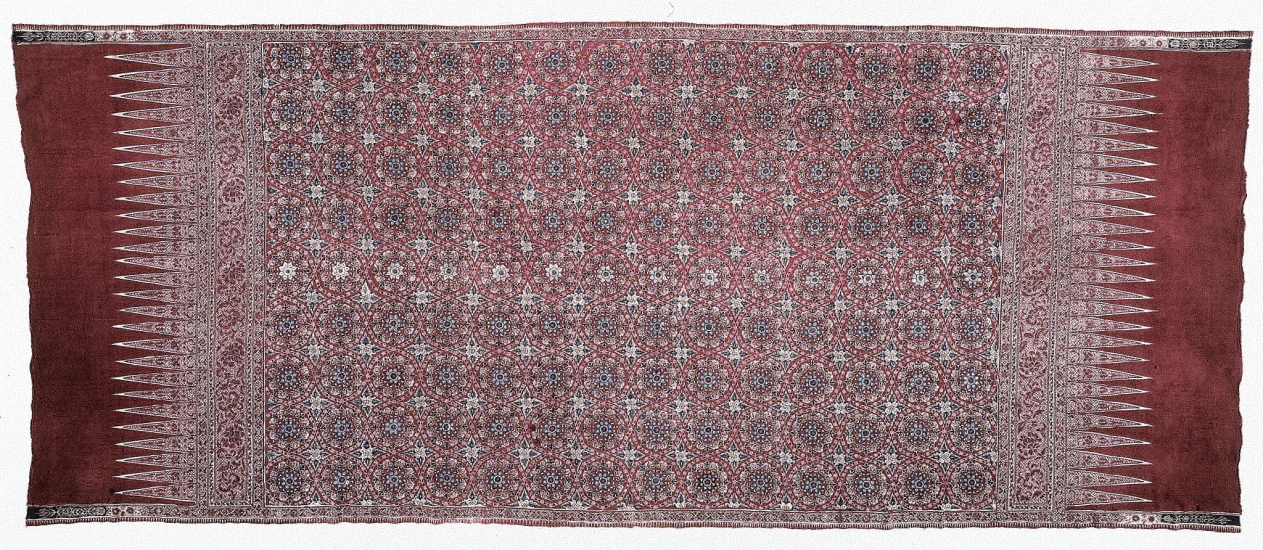
This colorful, elegantly patterned cloth was made in India for export to Indonesia in the East-West spice trade of the Dutch United East India Company. On the island of Sumatra such cloths, worn by both men and women, acquired ceremonial status, sometimes with magical and religious connotations. The pattern influenced local textile production, especially the heading at each end with triangles (kepala) on the deep red ground. The rich colors were a renowned hallmark of Indian cotton textiles, coveted in both Europe and the East. The Indian expertise in mordant patterning and dyeing was based on centuries of experience that foreigners sought in vain to duplicate. In 1734 a Frenchman, M. de Beaulieu, documented 11 stages of the labor-intensive process. It included applications of mordants (chemicals that fix dyes) that reacted in dye baths to produce specific colors; wax to keep desired areas white and dyed areas protected in subsequent dye baths; and bleaching in dung baths to lighten the ground.
Provenance
Made for export to Indonesia; collected by vendor in South Sumatra, Indonesia
Accession Number
2000.28
Medium
cotton; plain weave; drawn resist, painted mordants, dyed
Dimensions
Overall: 296 x 120 cm (116 9/16 x 47 1/4 in.)
Classification
Textile
Credit Line
John L. Severance Fund