Description
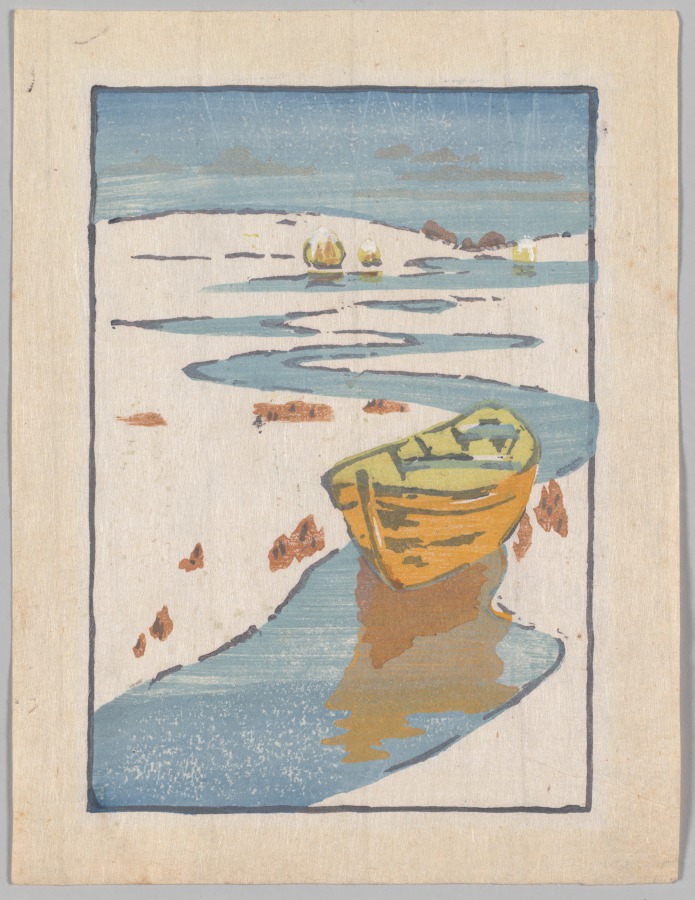
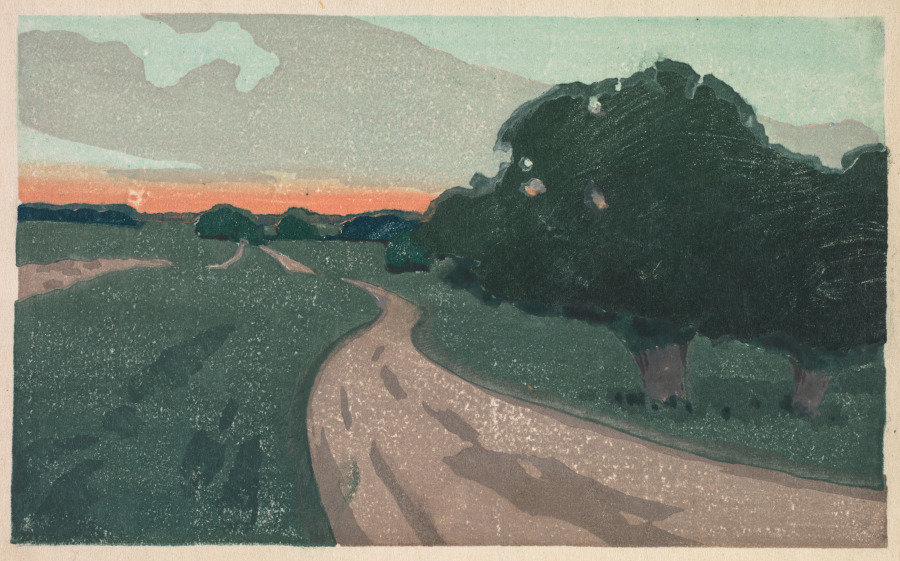
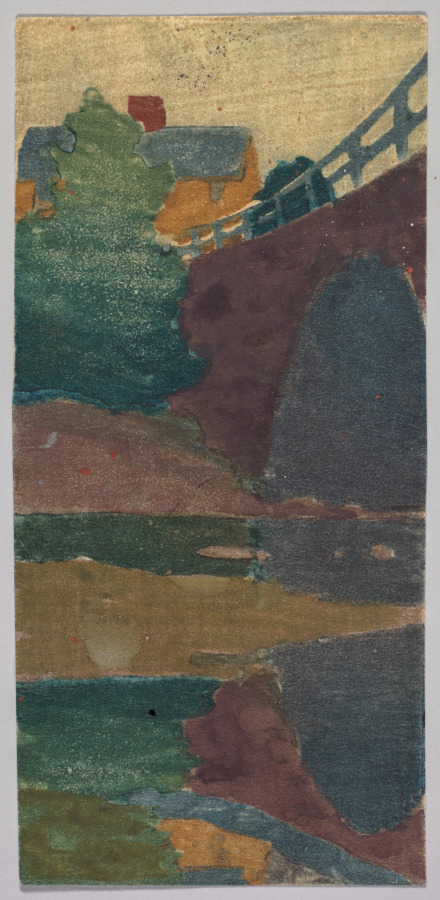
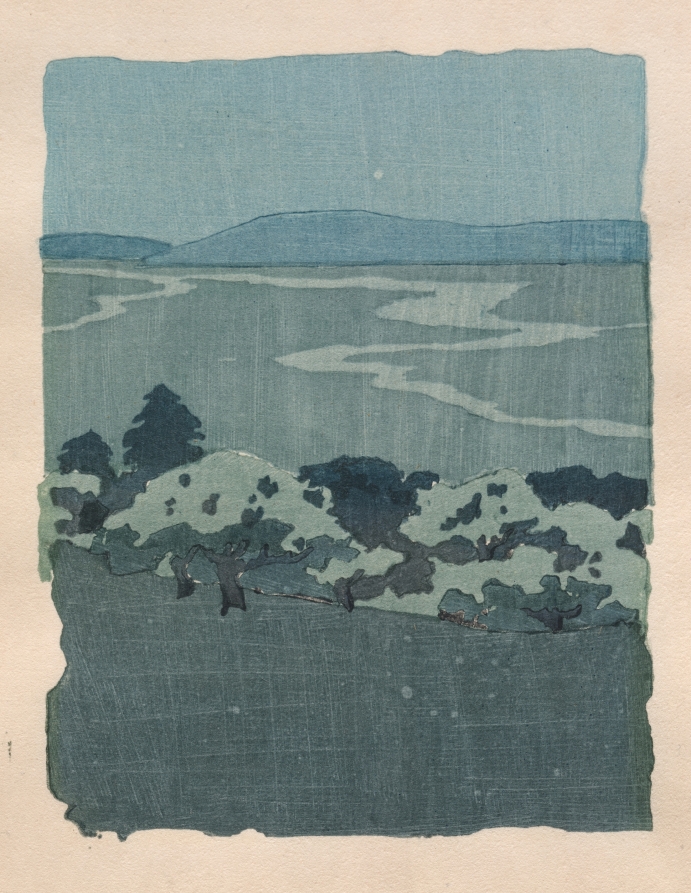
In his dual roles as artist and teacher, Dow was instrumental in reviving the color woodcut in America at the turn of the 20th century. Impressed by the flat, simplified compositions of Japanese color woodcuts, or ukiyo-e prints, Dow abandoned Western naturalism, with its linear modeling and one-point perspective, in favor of the basic elements of Japanese design: line, form, color, and notan—the harmonious arrangement of dark and light. Although in Japan the artist only executed the drawing—the carving and printing were carried out by craftsmen—Dow did everything himself. Like the Japanese, however, he printed by hand on mulberry paper. The picturesque Massachusetts fishing village of Ipswich and the surrounding area were Dow's subjects. The town is separated from the sea by sprawling salt marshes that are divided by canals and rivers. Dow expressed the changing effects of atmosphere and light by experimenting with color, which resulted in unique impressions.
Provenance
[]
Accession Number
2000.1
Medium
color woodcut
Dimensions
Sheet: 25.4 x 19.2 cm (10 x 7 9/16 in.); Image: 15.8 x 12.2 cm (6 1/4 x 4 13/16 in.)
Classification
Credit Line
Gift from funds of various donors to the Department of Prints and Drawings