Description
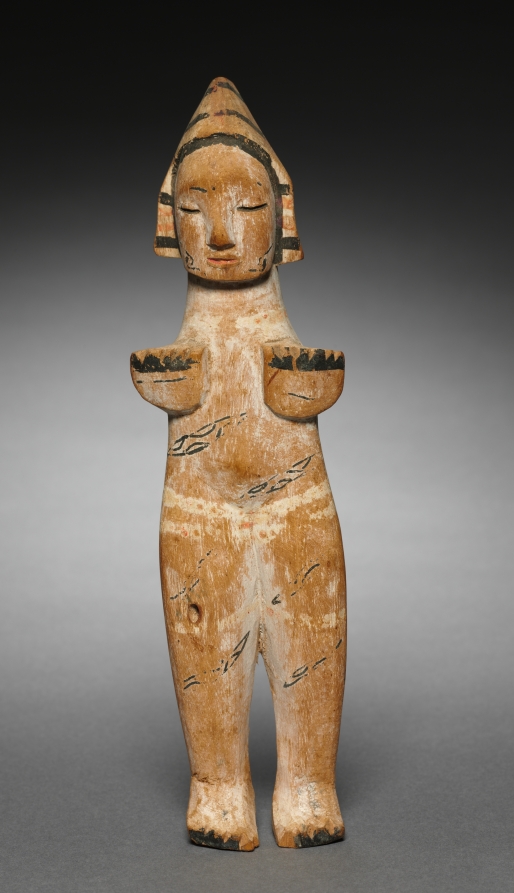
Young Ibibio girls would play with dolls for fun. The dolls also took on deeper significance when a girl entered seclusion to go through preparations for adulthood and marriage, representing her future children and promoting her fertility. The kaolin (white clay) that once covered the figures' bodies has been worn off, possibly through handling during play. Thin lines represent uli, a kind of body painting. Upraised, foreshortened hands with open fingers were typical of dolls carved by Ibibio people from the Anang group.
Provenance
Harry W. Langworthy III (?–1996) (?–1996); Cleveland Museum of Art by gift (1996–)
Accession Number
1996.267.2
Medium
Wood, kaolin, and paint
Dimensions
N/A
Classification
Sculpture
Credit Line
Gift of Harry W. Langworthy