Description
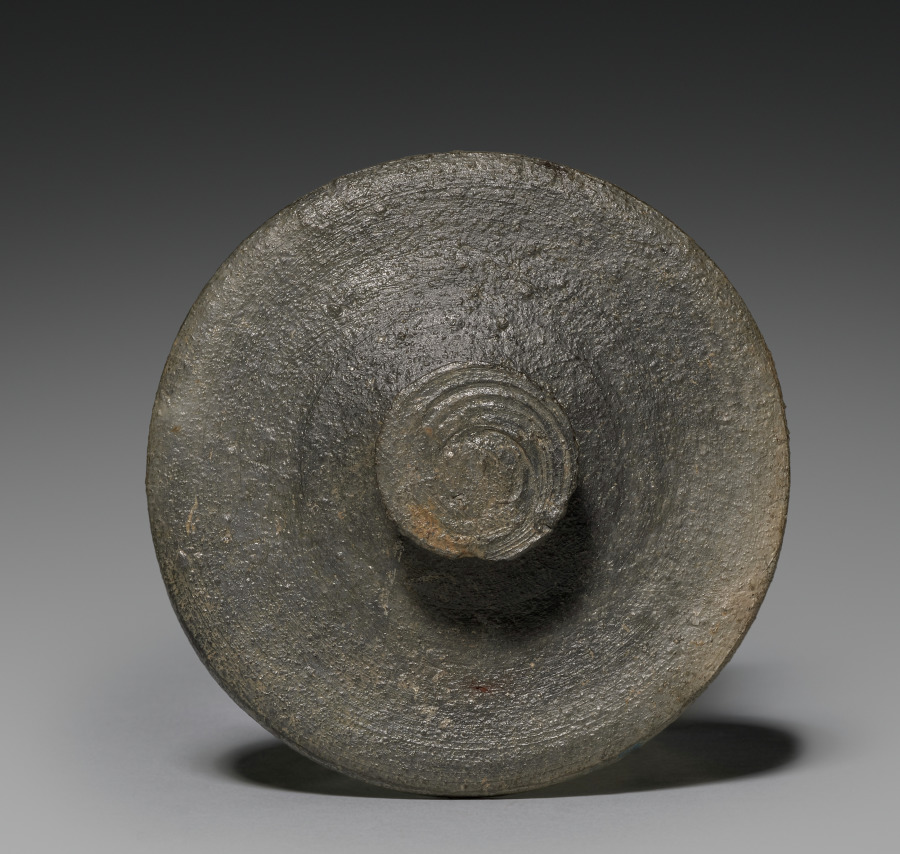
The work of Roman potters is very different from that of their Greek predecessors. Greek clay had allowed potters to throw thin-walled ceramics. Slips (paint) made from this clay had permitted painters to draw complicated scenes and figures with infinite care. As the Roman empire grew to include Germany and Britain, local clays found there were better for producing heavier pottery with three-dimensional decoration like this vase here. These jars—decorated with a human face (1992.125), animals (1992.126), a feather pattern (1992.183), a wheat pattern (1992.124), and vertical ribs (1992.127). were probably filled with foods or liquids and given either as gifts to an elaborate burial or as offerings to a god's shrine.
Provenance
[]
Accession Number
1992.127.b
Medium
tan ware with gray and some brown burnished slip
Dimensions
Diameter: 15.6 cm (6 1/8 in.); Overall: 13.1 cm (5 3/16 in.); Lid: 2.2 x 9.8 cm (7/8 x 3 7/8 in.)
Classification
Ceramic
Credit Line
John L. Severance Fund