Description
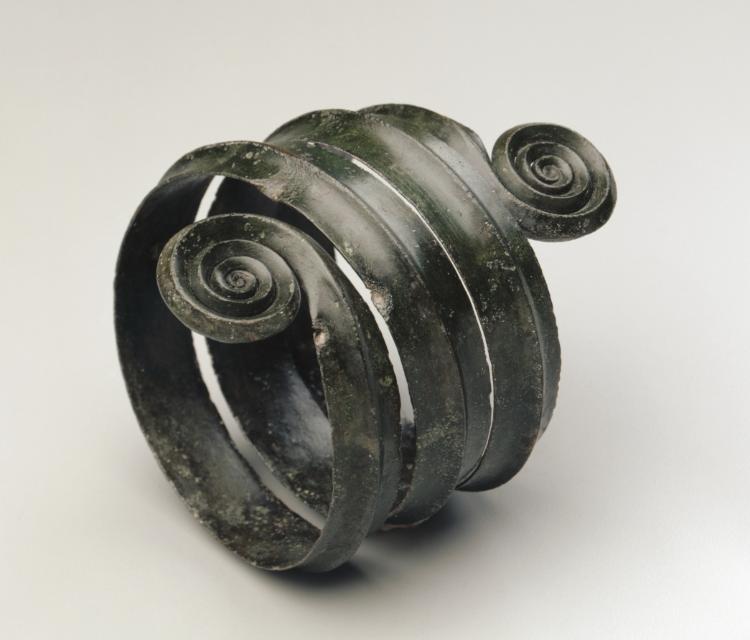
Europe. As the spiral mimics forms found in nature - specifically in nautilus shells - it is the basis for logarithmic measures of progression in measurement and growth, which in turn help establish the Fibonacci sequence. Through this sequence we can analyze the phenomenon of spiral designs, specifically in nautilus shells, where the radius of each new chamber grows at a rate determined by a specific proportion to the previous one.
Provenance
Count Keglevics; Dr. S. Egger, Vienna, sold Sotheby, 1891; Pitt Rivers; (Michael Ward, New York).
Accession Number
1988.5
Medium
bronze, wrought
Dimensions
Overall: 12.5 x 10.4 cm (4 15/16 x 4 1/8 in.)
Classification
Metalwork
Credit Line
Purchase from the J. H. Wade Fund