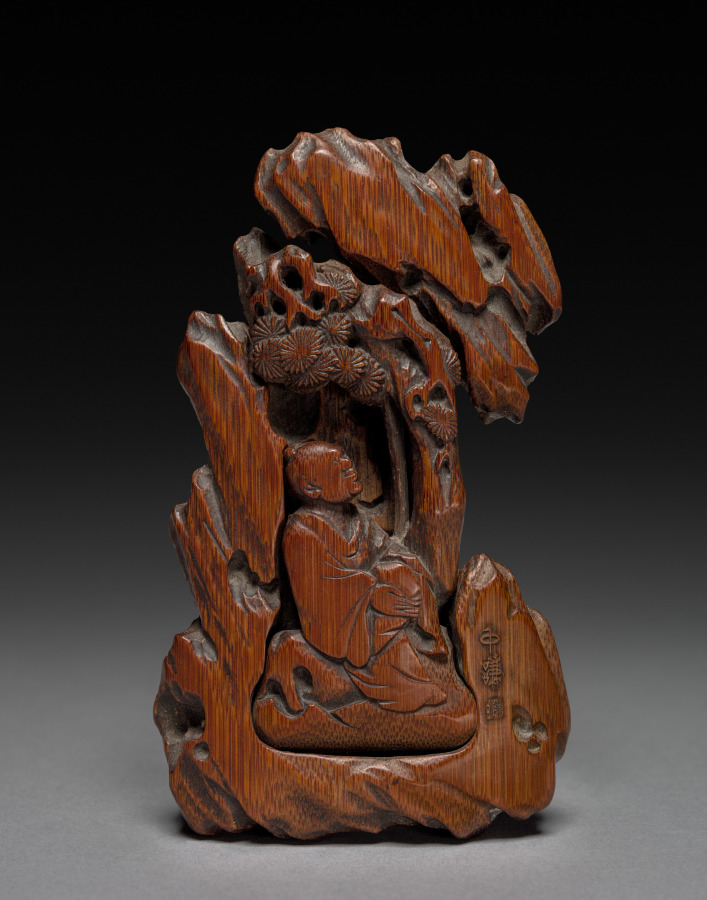
Description
In China, access to political power was granted to those who passed the civil service examinations, a system that offered official service only at a high level of education. Chinese literati-officials whose daily routine was administrative work in an office, enjoyed precious objects on their writing desks that offered distraction and demonstrated good taste. By the Ming (1368–1644) and Qing (1644–1911) dynasties, these utensils of the literati studio became also collectibles and were treasured as artworks.
Desk objects included paper weights, seals and seal paste boxes, brush rests, wrist rests, brush holders, water droppers, ink cakes, miniature mountains, and albums, all ranging in material from jade, gilt bronze, lacquer, and wood to porcelain.
Desk objects included paper weights, seals and seal paste boxes, brush rests, wrist rests, brush holders, water droppers, ink cakes, miniature mountains, and albums, all ranging in material from jade, gilt bronze, lacquer, and wood to porcelain.
Provenance
Sir Percival David [1892–1964], London, England, by descent to his wife Lady David (?–1964); Lady Sheila Jane Yorke Hardy David [1914–?], London, England (1964–1976?); (Sotheby's, London, 14 December, 1976, lot 234, sold to the Cleveland Museum of Art) (14 December 1976); The Cleveland Museum of Art, Cleveland, OH (1977–)
Accession Number
1977.8
Medium
carved bamboo
Dimensions
Overall: 9.5 cm (3 3/4 in.)
Classification
Wood
Credit Line
Edward L. Whittemore Fund