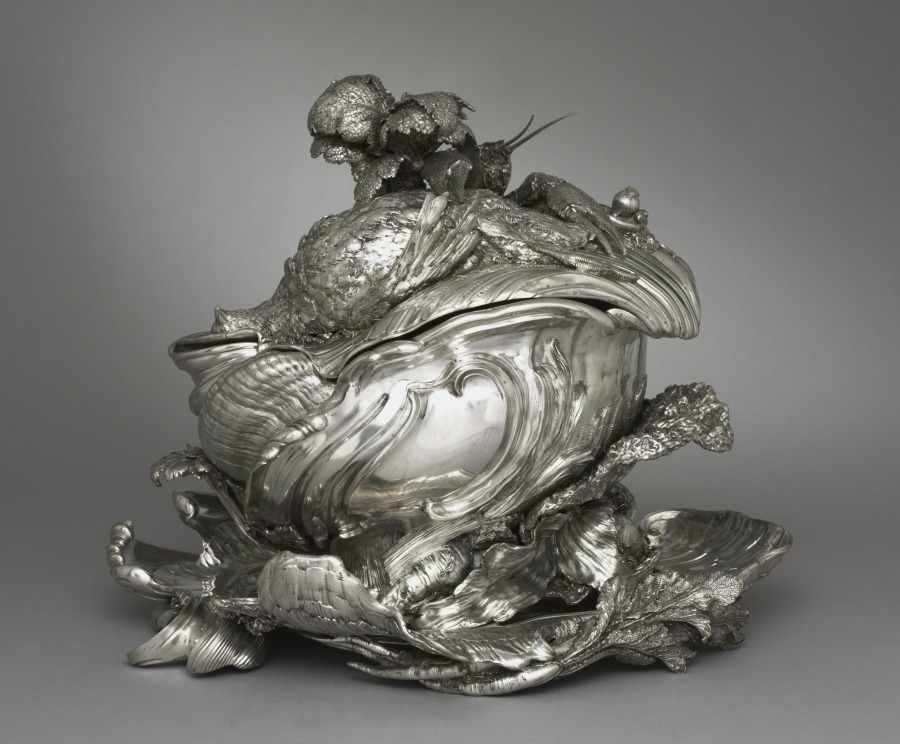
Description
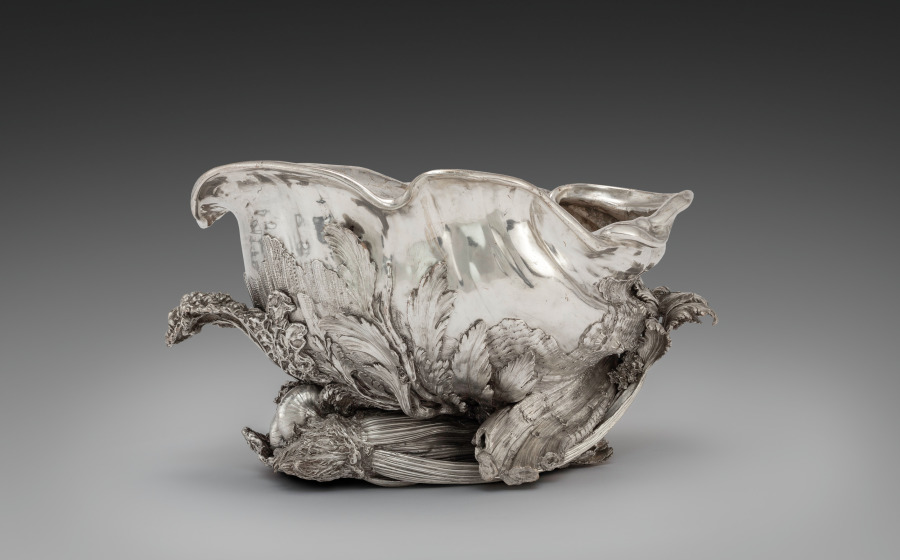
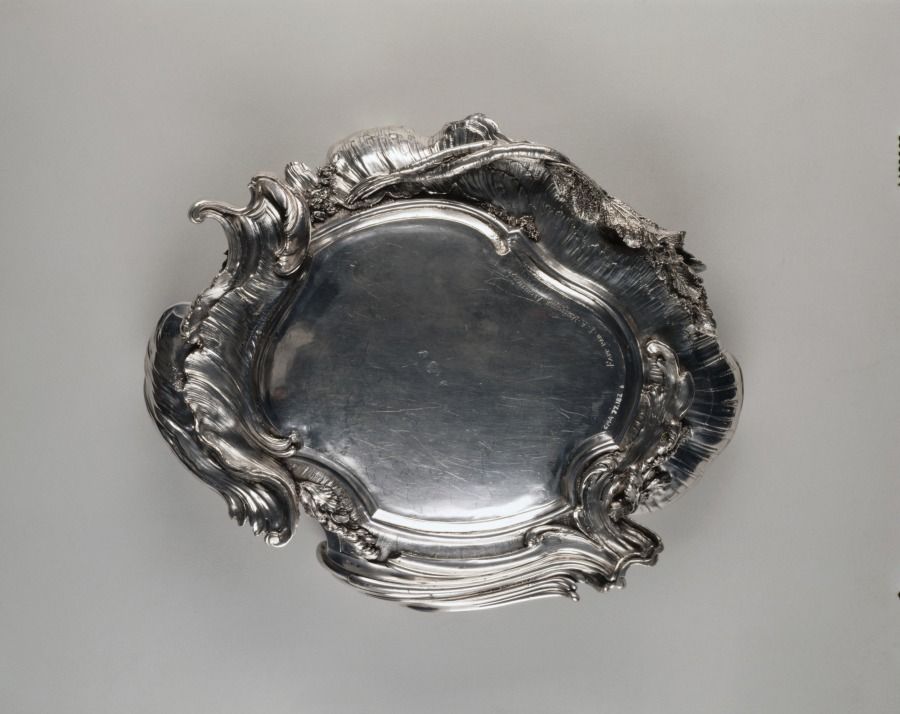
This tureen exemplifies the French Rococo style, an artistic movement celebrating naturalistic forms that developed in Paris during the early 1700s. In contrast to classical, controlled symmetry, Rococo forms morph, twist, and spill into the space around them. Meissonnier embellished this tureen in a picturesque arrangement of vegetables and creatures, transforming a utilitarian object into a decadent display of wealth and abundance. This masterpiece comes from a set of two tureens commissioned by the English Duke of Kingston during an extended stay in Paris in the 1730s.
Provenance
Evelyn Pierrepont, 2nd Duke of Kingston [1711–1773], England, by descent to his wife, Elizabeth Chudleigh (1740-1773); Elizabeth Chudleigh, sometime Duchess of Kingston [1721–1788], England (1773-1788); Prince Alexander Bezborodko [1747–1799], Russia (1788-1799 (?)); Count Elie Bezborodko [1756–1815], Russia (1799-1815 (?)); Count Alexander Kushelev-Bezborodko [1800-1855], Russia (1815-1855 (?)); Alexander Alexandrovich Polovtsoff [1832-1909], Russia, by descent to his heirs (1855-1909 (?)); (Jacques Seligmann [1858-1923], Paris, France, 1909, sold to John Pierpont Morgan); John Pierpont Morgan [1837-1913] (1909-1913 (?)); (Charles and Richard Comyns, London, England, 1925-1926, sold to anonymous buyer) (1925-1926); (Peter Zervudachi [b. 1921], Galerie du Lac, Vevey, Switzerland, sold to The Cleveland Museum of Art) (1977); Cleveland Museum of Art, Cleveland, Ohio (1977-)
Accession Number
1977.182
Medium
silver
Dimensions
Overall: 36.9 x 38.4 x 31.8 cm (14 1/2 x 15 1/8 x 12 1/2 in.); Average: 35 x 38.4 x 31.8 cm (13 3/4 x 15 1/8 x 12 1/2 in.)
Classification
Silver
Credit Line
Leonard C. Hanna Jr. Fund