Description
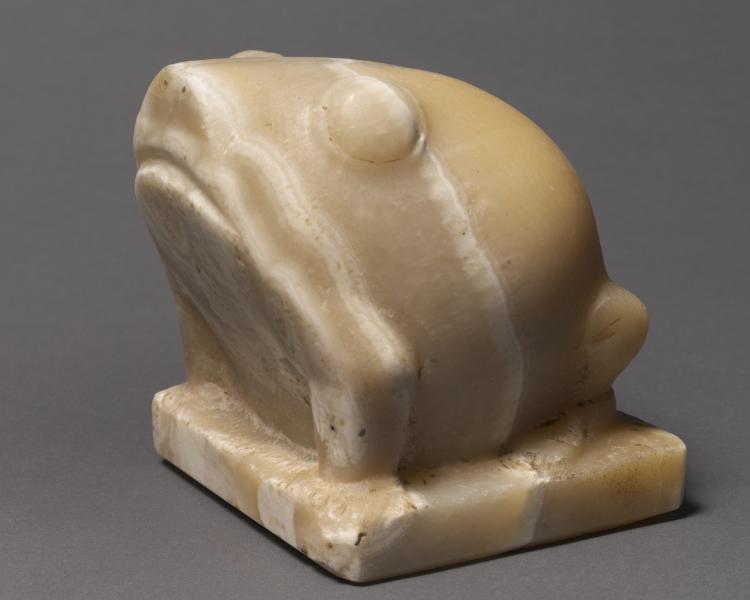
During the Predynastic period statues of animals are much more common than those of humans. This statue of a frog stands at the beginning of a great tradition of animal sculpture in Egyptian art. The sculptor has shown great sensitivity to the natural banding of the stone, using it to enhance the roundness of the animal's form. Small frogs, mostly of faience, are among the most common votive offerings deposited at early temple sites. The frog's exact religious significance in the Predynastic period is unknown, but in later times it was most often identified with Heqat, the goddess who assisted at childbirth.
Provenance
(Bruce and Ingrid McAlpine, London, England, sold to the Cleveland Museum of Art) (-1976); The Cleveland Museum of Art, Cleveland, OH (1976-)
Accession Number
1976.5
Medium
travertine (Egyptian alabaster)
Dimensions
Overall: 15.4 x 14.7 x 15.5 cm (6 1/16 x 5 13/16 x 6 1/8 in.)
Classification
Sculpture
Credit Line
Andrew R. and Martha Holden Jennings Fund