Description
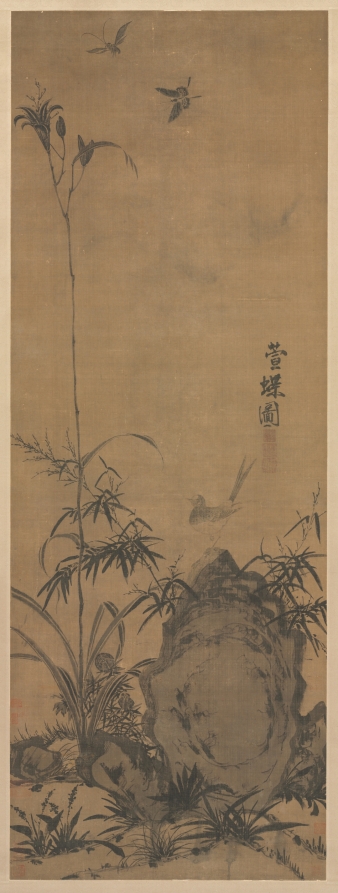
The bird is represented in pale ink, probably sketched in before the darker ink was used to finish the rock. Like the butterfly and moth above, his tail feathers echo the bamboo as well as the leaves and petals of the flowers. The Chinese wagtail can connote brotherly love. The daylily was used for various pharmaceutical purposes, especially for deadening pain in childbirth. It was also considered efficacious in relieving grief and aiding in the production of sons. The lily is in fact the real subject of this painting: it is the common symbol for motherly love. Hence, the lingering of the butterfly over a lily can signify a son's love, devotion, and yearning for his mother—the refuge from worldly woes.
Provenance
Liang Qingbiao 梁清標 [1620–1691] (1600s); Zhang Daqian 張大千 [1899–1983] (? by 1943–?); C. C. Wang 王季遷 [1907–2003], New York, NY, sold to the Cleveland Museum of Art (?–1971); The Cleveland Museum of Art, Cleveland, OH (1971–)
Accession Number
1971.132
Medium
Hanging scroll; ink on silk
Dimensions
Painting: 160 x 58.4 cm (63 x 23 in.); Overall with knobs: 277.7 x 85.2 cm (109 5/16 x 33 9/16 in.)
Classification
Painting
Credit Line
Purchase from the J. H. Wade Fund
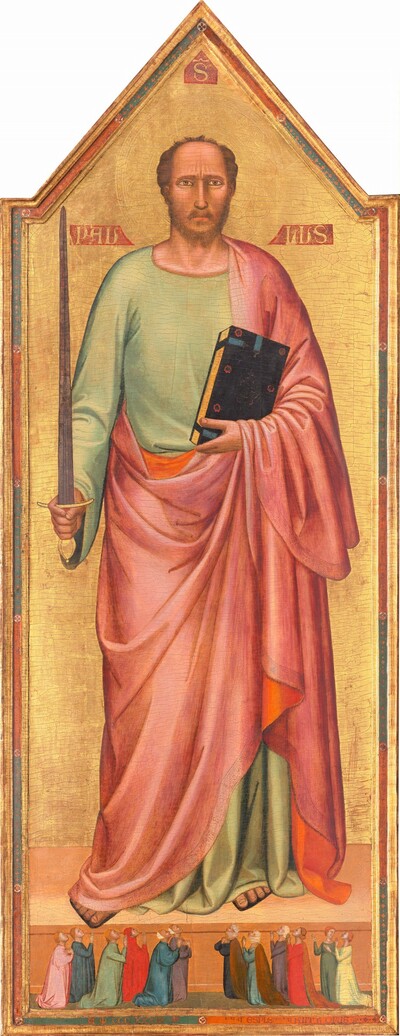
![Saint Bernard and Saint Catherine of Alexandria with the Virgin of the Annunciation [right panel]](https://api.nga.gov/iiif/e6890364-4d99-4684-a62b-5060ee3c3446/full/400,/0/default.jpg)