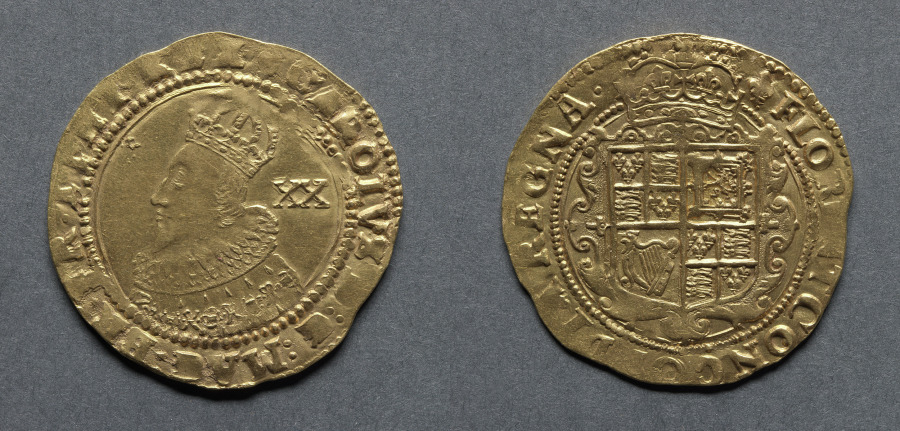
Description
After ascending to the throne, Charles I ordered that the coinage should remain the same types and denominations as that of James I. Throughout all the troubles of his reign he did not alter the value of the gold coinage. Until the English Civil War started in 1642, the king's authority continued to rule the Tower mint. With the appointment of Sir John Coniers as Lieutenant of the Tower, control of the mint passed into the hands of the Parliamentary party, which continued to strike coins bearing the king's effigy and titles. To keep the Royalist party supplied with money, Charles opened other mints at York, Aberystwyth, Shrewsbury, Oxford, Bristol, Truro, Exeter, Weymouth, and Chester, while a mint operated near Worcester in 1646. During the civil war mints operated in the besieged towns of Carlisle, Colchester, Newark, Pontefract, and Scarborough, and produced a number of irregularly shaped coins of many odd denominations hastily struck from local domestic plate.
Provenance
Mrs. Emery May Holden Norweb (1895-1984), Cleveland, OH, gifted to the Cleveland Museum of Art (-1969); The Cleveland Museum of Art, Cleveland, OH (1969-)
Accession Number
1969.192
Medium
gold
Dimensions
Diameter: 3.4 cm (1 5/16 in.)
Classification
Coins
Credit Line
The Norweb Collection