Description
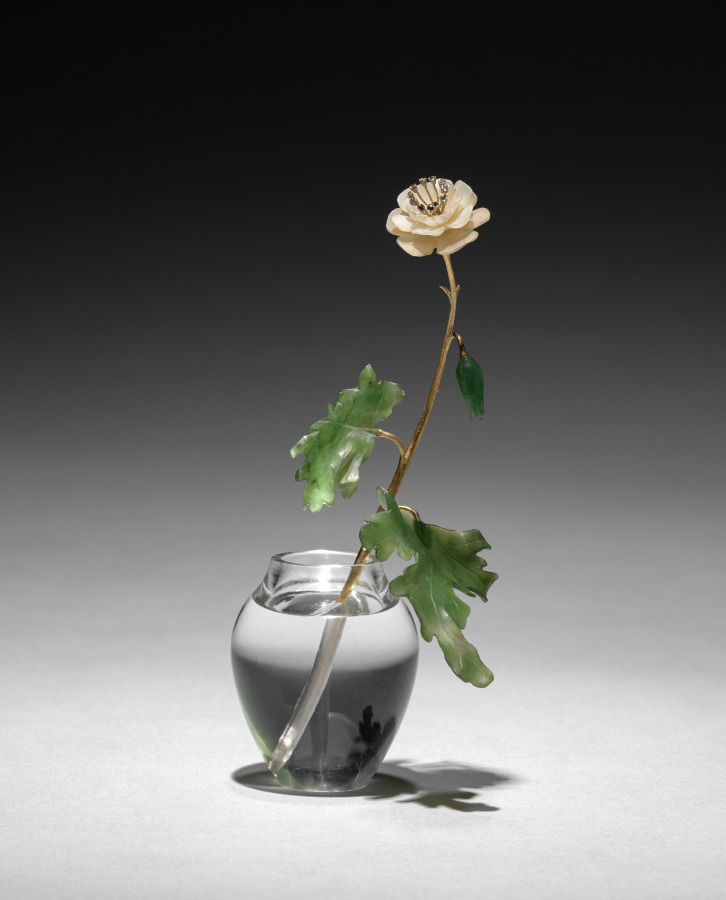
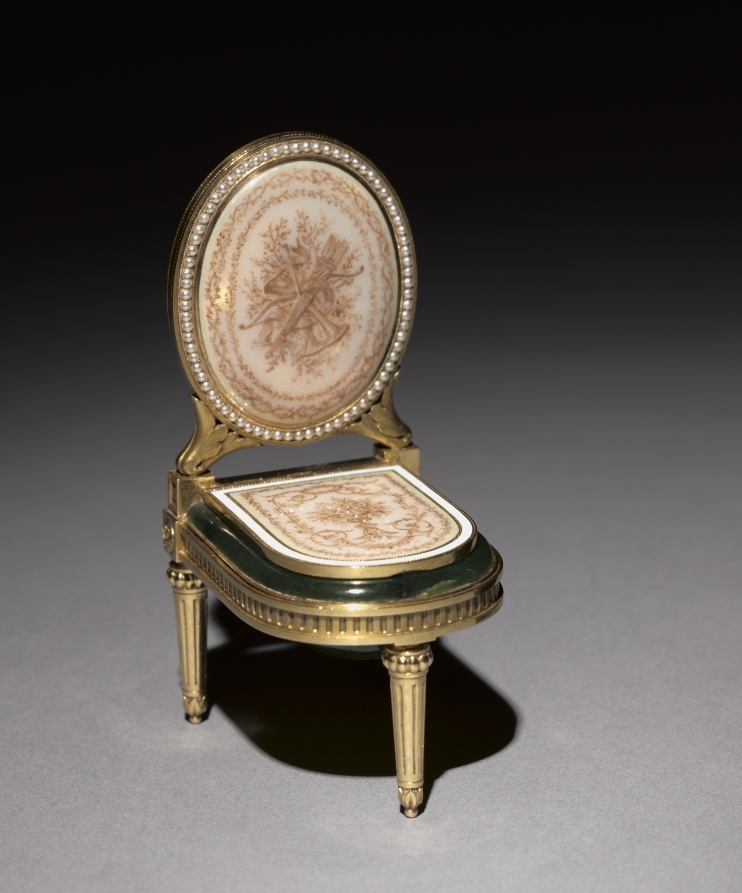
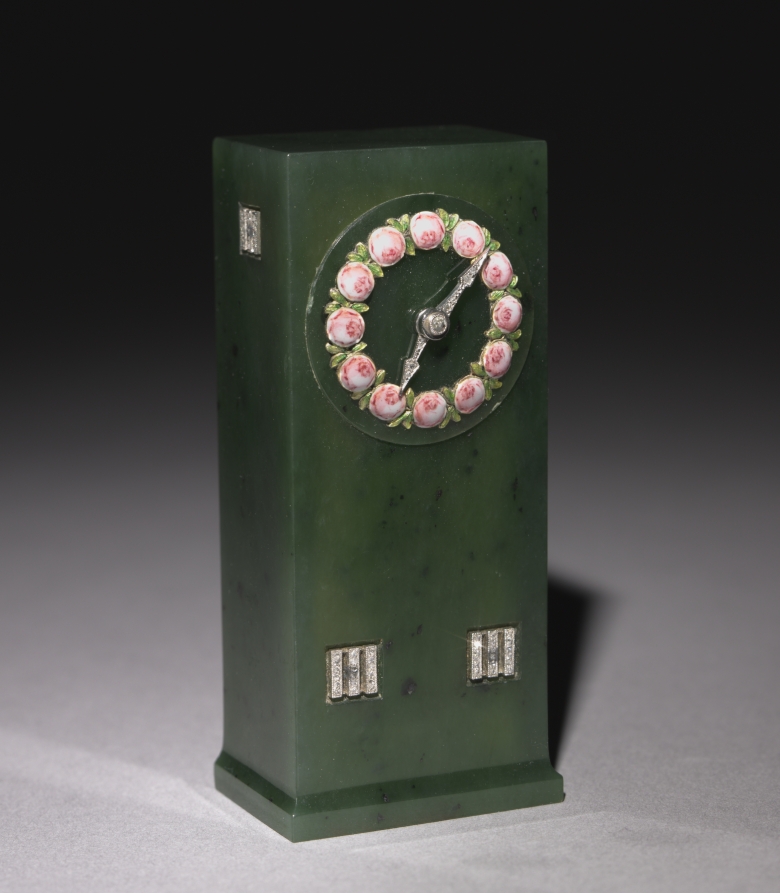
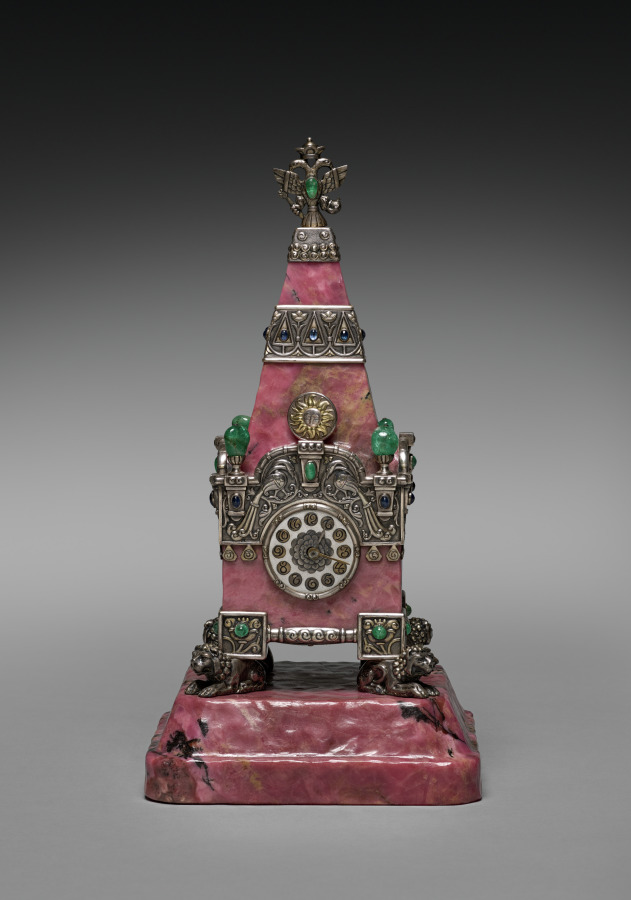
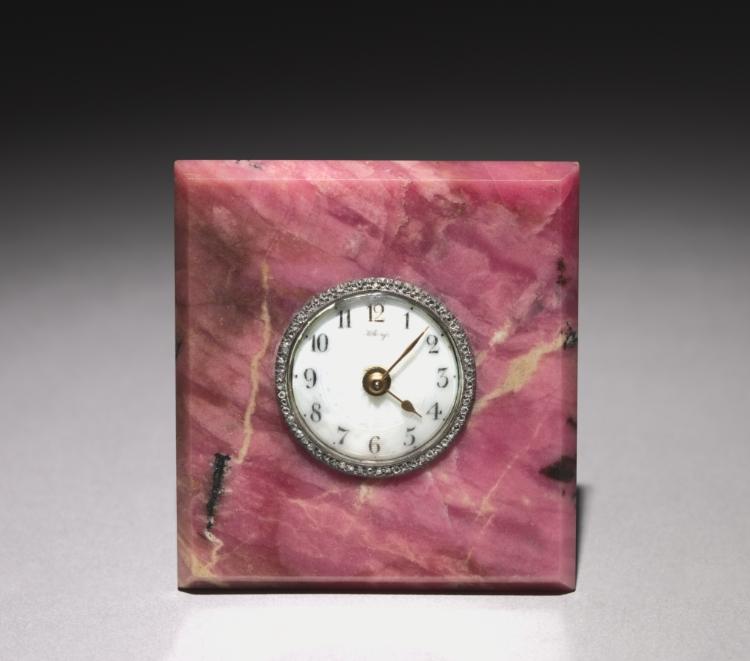
The use of Russian hardstones in creating precious objects became a hallmark of design from the House of Fabergé. Easily carved, these minerals were sourced largely from the western region surrounding the Ural Mountains. Fabergé's workmasters used colorful stones such as agate, nephrite (jade), lapis lazuli, rock crystal, and rhodonite, seen here in this small desk clock, to create and embellish flower studies, animal figures, and all manner of luxurious accessories. Bright pink rhodonite was among the rarest, and consequently most expensive, specimens used by the House of Fabergé.
Provenance
India Early Minshall [1885–1965], Cleveland, OH, bequest to the Cleveland Museum of Art (?-1966); The Cleveland Museum of Art (1966-)
Accession Number
1966.476
Medium
rhodonite, silver, enamel, diamonds
Dimensions
Overall: 5.3 x 5 x 2.9 cm (2 1/16 x 1 15/16 x 1 1/8 in.)
Classification
Timepiece
Credit Line
The India Early Minshall Collection