Description
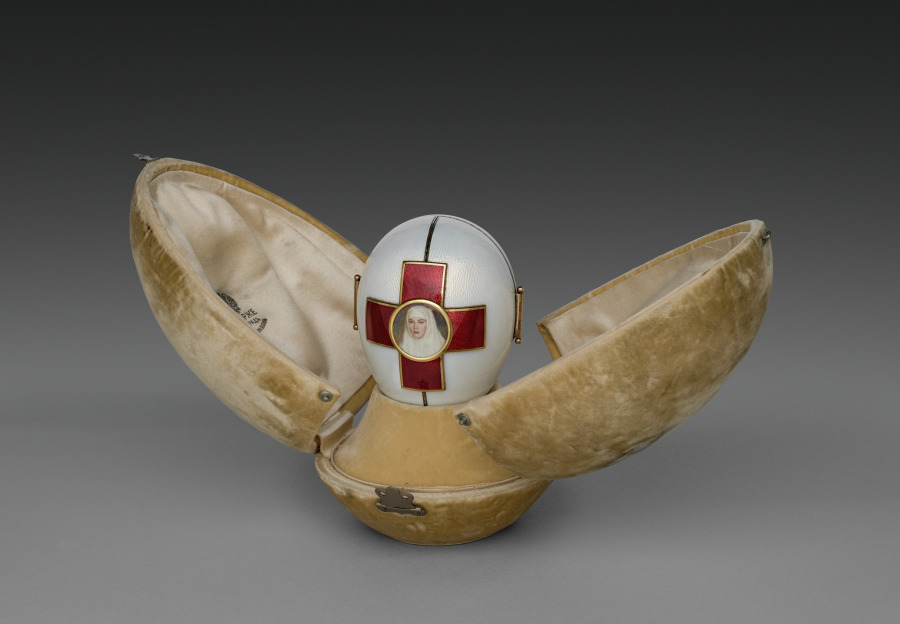
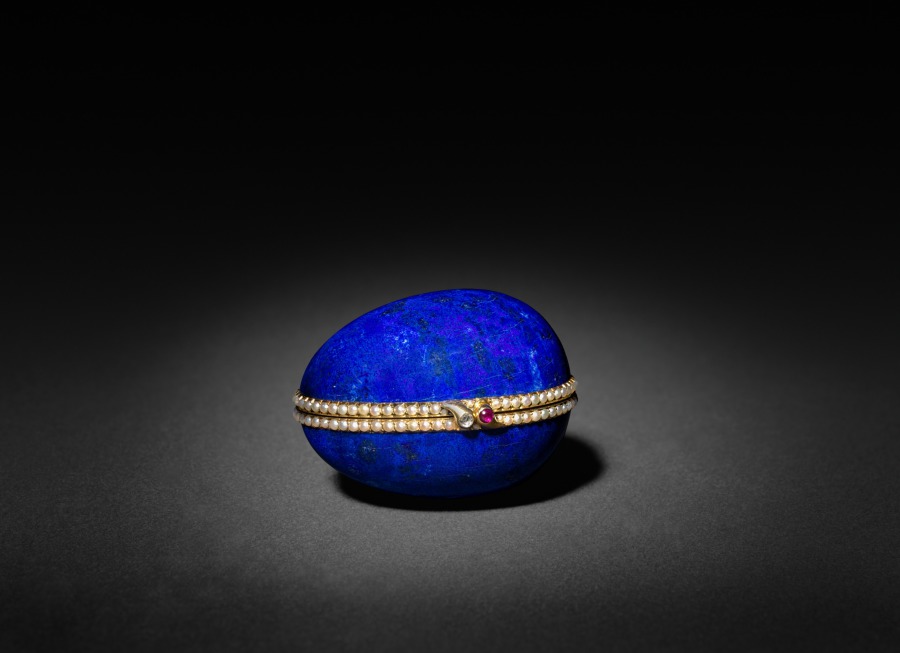
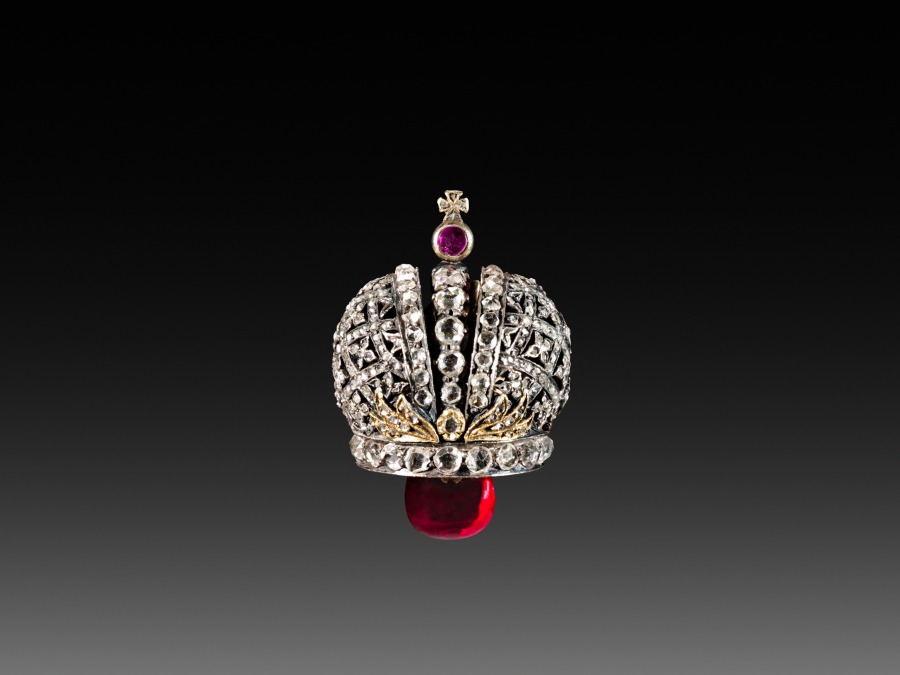
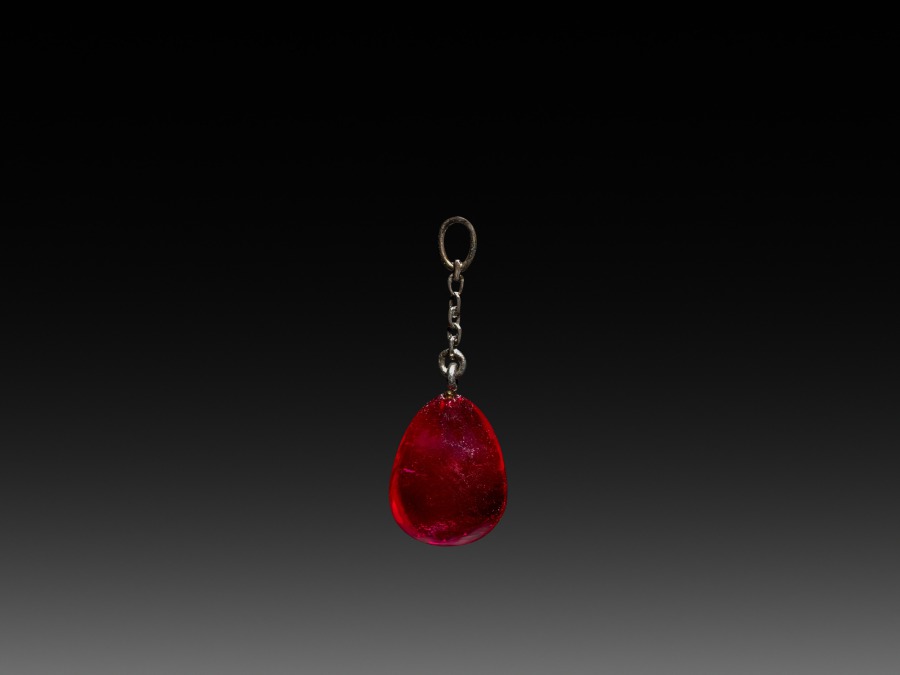
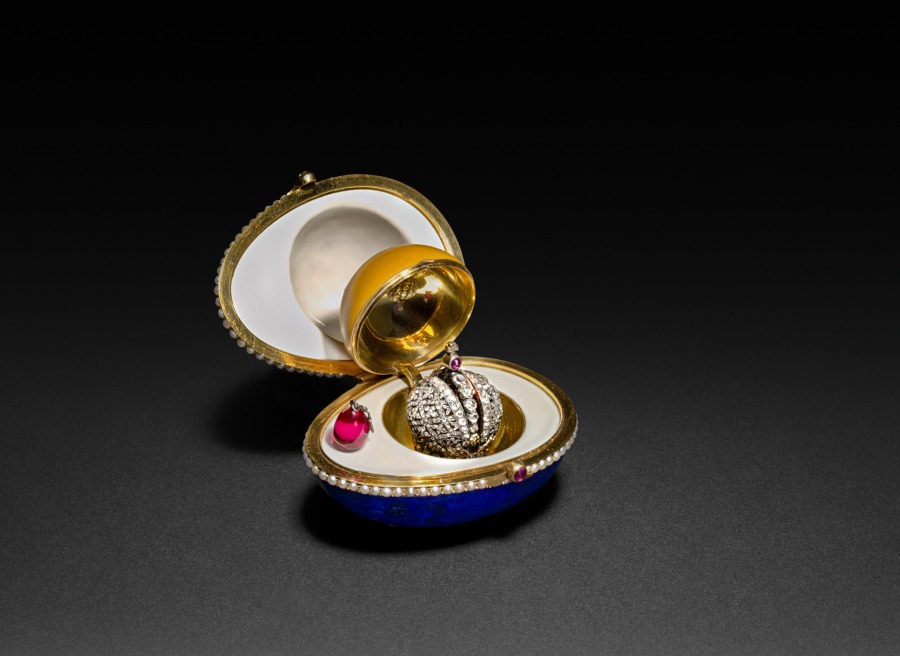
Peter Carl Fabergé became the crown jeweler to the imperial court of Russia in 1885 after he produced the very first Easter egg for Tsar Alexander III to give to his wife, Empress Marie Feodorovna. Fabergé created his celebrated Easter eggs, symbols of rebirth and renewal, as gifts for the Russian imperial family every year until he had to leave the country in 1919 after the Russian Revolution. Made of gold and lapis lazuli from the Ural Mountains, this egg opens to reveal a compartment enameled to resemble an egg yolk, which contains yet another delightful surprise of an imperial crown holding a tiny ruby or pink sapphire on a chain.
Provenance
India Early Minshall [1885–1965], Cleveland, OH, bequest to the Cleveland Museum of Art (?-1966); The Cleveland Museum of Art, Cleveland, OH (1966-)
Accession Number
1966.436
Medium
gold, enamel, lapis lazuli, pearls, diamonds, rubies
Dimensions
Overall: 5.9 x 4.5 cm (2 5/16 x 1 3/4 in.)
Classification
Miscellaneous
Credit Line
The India Early Minshall Collection