Description
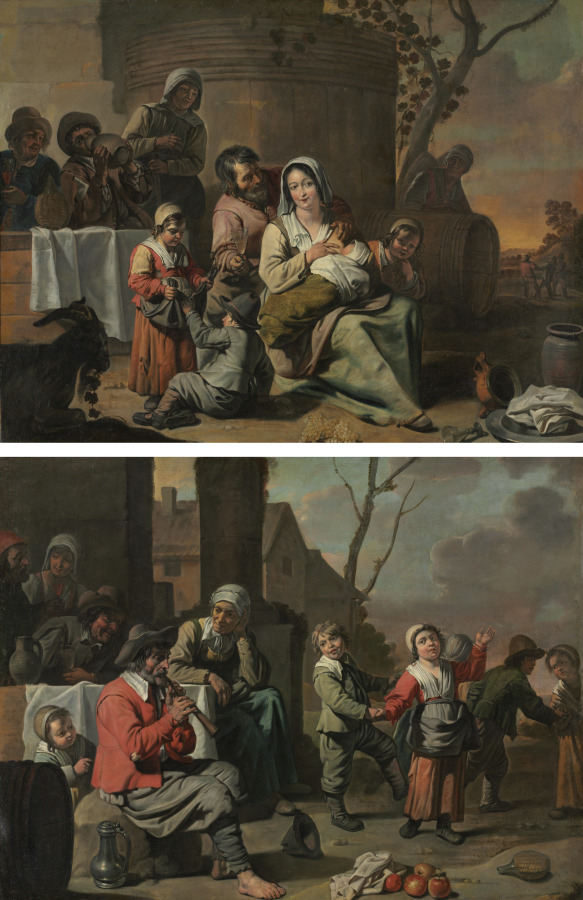
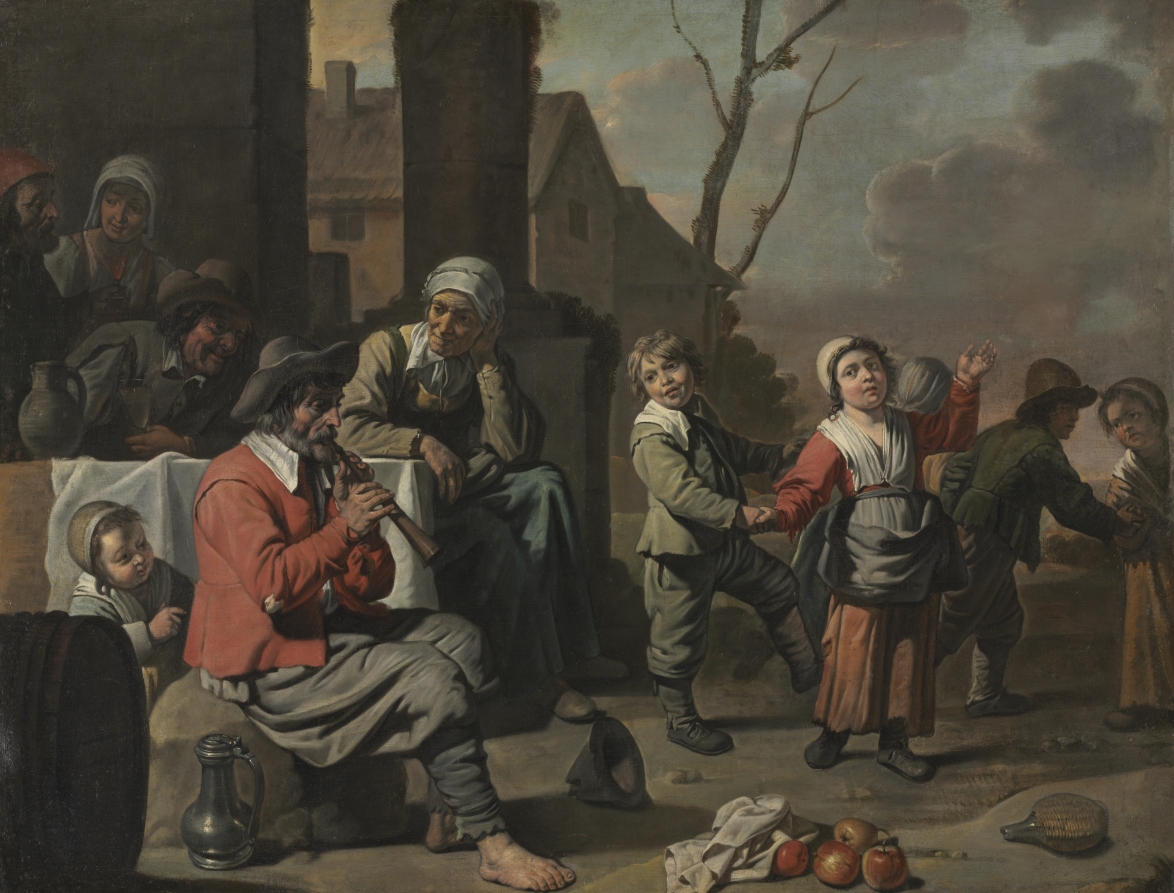
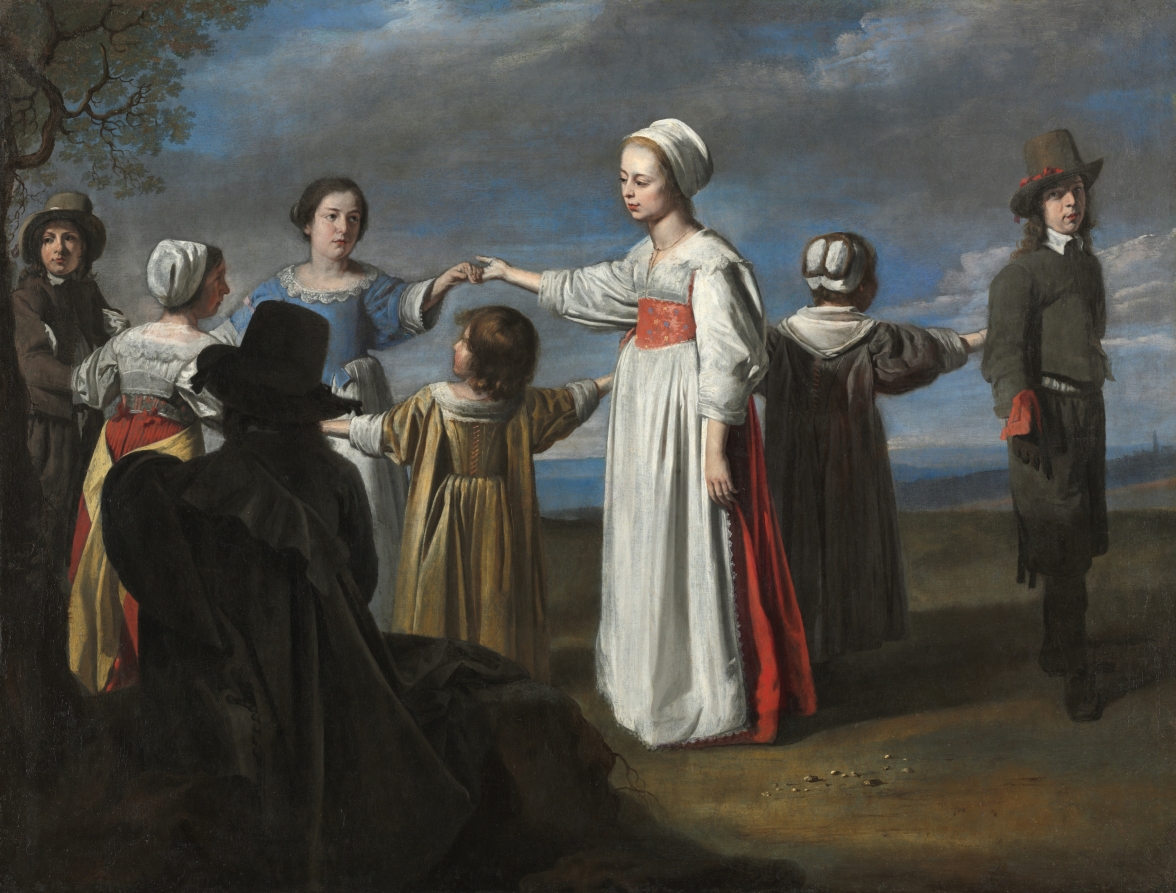
Antoine, Louis, and Mathieu Le Nain were brothers who ran a collective studio in Paris from around 1630 until 1648, when Antoine and Louis died. Mathieu continued to produce work under their name "Le Nain" throughout the 1650s. Of the museum's four paintings that have been called "Le Nain" (1958.174, 1958.175.1, 1958.175.2), this work has held its attribution to Mathieu the longest. With his back to the viewer, a musician sits in shadow while a group of children pose patiently in a chain-like formation, awaiting the start of their dance. Because of its reliance on order and collaboration, dancing symbolized familial harmony. The attention to the individuality of the children suggest a family portrait, while their wistful expressions and melancholic tone have led to the hypothesis that the children are portraits-both living and posthumous. The description of the intricate lace and the wearied expressions of the slim boys is characteristic of Mathieu's handling. However, the canvas has been attributed to one of Mathieu's followers, the Master of the Games, because of the static, brightly lit figures whose elongated shadows don't quite describe their forms.
Provenance
Count Ottone Ponte di Scarnafigi of Sardinia (died 1788);; Count Louis de Seyssel, Turin, sold to Salmon P. Halle, 1916; Salmon P. Halle, upon his death, by inheritance to his wife.; Mrs. Salmon P. Halle, by gift to the Cleveland Museum of Art, 1957.
Accession Number
1957.489
Medium
oil on canvas
Dimensions
Framed: 115 x 146 x 9.5 cm (45 1/4 x 57 1/2 x 3 3/4 in.); Unframed: 92 x 120.2 cm (36 1/4 x 47 5/16 in.)
Classification
Painting
Credit Line
Gift of Mrs. Salmon P. Halle in memory of Salmon Portland Halle