Accession Number
1947.503
Medium
color on paper
Dimensions
Overall: 13 x 13 cm (5 1/8 x 5 1/8 in.)
Classification
Painting
Credit Line
Edward L. Whittemore Fund
Tags
Painting Baroque (1600–1750) Paper
Background & Context
Background Story
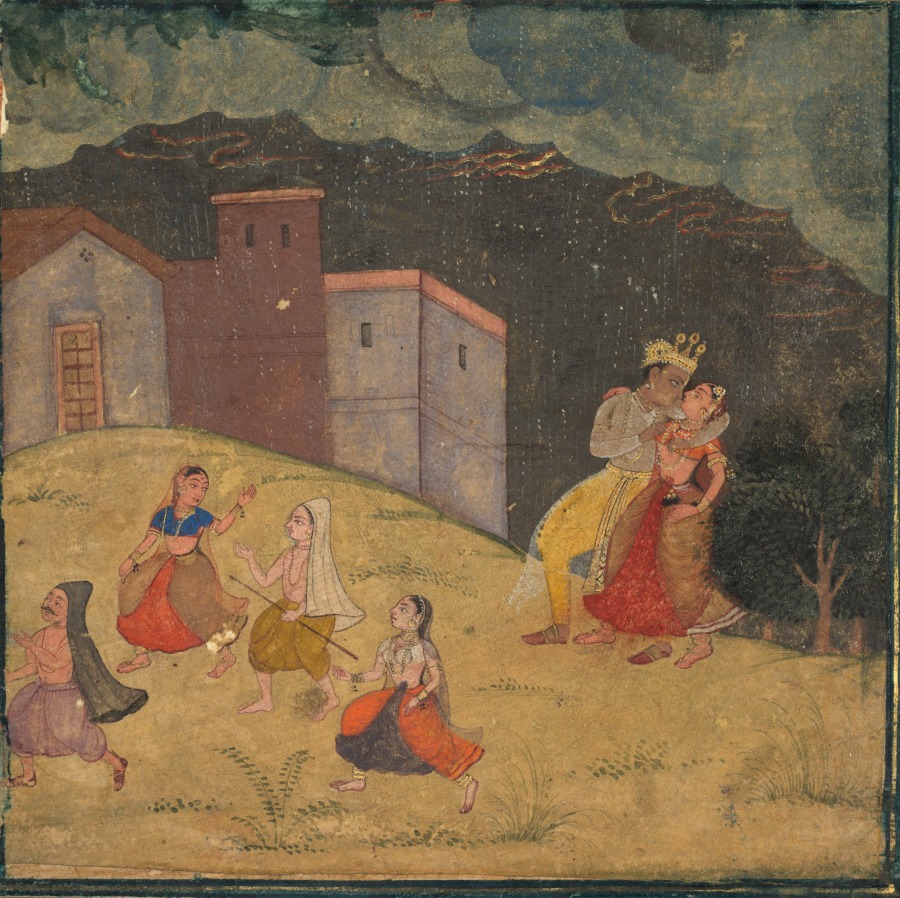
Radha and Krishna Caught in a Storm from c. 1615-1620 is an Indian painting depicting the divine lovers Radha and Krishna taking shelter from a storm, following the long Indian tradition of painting scenes from the Bhagavata Purana and other Hindu texts. The c. 1615-1620 date places this in the Mughal period, when Indian painting was being produced in the courts of the Mughal emperors and the Rajput kingdoms, and the Radha and Krishna subject connects the painting to the long tradition of Krishna painting in Indian art that is one of the most important genres in Indian painting.
Cultural Impact
Radha and Krishna Caught in a Storm is important in the history of Indian painting because it demonstrates the Krishna painting tradition in the Mughal period, when Indian painting was being produced in the courts of both the Mughal emperors and the Rajput kingdoms. The tradition of painting Radha and Krishna—the divine lovers whose relationship represents the soul's longing for union with the divine—is one of the most important subjects in Indian painting, and the c. 1615-1620 painting shows this tradition at an important period of development.
Why It Matters
Radha and Krishna Caught in a Storm is an Indian painting from the Mughal period depicting the divine lovers taking shelter from a storm. The c. 1615-1620 painting shows the Krishna painting tradition from one of the most important periods of development in Indian art, when Mughal and Rajput painting traditions were influencing each other.