Description
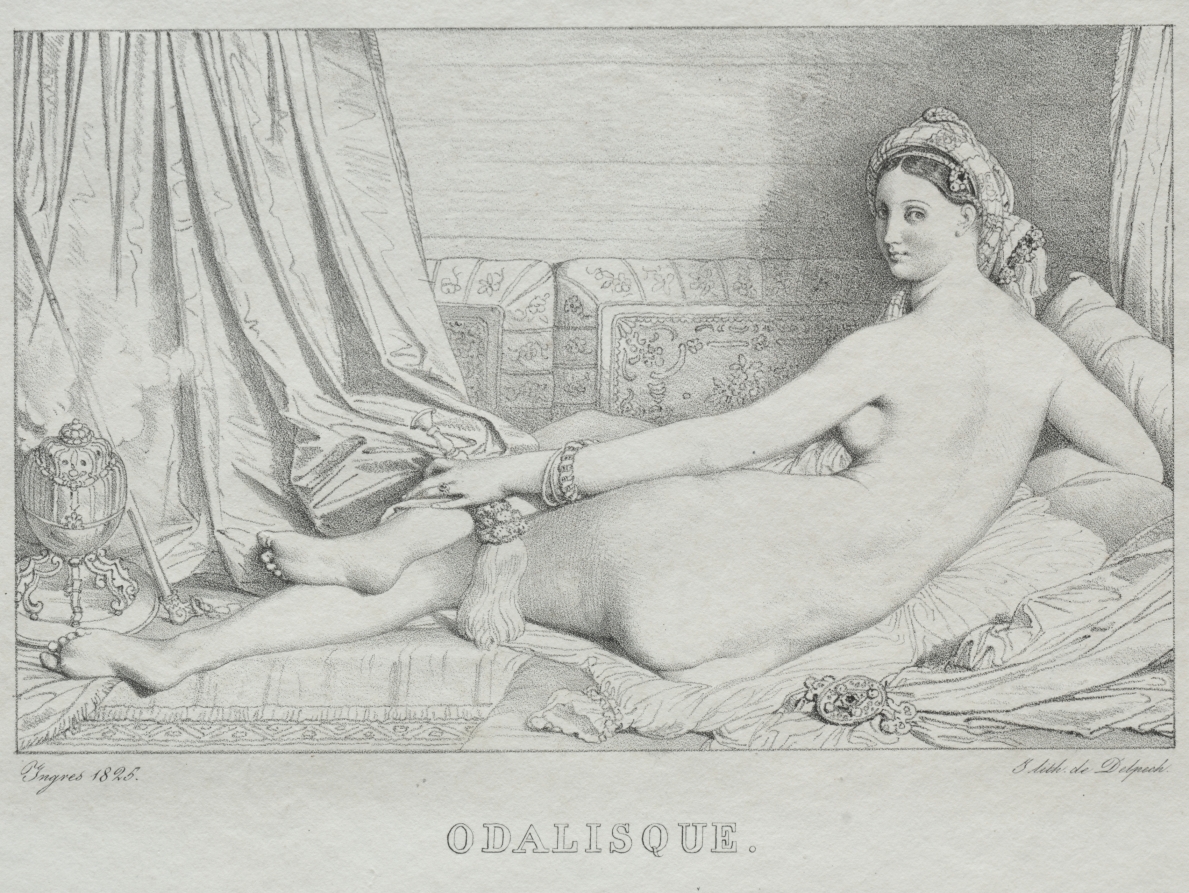
Ingres executed this lithograph to reproduce and publicize an important picture that he had previously painted. However, the lithograph also represents experimentation with an unfamiliar medium, but the artist's assured draftsmanship makes the print successful.
Provenance
[]
Accession Number
1943.177
Medium
lithograph
Dimensions
Sheet: 26.7 x 34.8 cm (10 1/2 x 13 11/16 in.); Image: 13 x 20.9 cm (5 1/8 x 8 1/4 in.)
Classification
Credit Line
Mr. and Mrs. Lewis B. Williams Collection
Background & Context
Background Story
Ingres created this lithograph to reproduce and publicize an important painting he had previously completed. However, the print also represents his experimentation with lithography — a relatively new medium at the time.
Ingres' odalisques (harem women) were products of the 19th-century European fascination with the 'Orient' — a largely imagined, exoticized vision of the Middle East and North Africa. While Ingres never visited the region, his sensual depictions of reclining women in Eastern settings became iconic images of Orientalist art.
Cultural Impact
Ingres' influence on later artists — from Degas and Matisse to Picasso — was primarily through his mastery of line, proving that a single contour could convey volume, texture, and emotion simultaneously. His odalisques influenced the Orientalist movement in painting and contributed to European visual culture's construction of the 'exotic East.'
Why It Matters
This lithograph captures Ingres at a transitional moment — adapting his mastery of painting to the new technology of lithographic printing. It demonstrates how 19th-century artists navigated the tension between unique masterpieces and reproductive technologies, a tension that would define the coming age of mechanical reproduction.