Accession Number
1916.1103
Medium
ink and color on silk
Dimensions
Overall: 117.5 x 64.8 cm (46 1/4 x 25 1/2 in.)
Classification
Painting
Credit Line
Gift of Mr. and Mrs. J. H. Wade
Tags
Painting Impressionist & Modern (1851–1900) Ink Silk Painting
Background & Context
Background Story
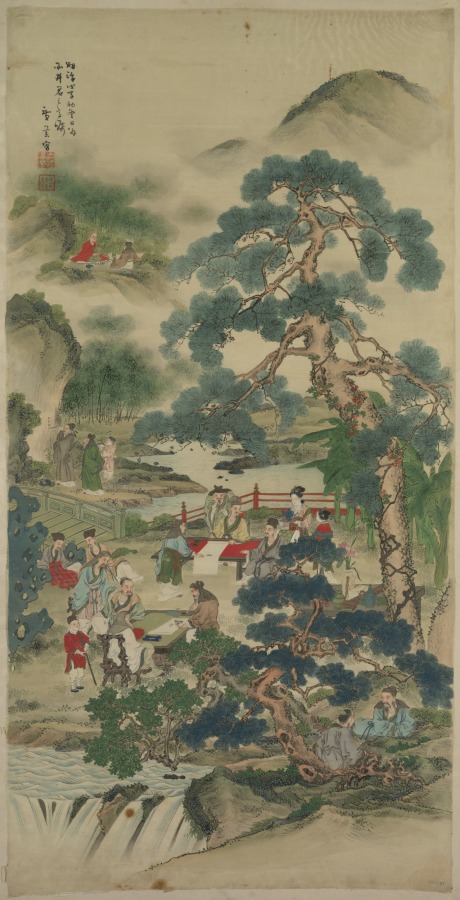
Chinese Sages in a Garden from 1888 depicts sage figures in a garden setting, following the long Chinese tradition of painting scholarly recluses in garden settings that dates back to the Song dynasty. The 1888 date places this in the late Qing period, when Chinese painting was being affected by both internal traditions and external influences. The painting of sages in gardens represents one of the most enduring subjects in Chinese painting—scholarly recluses who have withdrawn from official life to pursue cultivation in natural settings—and the garden setting connects the painting to the long Chinese tradition of garden painting that is one of the most important genres in Chinese art.
Cultural Impact
Chinese Sages in a Garden is important in the history of Chinese painting because it demonstrates the enduring appeal of the sage-in-garden tradition in the late Qing period. The tradition of painting scholarly recluses in garden settings—representing the ideal of withdrawal from official life to pursue cultivation in nature—is one of the most enduring subjects in Chinese painting, and the 1888 painting shows that this tradition remained vibrant in the late Qing period.
Why It Matters
Chinese Sages in a Garden is a late Qing painting following the enduring Chinese tradition of depicting scholarly recluses in garden settings. The 1888 painting represents the ideal of withdrawal from official life to pursue cultivation in nature—one of the most important subjects in Chinese painting that remained vibrant in the late Qing period.