Accession Number
1990.139.1
Medium
acrylic and silkscreen ink on linen
Dimensions
overall: 50.8 x 40.6 cm (20 x 16 in.) | framed: 53.9 x 43.1 x 3.8 cm (21 1/4 x 16 15/16 x 1 1/2 in.)
Classification
Painting
Credit Line
Gift of William C. Seitz and Irma S. Seitz, in Honor of the 50th Anniversary of the National Gallery of Art
Background & Context
Background Story
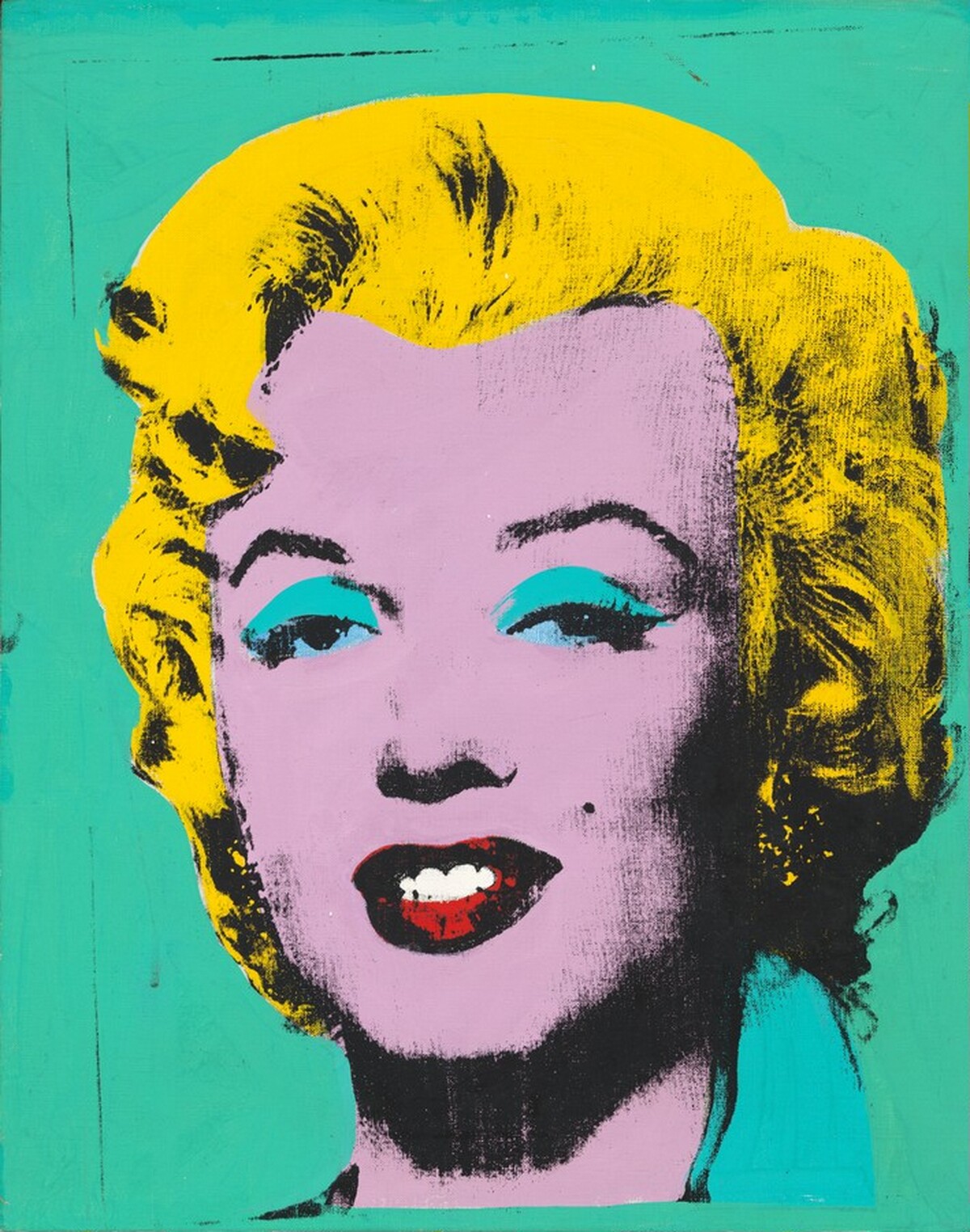
Green Marilyn from 1962 is one of Warhol's earliest silkscreen portraits, depicting Marilyn Monroe in the green-on-green color combination that transforms the movie star's face into a graphic icon. The 1962 date places this in the year following Monroe's death, when Warhol began the Marilyn series that would become his most iconic works. The silkscreen technique—reproducing a publicity photograph of Monroe on canvas through a photographic stencil—demonstrates Warhol's fundamental insight: that in the age of mechanical reproduction, the most powerful images are those that are endlessly reproduced, and the artist's role is not to create new images but to acknowledge the power of existing ones.
Cultural Impact
Green Marilyn is one of the earliest examples of Warhol's silkscreen technique and one of the most important works in the history of Pop Art because it demonstrates Warhol's fundamental insight about the relationship between art and mechanical reproduction. The green-on-green color combination transforms Monroe's face from a publicity photograph into a graphic icon, and the silkscreen technique acknowledges that the image's power comes not from the artist's touch but from its endless reproduction in the media.
Why It Matters
Green Marilyn is Warhol's silkscreen at its most iconic: Monroe's face reproduced from a publicity photograph in green-on-green, transforming the movie star into a graphic icon. The 1962 painting demonstrates Warhol's fundamental insight—that in the age of mechanical reproduction, the most powerful images are those that are endlessly reproduced, not those that are uniquely created.