Accession Number
17236
Medium
Lithograph in black ink, with additions in brush and red, blue, yellow, green, orange-brown and gray watercolor on ivory wove paper
Dimensions
Image: 41.5 × 63.9 cm (16 3/8 × 25 3/16 in.); Sheet: 48.7 × 69.8 cm (19 3/16 × 27 1/2 in.)
Classification
lithograph
Credit Line
Clarence Buckingham Collection
Background & Context
Background Story
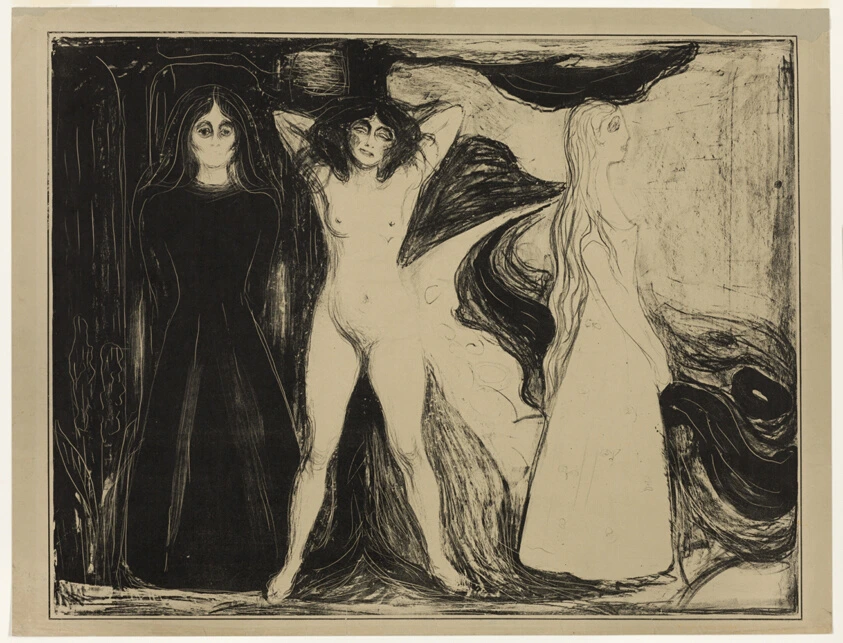
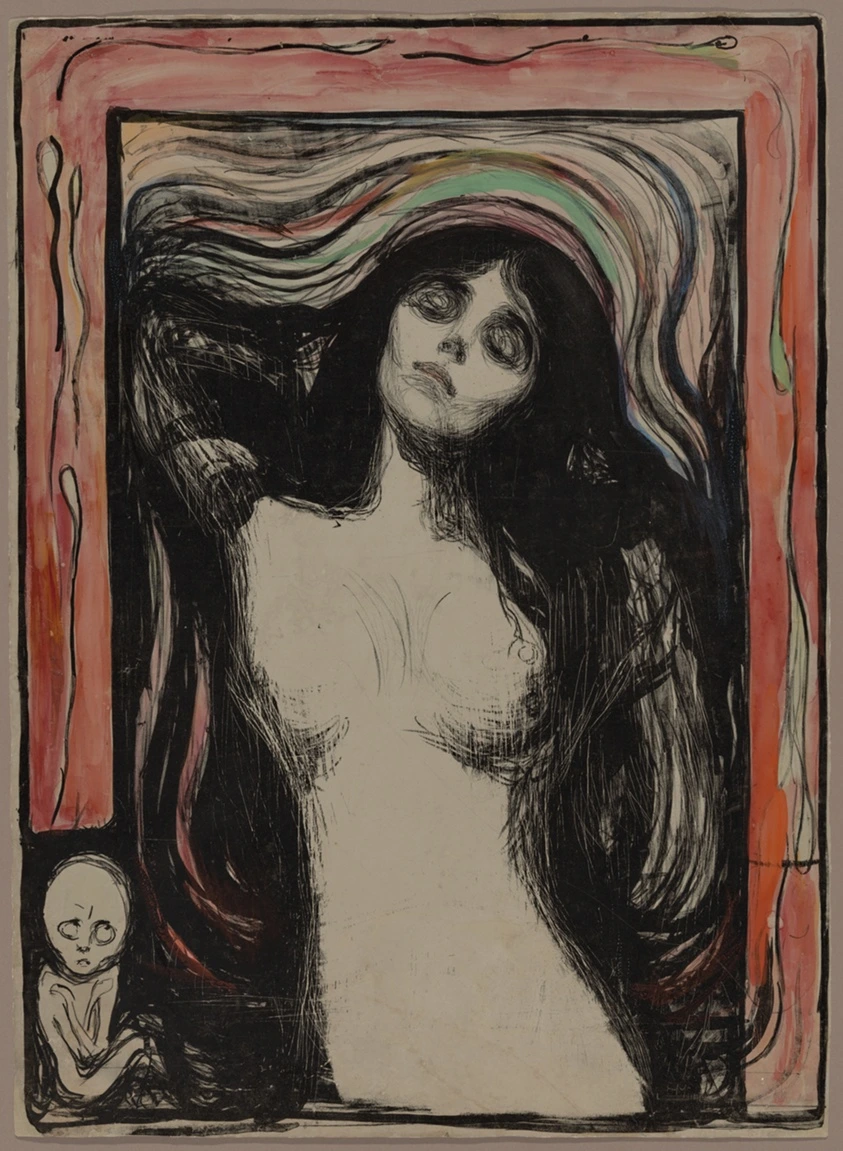
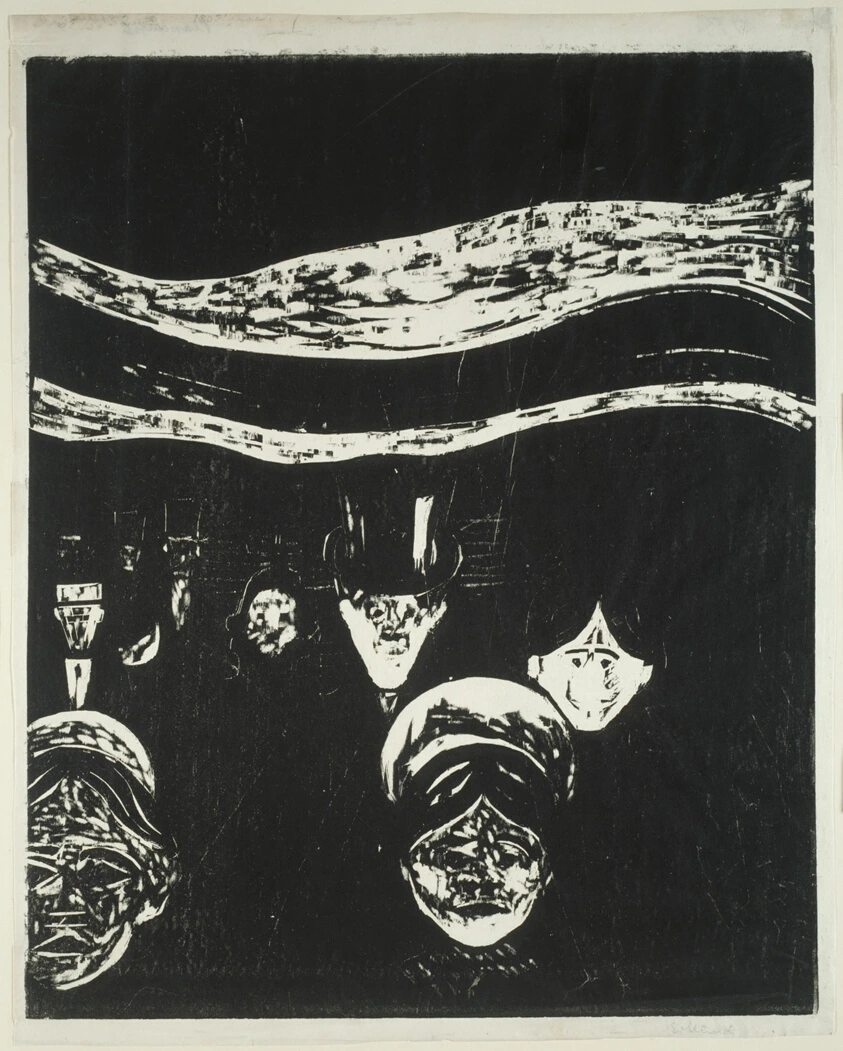
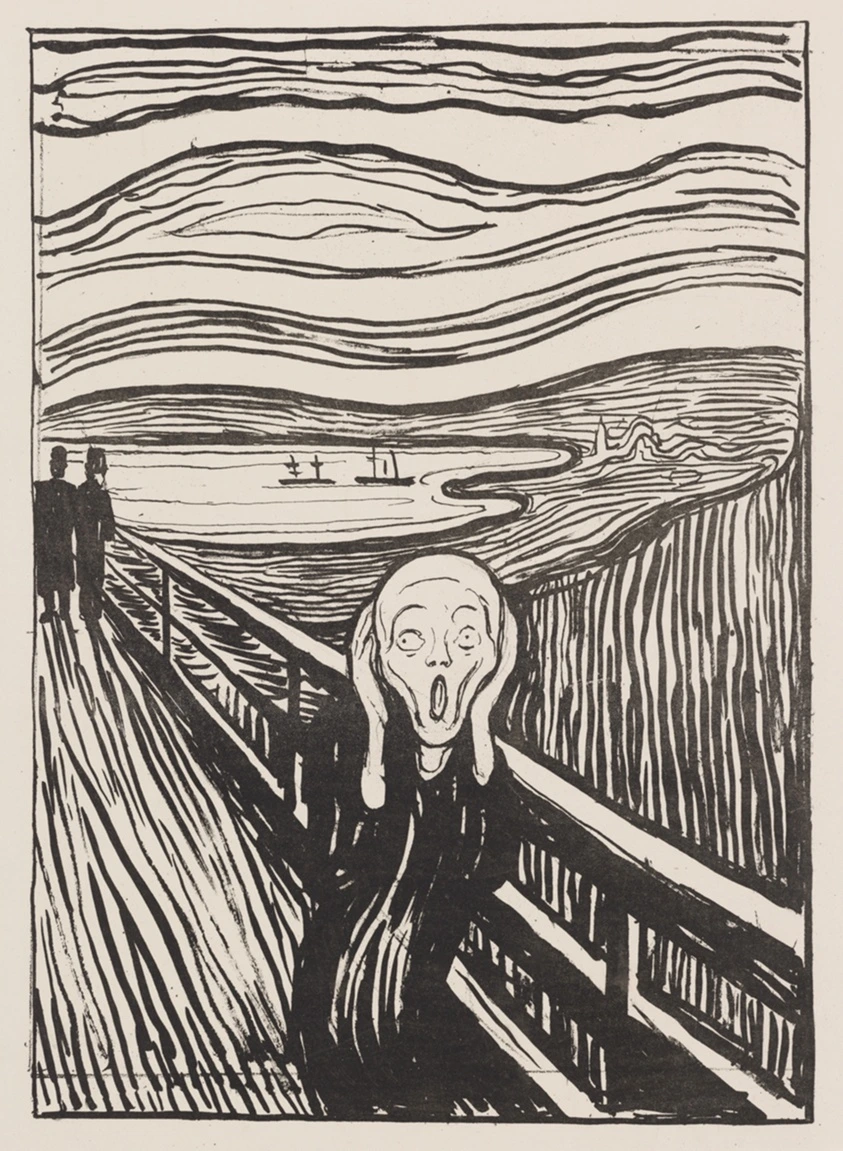
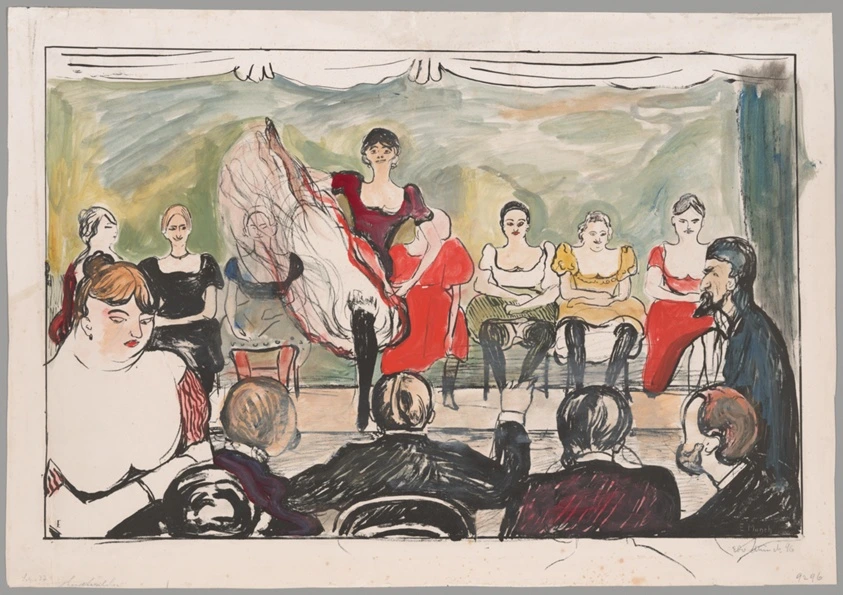
"Tingletangle" is an 1895 lithograph by Edvard Munch that captures the Norwegian Expressionist master in his most coloristically experimental and narratively ambiguous mode, the image showing a dance hall or cabaret scene rendered with the lithograph in black ink with additions in brush and watercolor on ivory wove paper, the technique creating a surface of extraordinary chromatic richness and narrative suggestion. The composition is a large print—image 41.5 × 63.9 centimeters, sheet 48.7 × 69.8 centimeters—showing a dance hall scene with the lithograph and watercolor additions creating a surface of extraordinary visual density and chromatic vibrancy. The hand-applied watercolor adds a dimension of painterly warmth and chromatic variation that suggests both the physical reality of the dance hall and the psychological complexity of the human interactions taking place within it. The 1895 date places this work in the period of Munch's most intensive production of color lithographs and his exploration of the narrative possibilities of the print medium. Art historians have connected this print to the broader tradition of the dance hall in European art, from the paintings of Toulouse-Lautrec to the prints of the German Expressionists, noting that Munch's treatment is more focused on the psychological suggestion and the chromatic warmth, the transformation of social observation into personal vision, than the documentary record or the social critique of these other traditions.
Cultural Impact
This 1895 lithograph made dance hall chromatically narrative through large 41cm black-ink painterly watercolor warmth and ivory-paper visual density, using intensive color-lithograph period to transform cabaret social observation into personal psychological vision beyond Toulouse-Lautrec documentary social critique.
Why It Matters
It matters because Munch printed a dance hall and painted over it by hand, making the paper feel like it was spinning with music and longing—proving that even a print could dance if the watercolor was free enough.