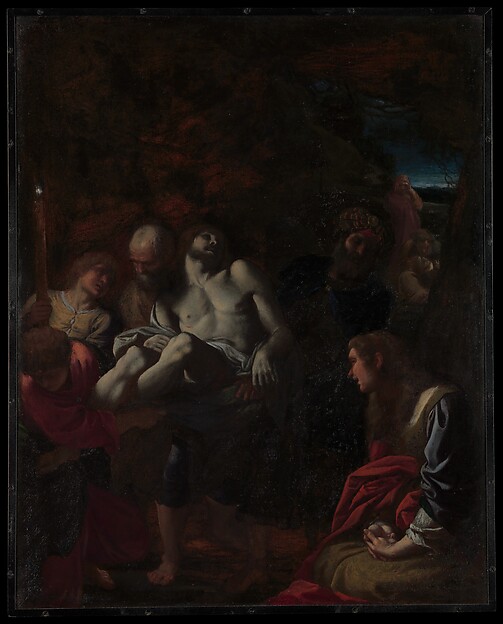
Christ of Caprarola

Description

Although not found in the canonical gospels, the Lamentation over the dead body of Christ was a popular subject in Catholic Italy during the 16th century. Annibale Carracci himself painted it no less than six times. This print, which marks his return to printmaking after a brief hiatus, signals a mature use of the medium of etching to give immediacy to a familiar theme. By employing an unusually fine etching tool as well as the drypoint technique, the artist produced shimmering lines that emphasize the mood of agitated mourning. The title refers to the small city of Caprarola, 50 miles from Rome, where Carracci executed and signed the print.

Christ of Caprarola

Annibale Carracci

1597

Accession Number

43000

Medium

Etching, with engraving and drypoint, on ivory laid paper

Dimensions

12.4 × 16 cm (4 15/16 × 6 5/16 in.)

Classification

print

Museum

The Art Institute of Chicago

Chicago, United States

Credit Line

The Charles Deering Collection
Background & Context

Background Story

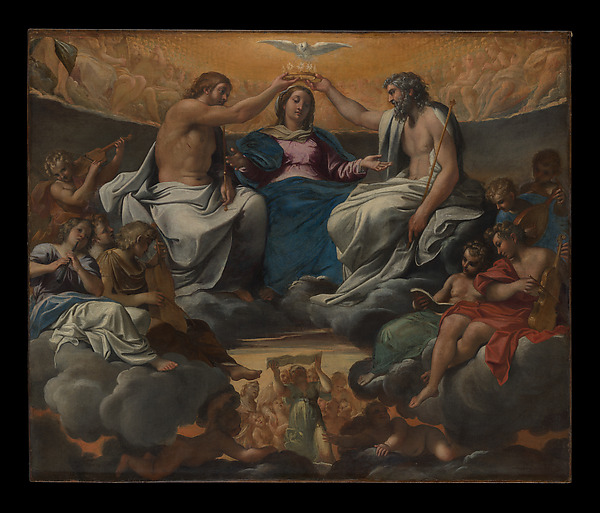
Annibale Carraccis Christ of Caprarola, created in 1597, is an etching with engraving and drypoint that demonstrates the artists virtuosity as a printmaker and his pivotal role in reforming Italian art at the turn of the 17th century. The print depicts Christ in a devotional image type associated with the sanctuary at Caprarola, combining the emotional intensity that would become hallmarks of Baroque spirituality with the compositional clarity and naturalism that the Carracci family championed against Mannerist excess. Annibale uses the etching needle to create flowing, calligraphic lines that convey movement and emotion with a spontaneity impossible in pure engraving, while the drypoint additions create rich, velvety burrs that model Christs form with sculptural weight. The combination of etching, engraving, and drypoint in a single plate was technically ambitious, allowing Annibale to exploit the distinctive qualities of each medium: etching for fluid contours and atmospheric backgrounds, engraving for sharp details and deep shadows, and drypoint for soft tonal transitions. This print dates from the period when Annibale was establishing his reputation in Rome through the Palazzo Farnese frescoes, and its devotional subject and accomplished technique reflect the Carracci program of combining classical grandeur with naturalistic observation and emotional immediacy.

Cultural Impact

Annibale Carraccis prints were instrumental in disseminating the Carracci reform style throughout Italy and beyond. His combination of technical virtuosity and emotional accessibility in print set a standard that influenced Guercino, Domenichino, and the entire Baroque tradition, making prints a primary vehicle for stylistic change.

Why It Matters

A masterful mixed-technique print by Annibale Carracci combining etching, engraving, and drypoint to create a devotional image of Baroque emotional intensity, exemplifying the Carracci reform of Italian art through technical innovation and naturalistic piety.