Provenance
Daniel-Henry Kahnweiler, Paris by 1939 [Paul-Klee Stiftung, 2000]. Karl Nierendorf Gallery, New York, by 1939 until at least 1940 [Paul-Klee Stiftung, 2000 and New York 1940 exh. cat.]. Harold M. and Claire Florsheim, Highland Park, Ill., by 1941 [Chicago 1941 exh. cat.]. Katherine Kuh Gallery, Chicago [according to telephone conversation in October 1991 between Katherine Kuh and AIC curator Charles Stuckey]. Dr. Ernest B. and Claire Zeisler (formerly Claire Florsheim), Chicago by June 1960 to September 30, 1991 [conservation report June 30, 1960 by Louis Pomerantz in curatorial file]; bequeathed to the Art Institute, 1991.
Accession Number
111668
Medium
Oil and plaster, over gauze, on panel
Dimensions
56.5 × 35.6 cm (22 1/4 × 14 in.)
Classification
Painting
Credit Line
Bequest of Claire Zeisler
Background & Context
Background Story
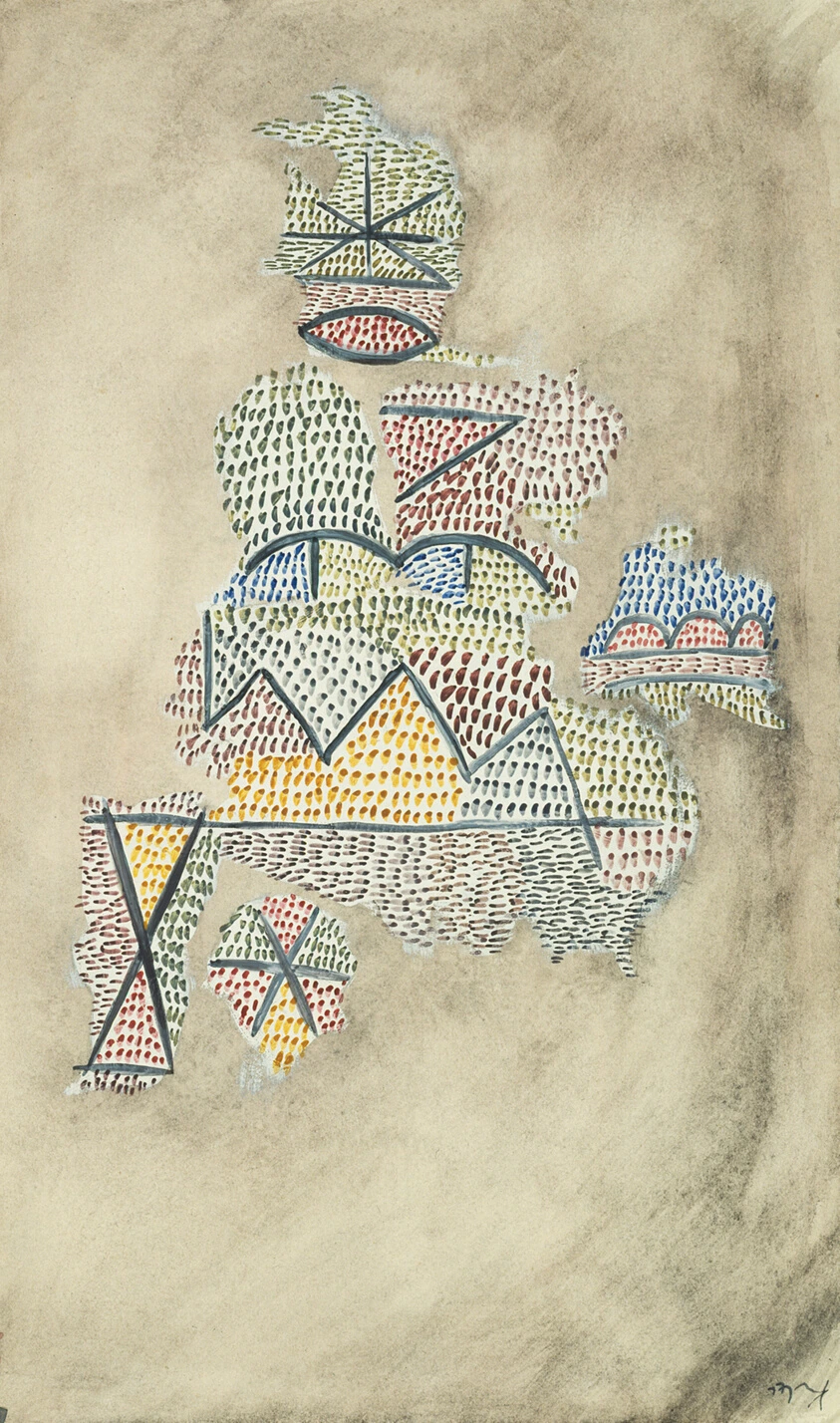
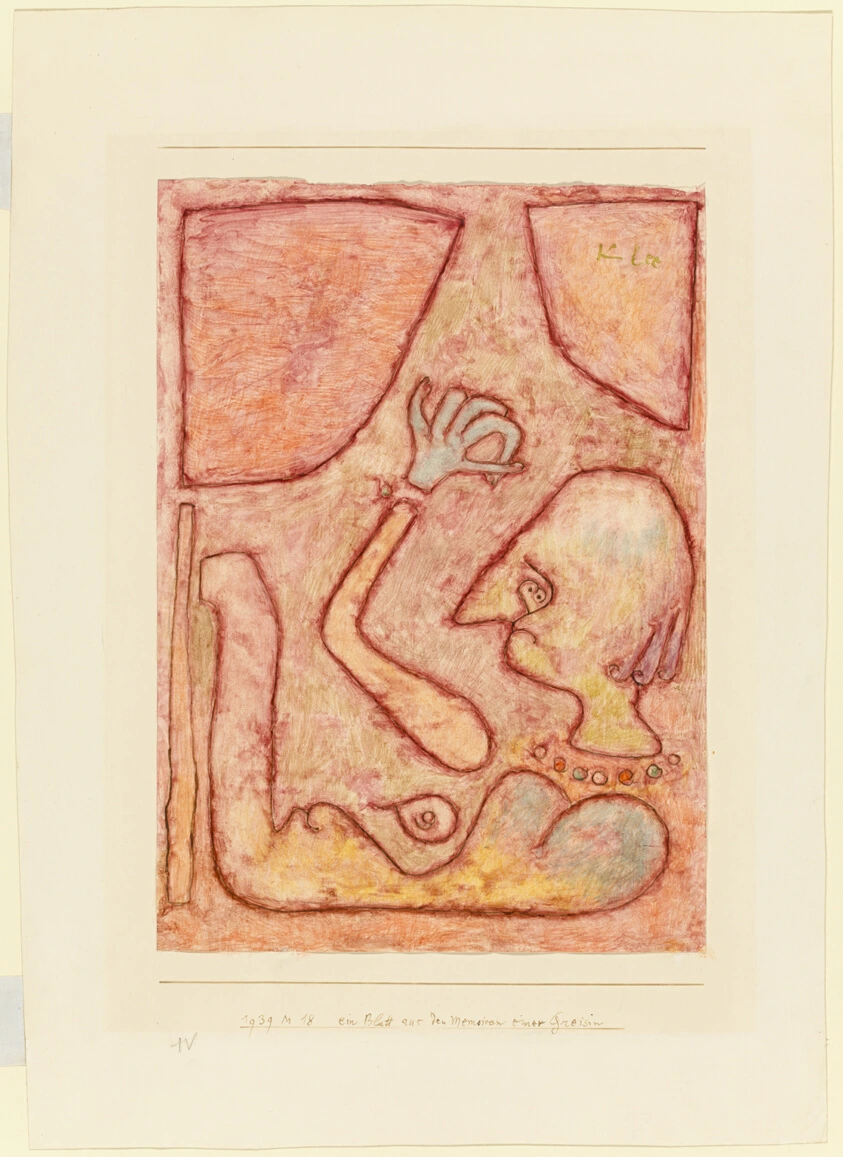
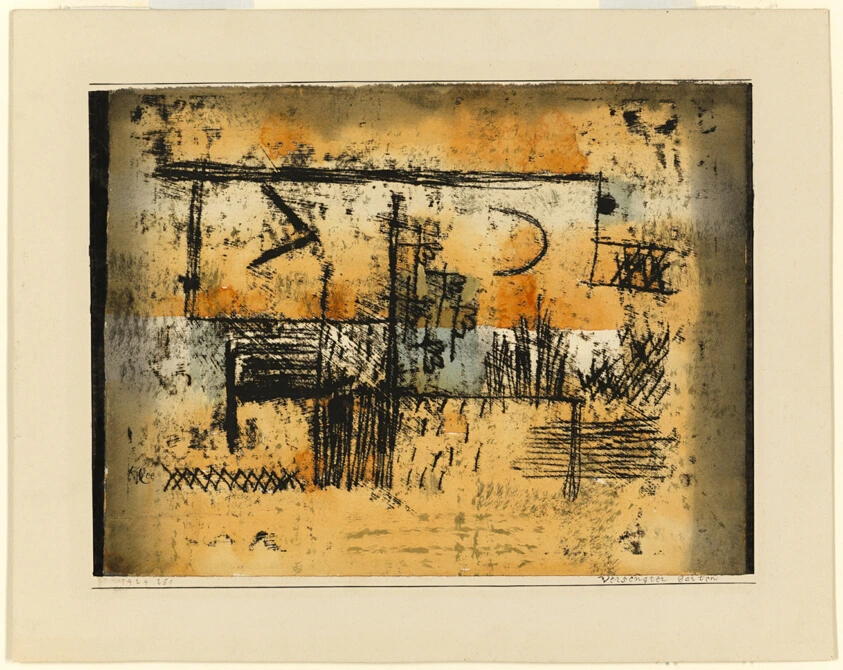
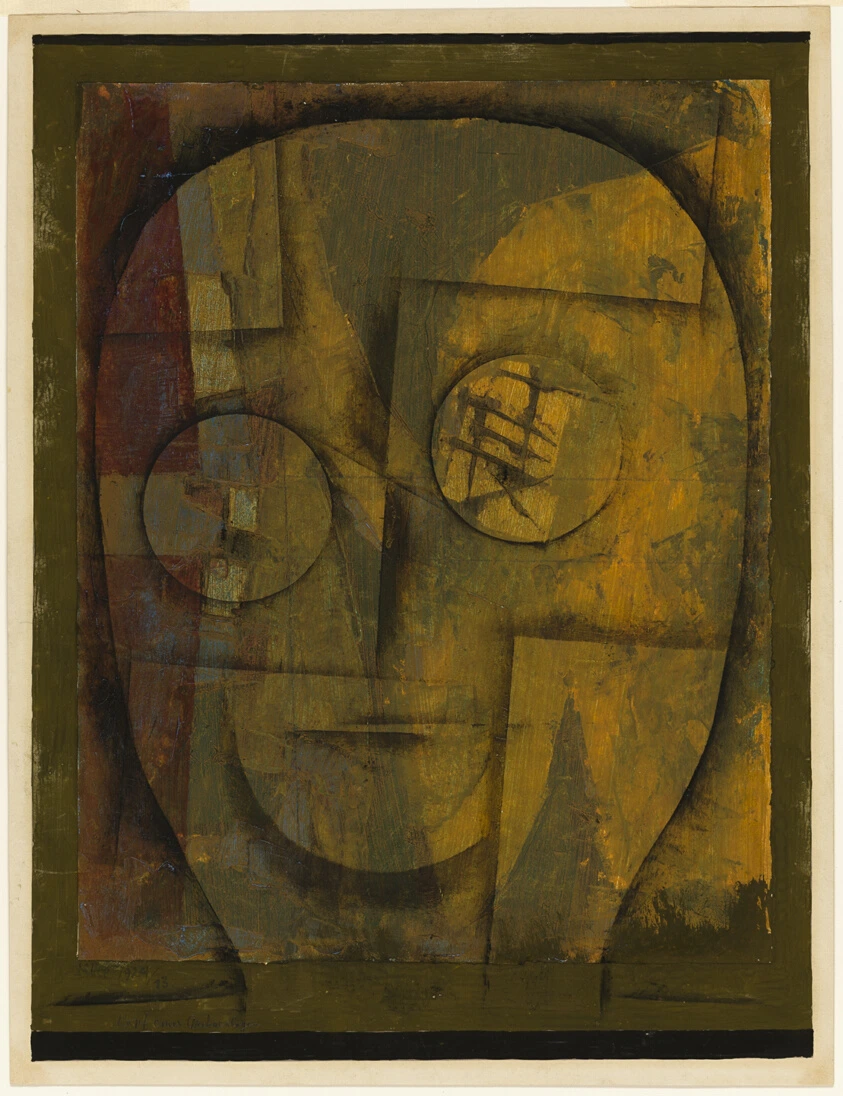
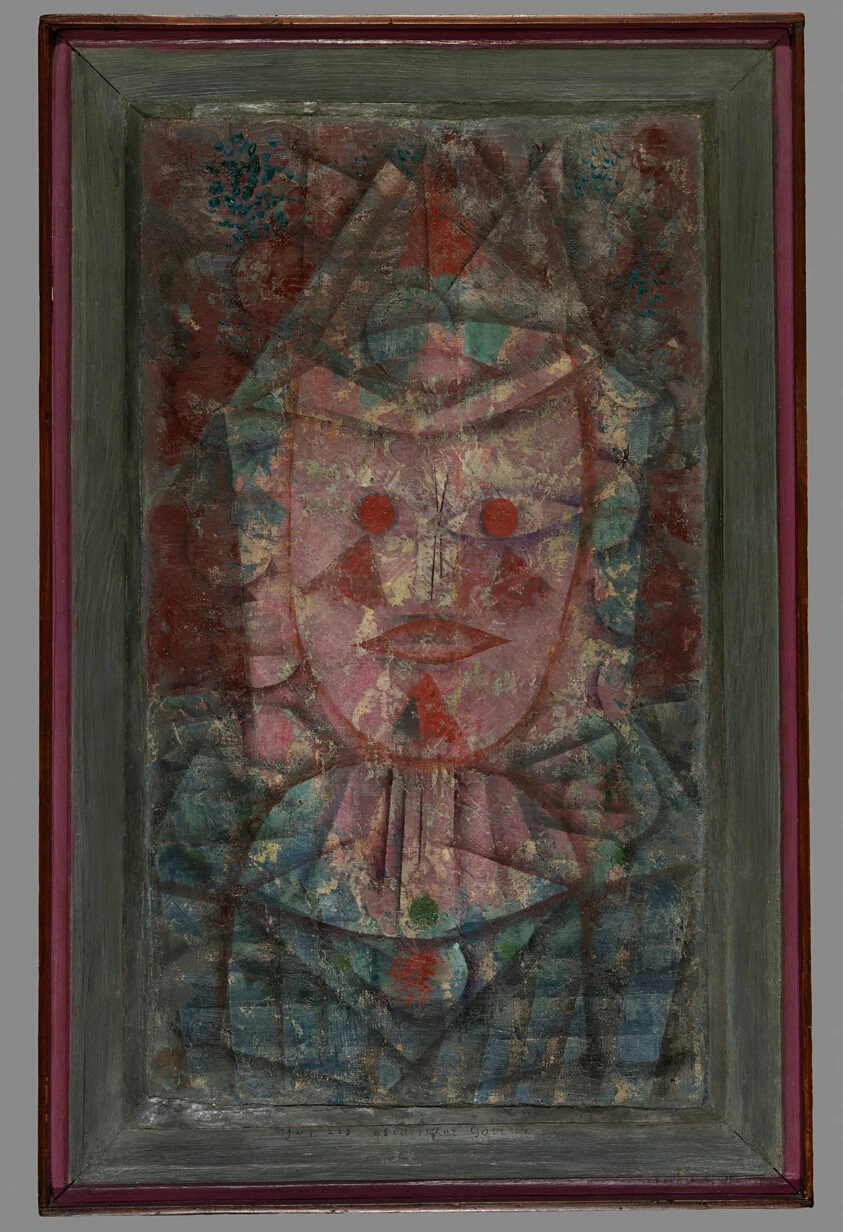
Paul Klees Asiatic God from 1924 is an oil and plaster painting over gauze on panel that exemplifies the artists lifelong fascination with non-Western art and his ability to create images that suggest the authority and mystery of religious icons without depicting any specific deity or religious tradition. The title Asiatic God identifies the figure as a divinity from an unspecified Asian culture, a deliberate vagueness that reflects Klees interest in the formal qualities of religious art rather than its specific iconographic content. The oil and plaster medium, applied over gauze on a panel, creates a surface that has the textured, weathered quality of an ancient wall painting or a fresco that has been exposed to the elements for centuries, giving the image the patina of age and authenticity that reinforces its claim to sacred authority. The gauze underlayer, visible through the painted surface in some areas, creates a texture that suggests the weave of an ancient fabric or the surface of a deteriorating wall, adding a physical dimension to the paintings reference to the past. The year 1924 places this painting in the period when Klee was teaching at the Bauhaus and developing the theoretical framework that would inform his teaching, and the Asiatic God can be understood as a practical demonstration of the principle that pictorial construction is independent of representational content, a principle that Klee articulated in his lectures and that is visible in the paintings geometric structure.
Cultural Impact
Klees engagement with non-Western art was a significant influence on the development of European modernism, and Asiatic God demonstrates his ability to create images that suggest religious authority without depicting specific iconographic content. The painting influenced the development of modern religious art and the broader tradition of European artists engaging with non-Western visual traditions.
Why It Matters
A 1924 oil and plaster painting over gauze on panel by Klee depicting an Asiatic God with the weathered texture of an ancient wall painting, combining non-Western visual traditions with Bauhaus pictorial construction in a surface that suggests sacred authority through material authenticity.