Provenance
The artist [1870-1953]; his estate; by inheritance to his son, John C. Marin, Jr. [1914-1988], Cape Split, Maine; gift 1986 to NGA.
Accession Number
1986.54.3
Medium
oil on canvas board
Dimensions
overall: 20.3 x 25.2 cm (8 x 9 15/16 in.)
Classification
Painting
Credit Line
Gift of John Marin, Jr.
Tags
Painting Early Modern (1901–1950) Oil Painting Canvas Board American
Background & Context
Background Story
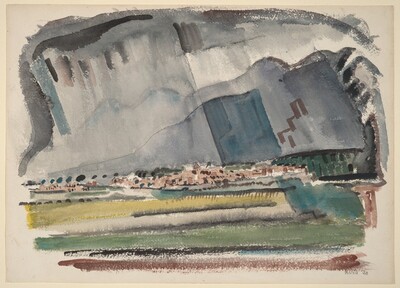
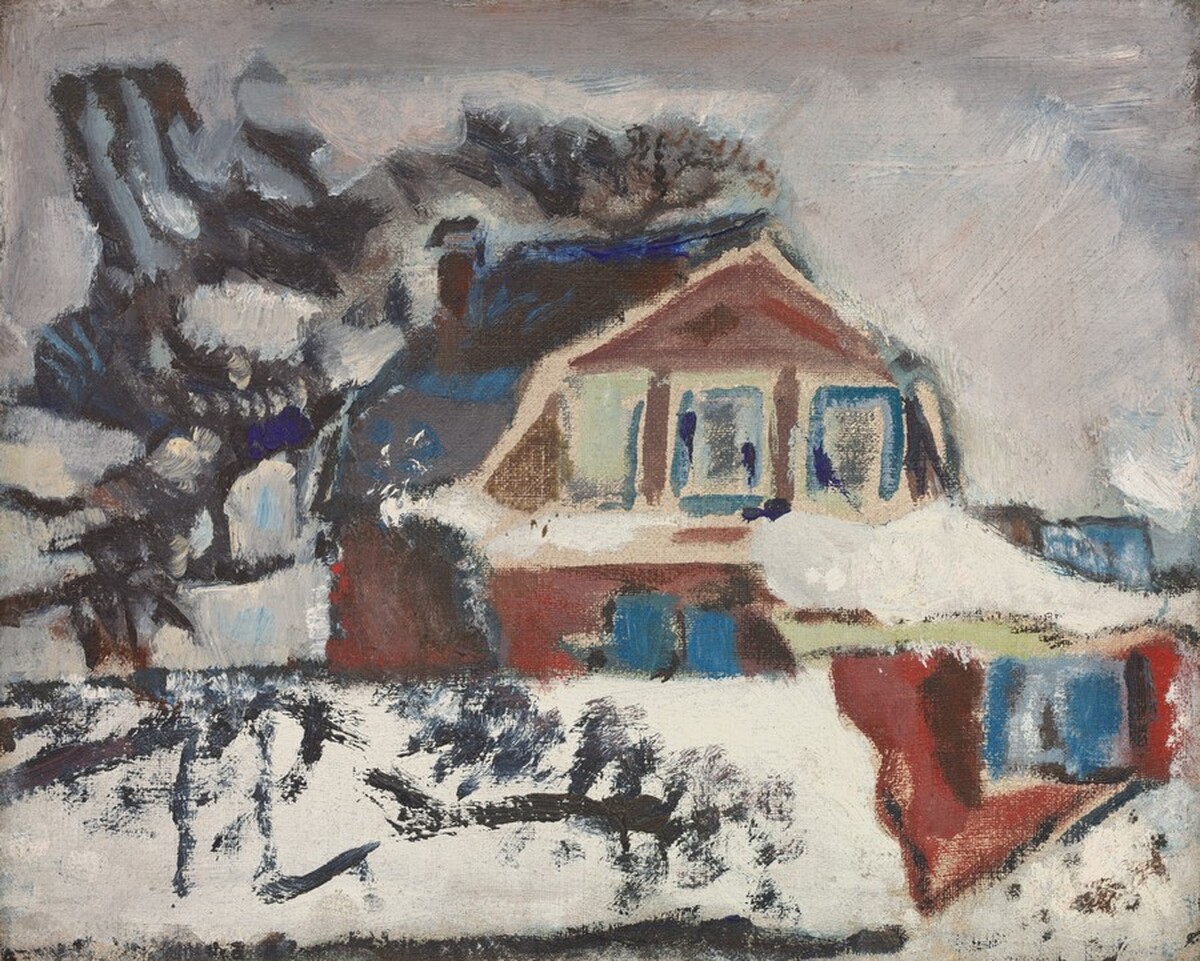
The Dutch roof of the title — a gambrel roof that echoes the colonial architecture of the New York/New Jersey region — becomes a structural element in Marin's compositional vocabulary. The house is recognizable, but it has been subjected to the spatial fragmentation and formal reorganization that characterize Marin's mature painting. The roofline is not merely described but reorganized, its angles and planes becoming a rhythmic pattern that asserts the painting's own logic alongside the architectural subject's. This tension between recognizable subject and abstract structure is the engine of Marin's best work.
Cultural Impact
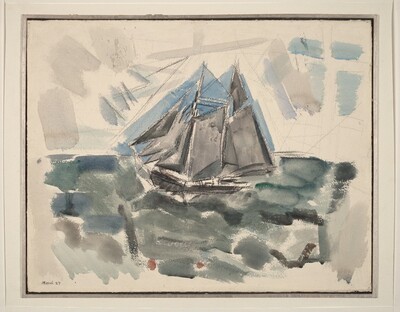
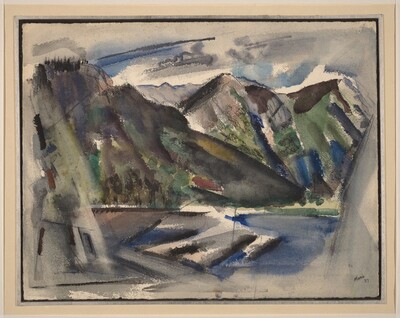
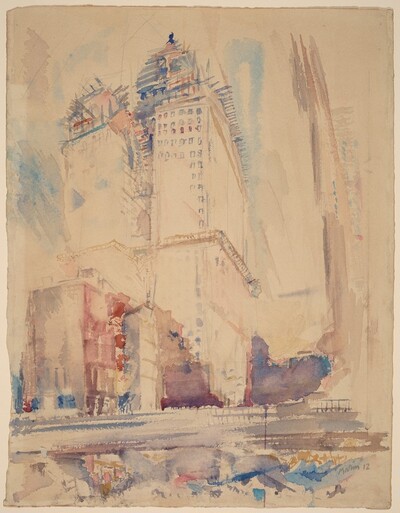
Marin's houses and buildings are among his most original contributions to American painting. Where other modernists (Sheeler, Demuth) approached architecture with Precisionist clarity, Marin approached it with Expressionist energy — the building is not a static object but a dynamic form that can be reorganized, fragmented, and rebuilt on canvas.
Why It Matters
House with Dutch Roof is Marin proving that a colonial gambrel roof can be as dynamically fragmented as a Manhattan skyscraper. The modernist eye finds energy everywhere, even in the modest architecture of small-town New Jersey.