Provenance
The artist [1870-1953]; his estate; by inheritance to his son, John C. Marin, Jr. [1914-1988], Cape Split, Maine; gift 1986 to NGA.
Accession Number
1986.54.1
Medium
oil on canvas
Dimensions
overall: 22.8 x 29.8 cm (9 x 11 3/4 in.)
Classification
Painting
Credit Line
Gift of John Marin, Jr.
Tags
Painting Impressionist & Modern (1851–1900) Oil Painting Canvas American
Background & Context
Background Story
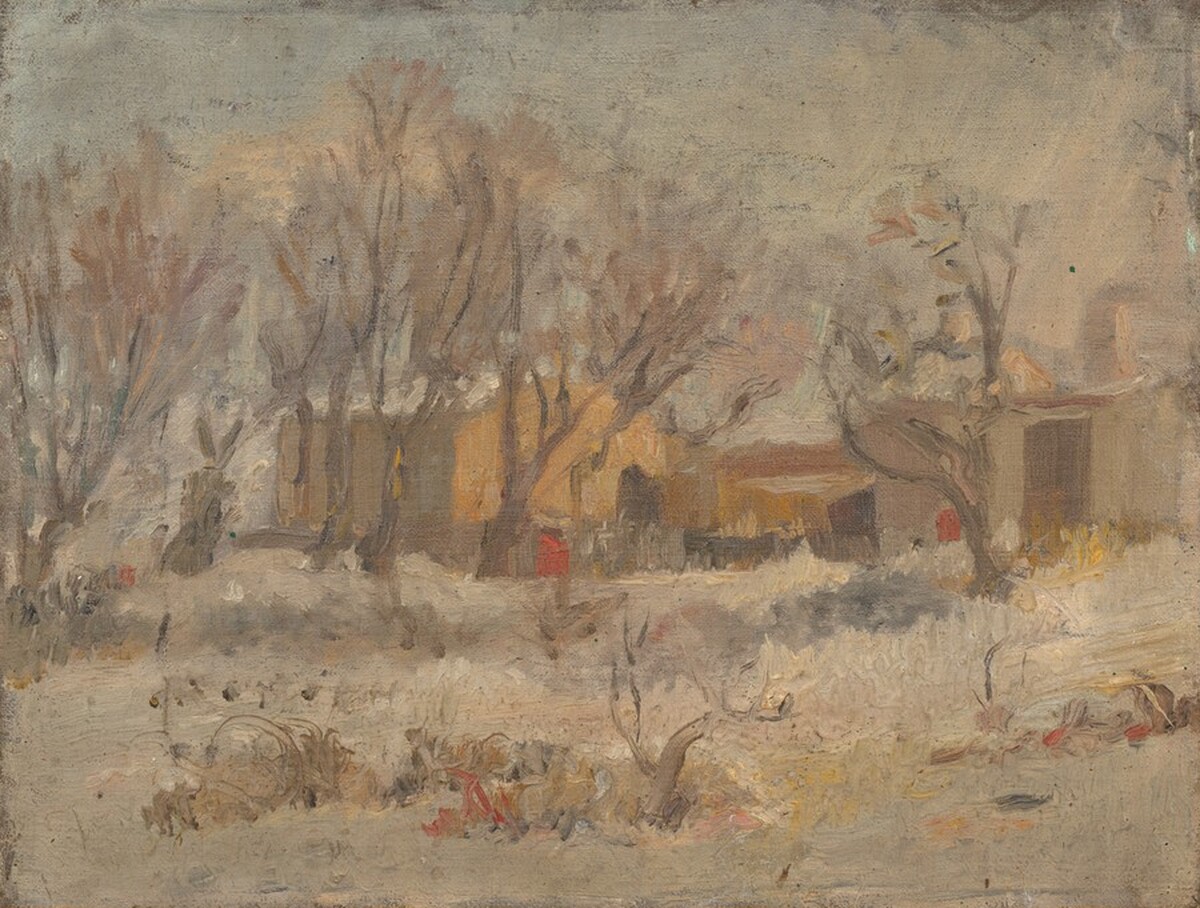
This early oil painting from around 1900 predates Marin's transformation into America's foremost modernist watercolorist and shows him working firmly within the late Impressionist landscape tradition. The winter subject — bare trees, snow-covered ground, a muted palette — is handled with the kind of tonal subtlety that American painters had developed in the decades after Impressionism's first impact. There is no hint yet of the radical fragmentation and dynamic brushwork that would characterize Marin's mature work, but the painting already shows his interest in the structural relationship between the vertical lines of trees and the horizontal expanse of snow-covered ground.
Cultural Impact
Marin's early landscape paintings are important precisely because they demonstrate how far he had to travel to reach his mature style. Before he encountered European modernism — particularly the work of Cézanne and the Fauves — Marin was a competent but conventional landscape painter. The transformation that followed his exposure to avant-garde ideas in New York and Paris was one of the most dramatic in American art history.
Why It Matters
Winter Landscape is the 'before' picture in John Marin's artistic revolution. Knowing what came after makes this conventional winter scene more interesting than it would otherwise be: the seeds of structural thinking are here, waiting for modernism to activate them.