Accession Number
1986.54.35
Medium
watercolor
Dimensions
N/A
Classification
Drawing
Credit Line
Gift of John Marin, Jr.
Tags
Drawing Impressionist & Modern (1851–1900) Watercolor American
Background & Context
Background Story
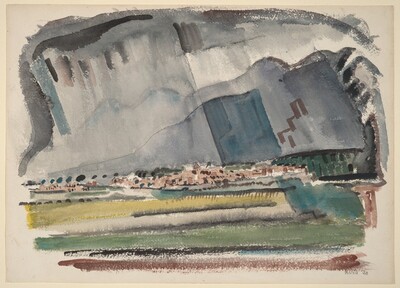
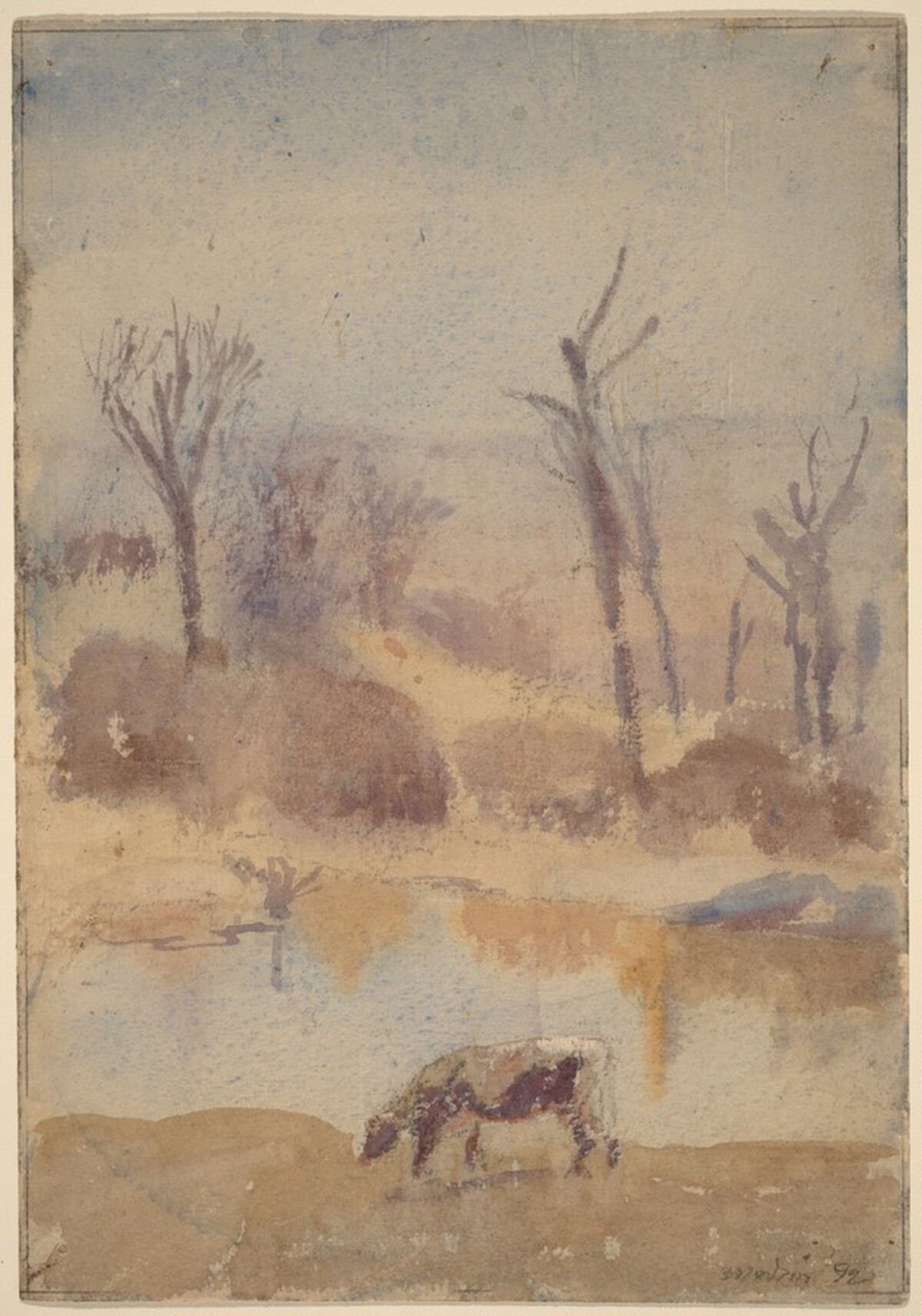
West New York, New Jersey, painted in 1892, is one of John Marin earliest surviving works and a document of his artistic origins before he discovered modernism. The painting depicts the industrial landscape across the Hudson from Manhattan, its factories and smokestacks rendered in a conventional realist style.
Marin did not encounter modernism until 1905, when he traveled to Europe and discovered the work of Cezanne, Matisse, and the Fauves. But this early work reveals the interests that would define his mature art: the industrial landscape, the American scene, and the relationship between natural and built environments.
The painting most interesting feature is its treatment of the industrial waterfront. The factories and warehouses of West New York dominate the composition, rendered with topographic precision that anticipates the Precisionist paintings of Charles Sheeler and Charles Demuth. Marin industrial waterfront, painted in 1892, is one of the earliest American paintings to treat the factory landscape as a subject for serious art.
This early work reveals the seeds of what Marin would become: an artist whose entire career would be devoted to finding visual equivalents for the energy of the American landscape, both natural and built.
Cultural Impact
Marin early industrial landscapes anticipate the most important development in American painting of the early 20th century: the discovery that the American industrial landscape was a worthy subject for the most ambitious art. Their influence on Precisionism was indirect but significant.
Why It Matters
West New York, New Jersey captures the future American modernist before his revolution, painting a landscape that would become a major subject for 20th-century art. The factories and smokestacks are already the subjects that Marin would spend his career investigating.