Accession Number
4027
Medium
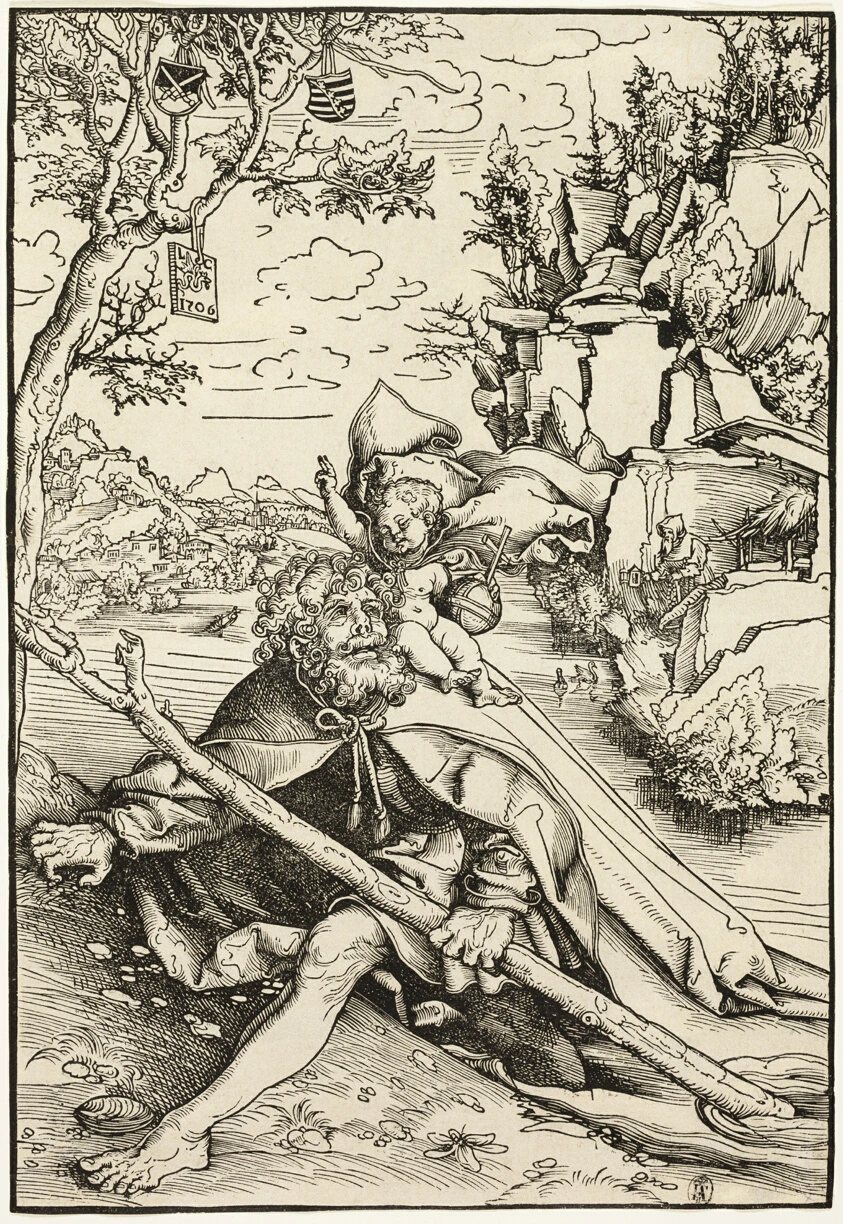
Engraving in black on cream laid paper, laid down on cream laid paper
Dimensions
Image/plate/sheet: 28.6 × 23 cm (11 5/16 × 9 1/16 in.)
Classification
engraving
Credit Line
Bequest of Mrs. Potter Palmer, Jr.
Background & Context
Background Story
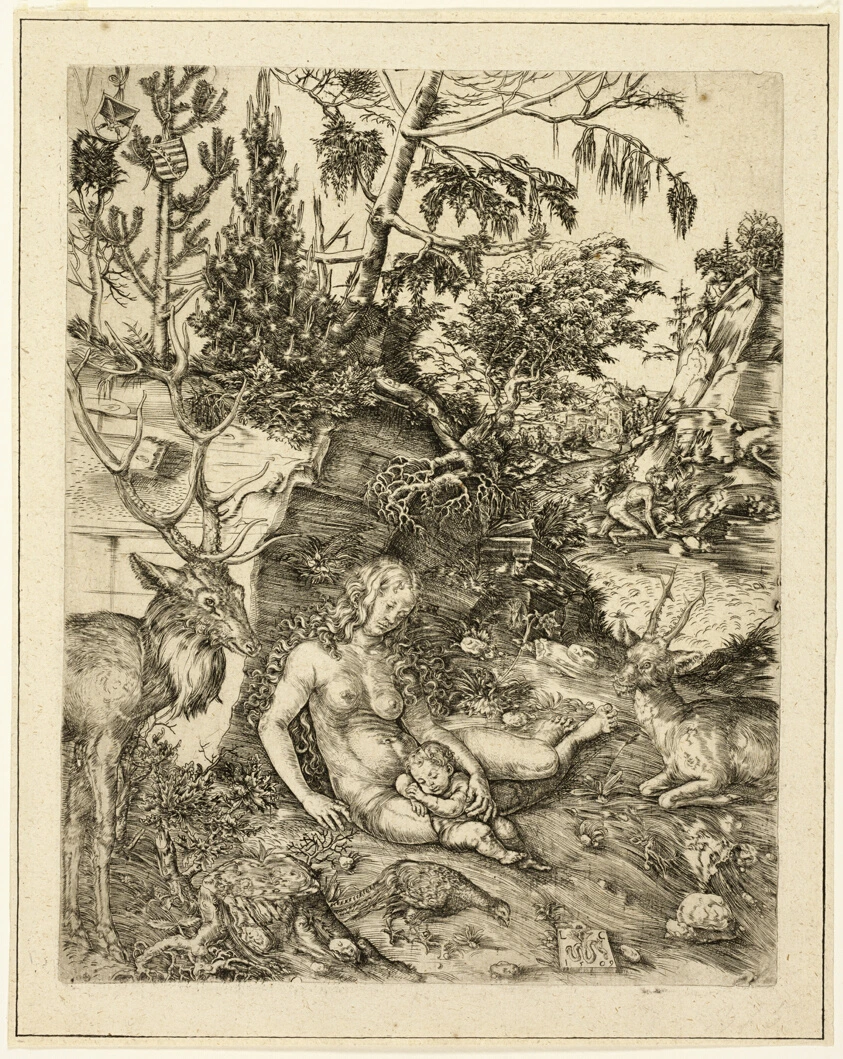
This engraving of The Penitence of Saint John Chrysostom by Lucas Cranach the Elder captures the German Renaissance master in one of his most dramatically expressive and spiritually intense compositions, the image showing the Church Father in the wilderness with the same attention to the physical and emotional extremes of penitence that characterized Cranach's religious works for the Saxon court. The composition is a large engraving—28.6 × 23 centimeters—showing Saint John Chrysostom in a rocky landscape, the saint's body rendered with the muscular precision and the dramatic chiaroscuro that made Cranach the leading graphic artist of the German Reformation. The engraving technique creates a surface of extraordinary clarity and tonal range, the fine lines suggesting both the physical texture of the rocks and the spiritual radiance of divine penitence. The cream laid paper provides a warm, luminous ground that makes the black engraved lines appear rich and substantial. The 1509 date places this work in the early period of Cranach's printmaking activity, when he was producing the engravings that established his reputation as a technically innovative and spiritually committed graphic artist. Art historians have connected this print to the broader tradition of the penitent saint in German art, from the woodcuts of Dürer to the paintings of Grünewald, noting that Cranach's treatment is more focused on the physical drama and the emotional intensity of the saint's bodily mortification than the theological symbolism or the mystical ecstasy of these other traditions.
Cultural Impact
This 1509 engraving made penitent saint physically dramatic through large 28cm muscular crisp-line chiaroscuro and cream-paper luminous warmth, using early-Renformation graphic innovation to focus on bodily mortification intensity beyond Dürer theological symbolism.
Why It Matters
It matters because Cranach carved a saint in the wilderness and made the paper feel like it was hearing his bones crack with devotion—proving that even penitence could be beautiful if the line was fierce enough.