Provenance
Estate of the artist [sale, Fifth Avenue Art Galleries, New York, February 12-14, 1895, as The Lonely Farm, Nantucket]; George E. Tewksbury, 1895; Lewis G. Tewksbury [sale, Benjamin S. Wise, Auctioneer, New York, April 24-26, 1902, as The Lonely Farm]; with Harry Reinhardt Galleries, Chicago; Edward B. Butler, Chicago; given to the Art Institute of Chicago, 1914.
Accession Number
69844
Medium
Oil on canvas
Dimensions
78.1 × 116.2 cm (30 3/4 × 45 3/4 in.)
Classification
Painting
Credit Line
Edward B. Butler Collection
Background & Context
Background Story
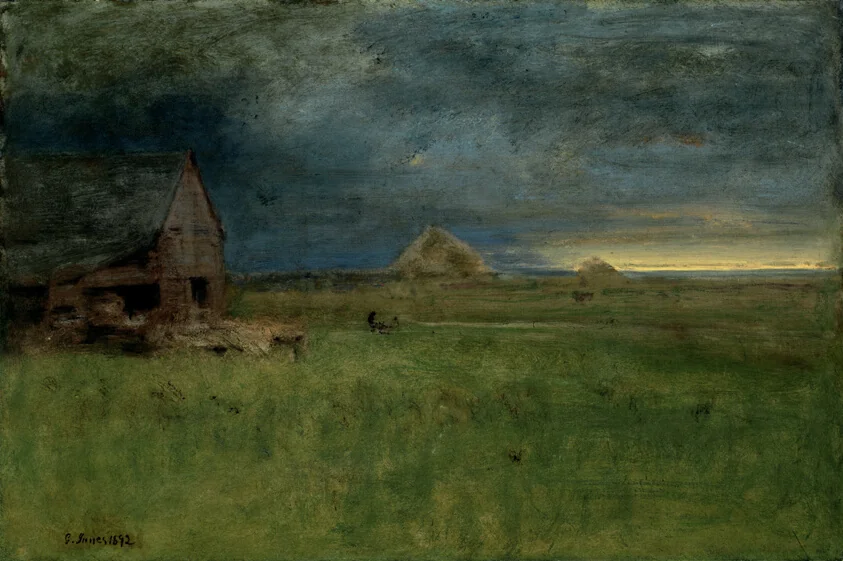
George Inness's "The Lonely Farm, Nantucket" (1892) is an oil on canvas depicting a solitary farm building in the landscape of Nantucket Island, off the coast of Massachusetts. The title emphasizes the isolation of the farm—"lonely" suggests both its physical remoteness and the emotional mood it evokes. Inness's treatment is characteristically atmospheric, the farm building small within the vast landscape, the soft light and muted colors creating a mood of quiet solitude. The palette is subdued, with the grays, browns, and soft greens of the coastal landscape. The brushwork is loose and expressive, the forms dissolving into the atmosphere. Nantucket, with its open, windswept landscapes and its sense of isolation, was a subject well suited to Inness's meditative vision. This painting belongs to the final period of Inness's career, when his Tonalist style had achieved its fullest development and his interest in the spiritual dimensions of landscape was at its most intense.
Cultural Impact
Inness's Nantucket landscapes capture the particular character of the island's open, windswept terrain, finding spiritual significance in its isolation and exposure to the elements.
Why It Matters
This painting of a lonely farm on Nantucket captures the quiet solitude of the island landscape, the isolated building becoming a symbol of human presence in the vastness of nature.