Description
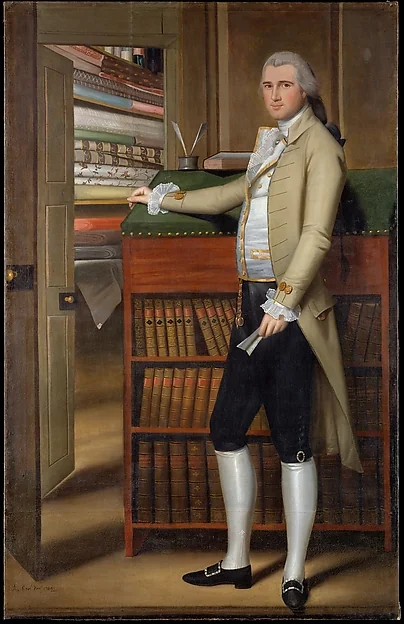
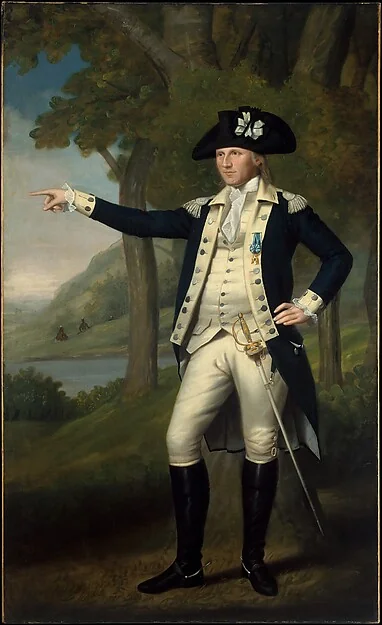
Ralph Earl garnered portrait commissions primarily from wealthy rural landowners in Connecticut, New York, and Vermont. A loyalist, Earl fled America for England during the Revolutionary War, developing his portrait style, in turn, by studying with Benjamin West (an American painter in London) and through contact with English artists. Returning in 1785, Earl painted this portrait of Noah Smith late in his career, having melded his British training with a simpler, linear style that appealed to his clients of the rural gentry. In this work, Smith, chief justice of the Vermont Supreme Court, sits assuredly before the viewer; the map at hand, pastoral view at left, and volumes of books behind him signal the sitter’s prominent position as a man of affairs in the young nation.
Provenance
Accession Number
2158
Medium
Oil on canvas
Dimensions
163.2 × 107.3 cm (64 1/4 × 42 1/4 in.)
Classification
Painting
Credit Line
Goodman Fund