Accession Number
84213
Medium
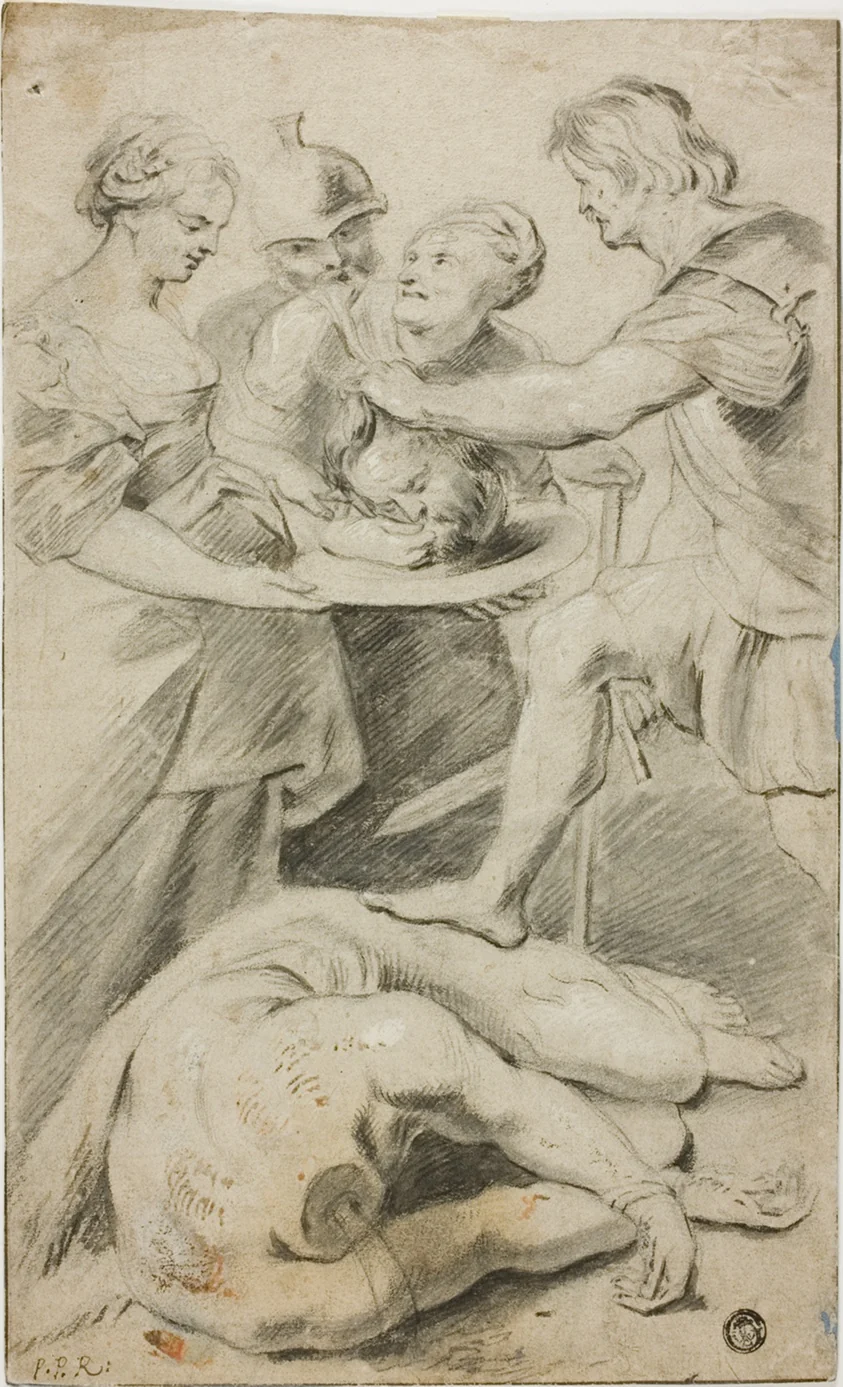
Black chalk, with brush and black ink, and gray and brown wash, heightened with lead white (partly discolored), on tan laid paper, laid down on blue laid paper
Dimensions
32.3 × 19.7 cm (12 3/4 × 7 13/16 in.)
Classification
pen and ink drawings
Credit Line
The Leonora Hall Gurley Memorial Collection
Background & Context
Background Story
Peter Paul Rubens Herodias Receiving the Head of Saint John the Baptist is a black chalk, pen and ink, and wash drawing heightened with lead white on tan laid paper that exemplifies the Baroque masters approach to the dramatic subject of the biblical narrative in which Salome presents the severed head of John the Baptist to her mother Herodias. Rubens, who was the most celebrated painter in Northern Europe in the early 17th century and whose influence on the development of Baroque art extended throughout the continent, produced drawings throughout his career that demonstrate the combinatory method of composition for which his paintings are celebrated, in which figures are arranged in dynamic poses that create a visual narrative of extreme emotional content. The chalk underdrawing provides the structural framework of the composition, while the pen and ink and wash provide the tonal modeling and atmospheric depth that give the drawing the pictorial completeness of a finished painting. The lead white highlights, which have partly discolored over time, originally provided the brilliant accents that gave the drawing the luminosity and three-dimensional presence of an oil painting. The blue laid paper onto which the tan paper is mounted provides a cool ground that enhances the warm tones of the figures and gives the composition a greater tonal range than would be possible on a single sheet.
Cultural Impact
Rubens drawings are among the most accomplished works in the history of Western draftsmanship, and their influence on the practice of drawing extends from his contemporaries through the academic tradition to the present. Herodias Receiving the Head of Saint John the Baptist demonstrates the dramatic compositional method and tonal sophistication that made his drawings models for generations of artists.
Why It Matters
A drawing by Rubens in black chalk, pen and ink, wash, and lead white highlights on tan laid paper mounted on blue paper, depicting the biblical narrative of Herodias receiving the head of John the Baptist with the dramatic compositional method and tonal sophistication of his Baroque painting practice.