Description
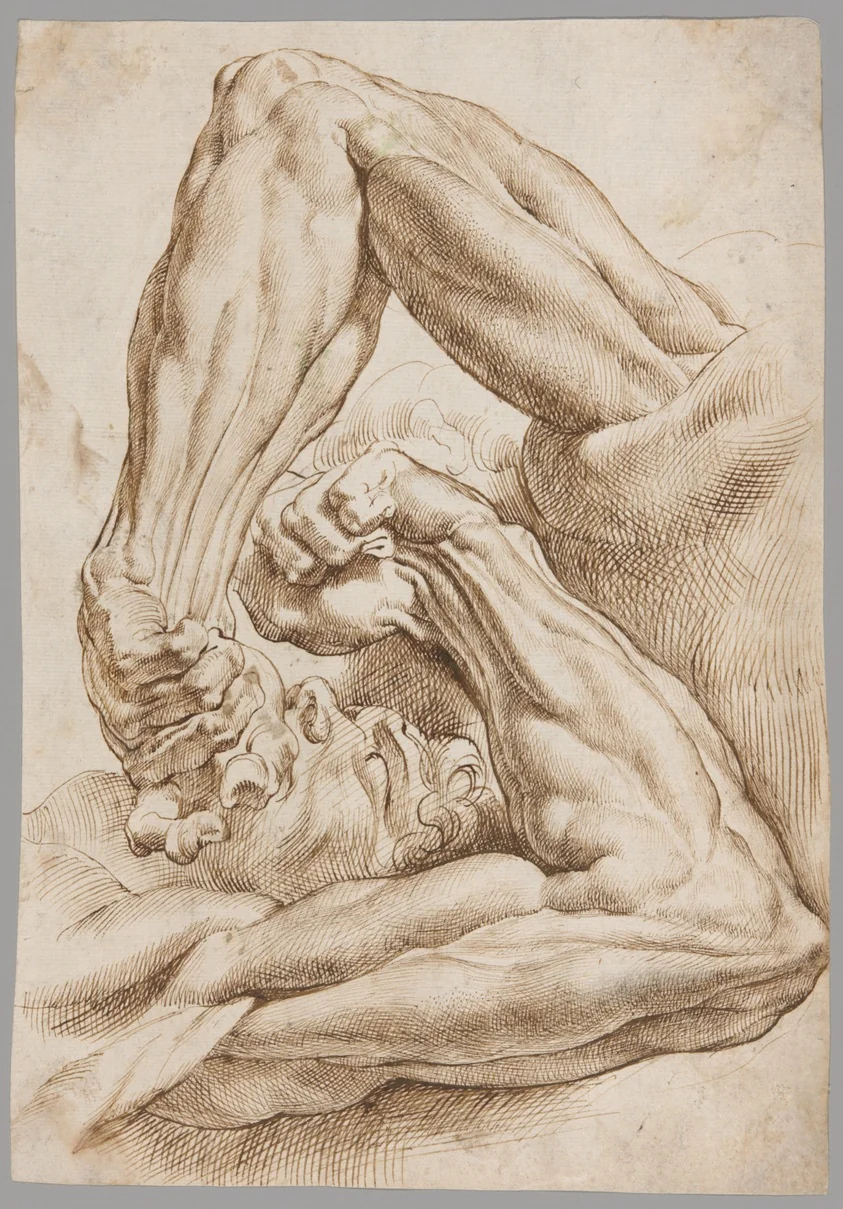
In addition to his study of Classical antiquity, Peter Paul Rubens also developed his sense of ideal anatomical form through proto-scientific treatises, some of which represented the muscles of the body with the skin flayed. Rubens adopted this manner, known as écorché, for his compelling representation of two interlocking forearms and a face. A virtuoso performance of the use of pen and ink (perhaps the most unforgiving media since it cannot be easily blended or erased), the drawing belongs to a group of about a dozen similar sheets that Rubens intended to publish as an anatomical treatise. The project was never realized, but one of the members of his workshop distributed a series of engravings years after the artist’s death that included these images together with other highlights of the artist’s repertoire.
Provenance
Accession Number
235541
Medium
Pen and brown ink on ivory laid paper
Dimensions
27.1 × 18.8 cm (10 11/16 × 7 7/16 in.)
Classification
pen and ink drawings
Credit Line
Regenstein Acquisition Fund