Painting

Description

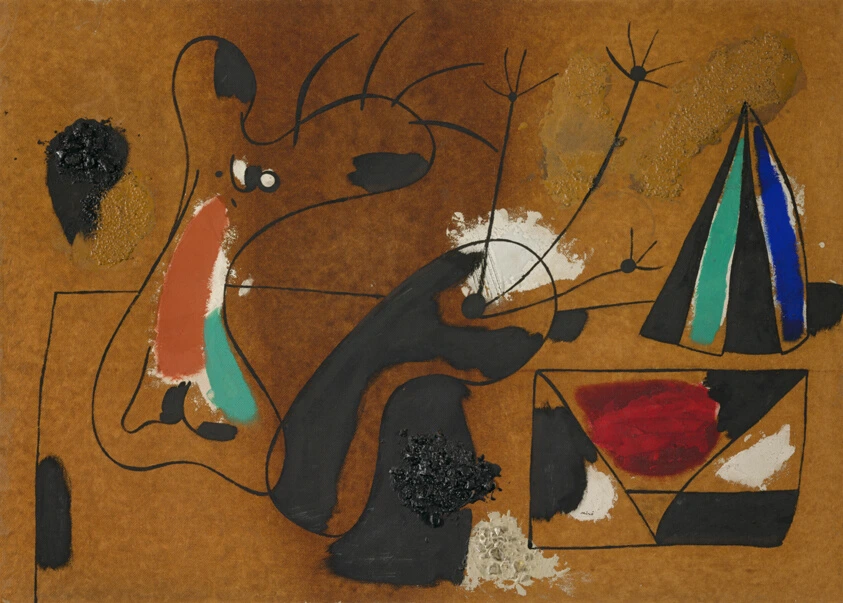
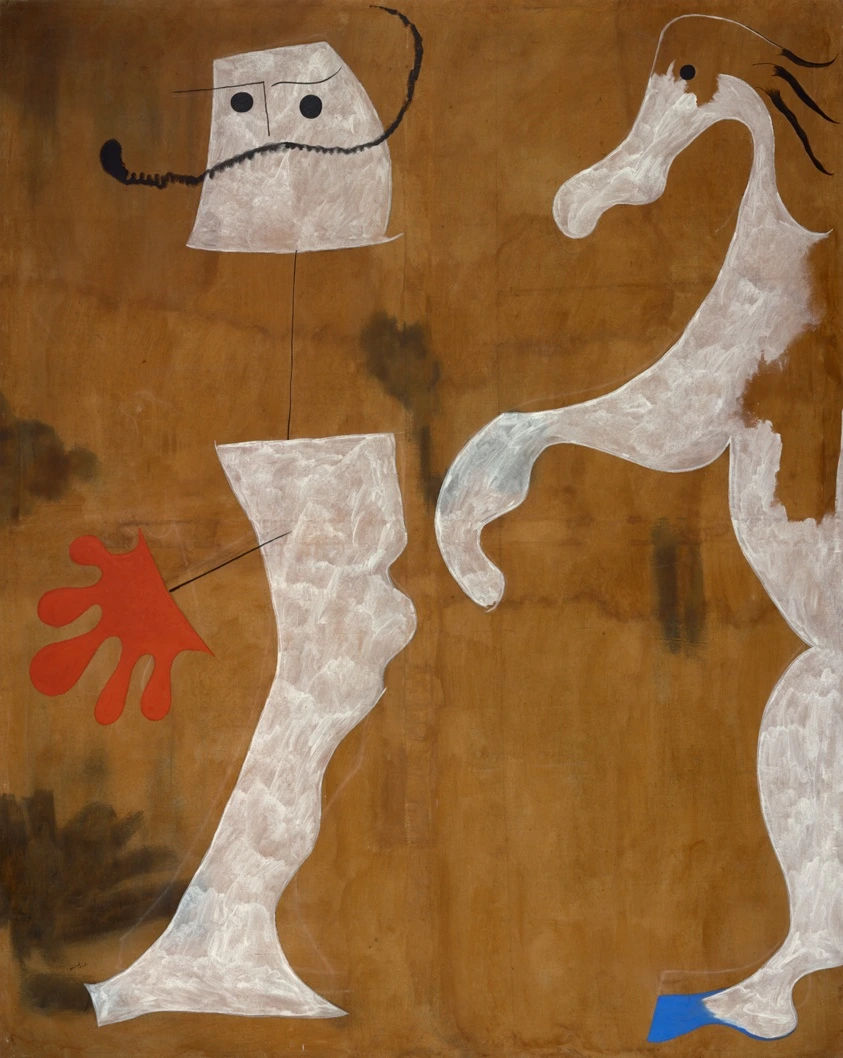
In 1927, in the spirit of modernist challenges to authority and convention, Joan Miró declared his intent to “assassinate painting” and upend its traditional hierarchies of materials and subject matter. Painting demonstrates Miró’s ongoing search for new artistic materials, including gravel and sand mixed into oil paint, which he applied to Masonite, a rugged support he favored over traditional canvas. Fascinated by the effect of such rough substances, the artist told his dealer not to worry if any materials came loose when the work was exhibited overseas, since it would “make the surface . . . look like an old crumbling wall, which will give great force to the formal expression.”

Provenance

Gallerie Pierre, New York, 1936 [Duthuit 1936]. Pierre Matisse Gallery, New York, 1948. Mr. and Mrs. Samuel A. Marx, Chicago, by 1950. Gift to Art Institute, 1950.

Painting

Joan Miró

summer 1936

Accession Number

72889

Medium

Oil, gravel, pebbles, and sand on Masonite

Dimensions

77.6 × 107.2 cm (30 9/16 × 42 3/16 in.)

Classification

Painting

Museum

The Art Institute of Chicago

Chicago, United States

Credit Line

Gift of Florene May Schoenborn and Samuel A. Marx
Background & Context

Background Story

A radical 1936 painting by Miro incorporating gravel, pebbles, and sand into the paint surface on Masonite, transforming painting into a relief object of raw materiality that responded to the outbreak of the Spanish Civil War with an aggressive rejection of decorative beauty.

Cultural Impact

Miros paintings of 1936-37 are among the most radical works produced by any artist in response to the Spanish Civil War. Their influence on material painting, Art Informel, and neo-expressionism extends through the second half of the 20th century. Painting demonstrates that Surrealist abstraction could accommodate historical crisis.

Why It Matters

Miro 1936 mixed media painting with gravel, pebbles, and sand on Masonite, radical material response to the Spanish Civil War.