Provenance
Gunnar W. Lundberg (1903–1986), Paris, by 1967–at least 1972 [Berlin 1967 exh. cat.; according to Nagel 1972]. Sold by Nancy Schwartz, New York, to Dr. Walter Feilchenfeldt, Zürich, 1980 [correspondence with Walter Feilchenfeldt, dated January 5, 2004]; sold to the Art Institute, 1980.
Accession Number
60513
Medium
Brush and opaque black and white watercolor on brown wove paper
Dimensions
41 × 33 cm (16 3/16 × 13 in.)
Classification
gouache
Credit Line
Purchased with funds provided by Margaret Day Blake, Mr. and Mrs. Alan Press, and Prints and Drawings Purchase Fund
Background & Context
Background Story
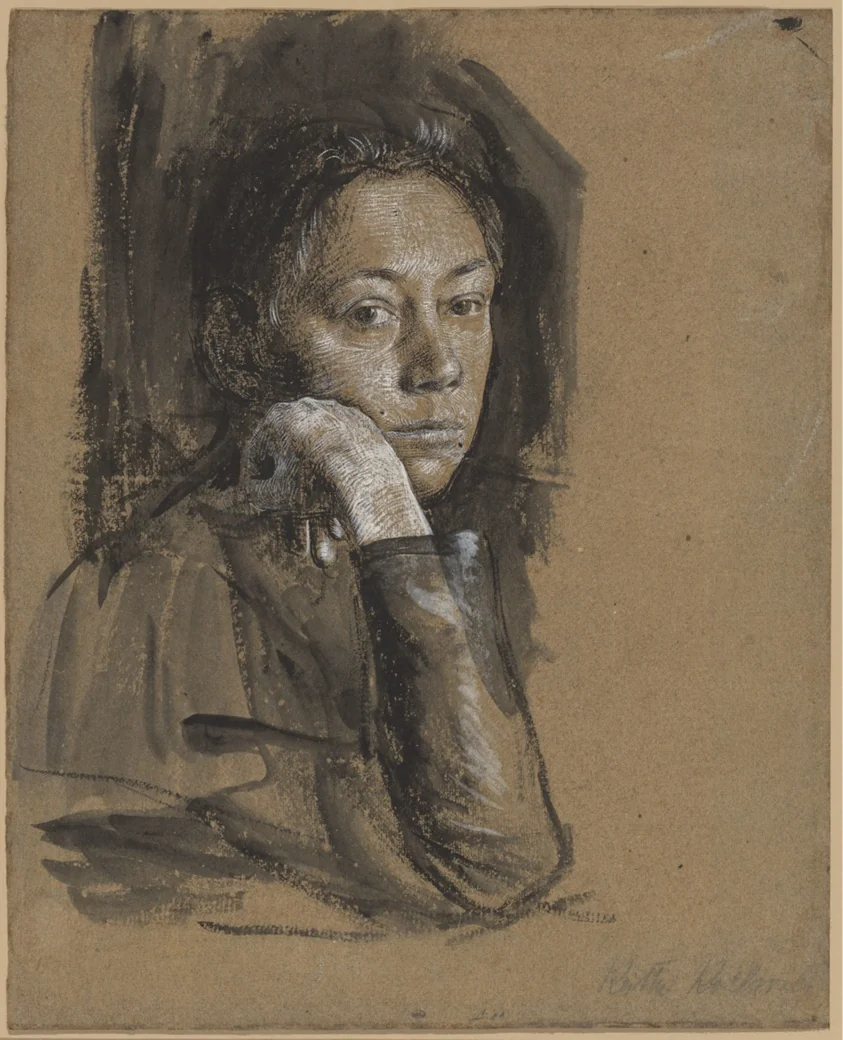
Kathe Kollwitz's Self-Portrait (1891/92) is a brush and opaque black and white watercolor on brown wove paper. This early self-portrait shows Kollwitz at the beginning of her career, when she was in her mid-twenties. The brush and opaque watercolor technique is bold and direct, the features rendered with an intensity that anticipates the power of her mature work. Kollwitz was her own most frequent model, and her self-portraits document her physical appearance and emotional state across the decades. This early self-portrait captures the young artist with the seriousness and determination that would sustain her through a career devoted to representing the struggles of the poor and the victims of war.
Cultural Impact
Kollwitz's self-portraits constitute one of the most remarkable visual autobiographies in art history, documenting the artist's journey across five decades.
Why It Matters
This early self-portrait captures the young Kollwitz with the intensity and determination that would define her career, the direct gaze and bold handling revealing the artist's exceptional gifts.


