Provenance
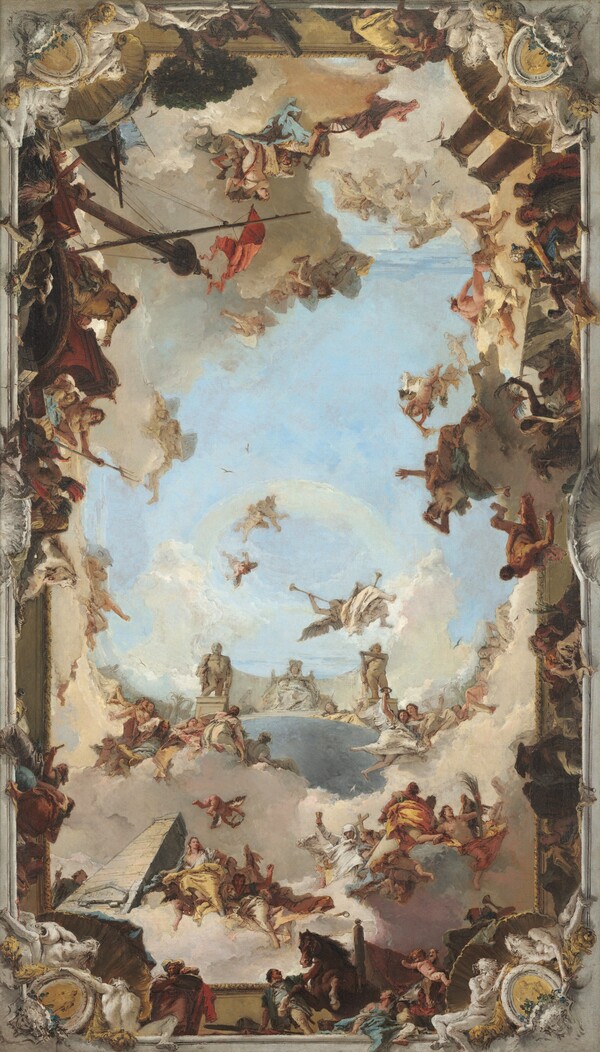
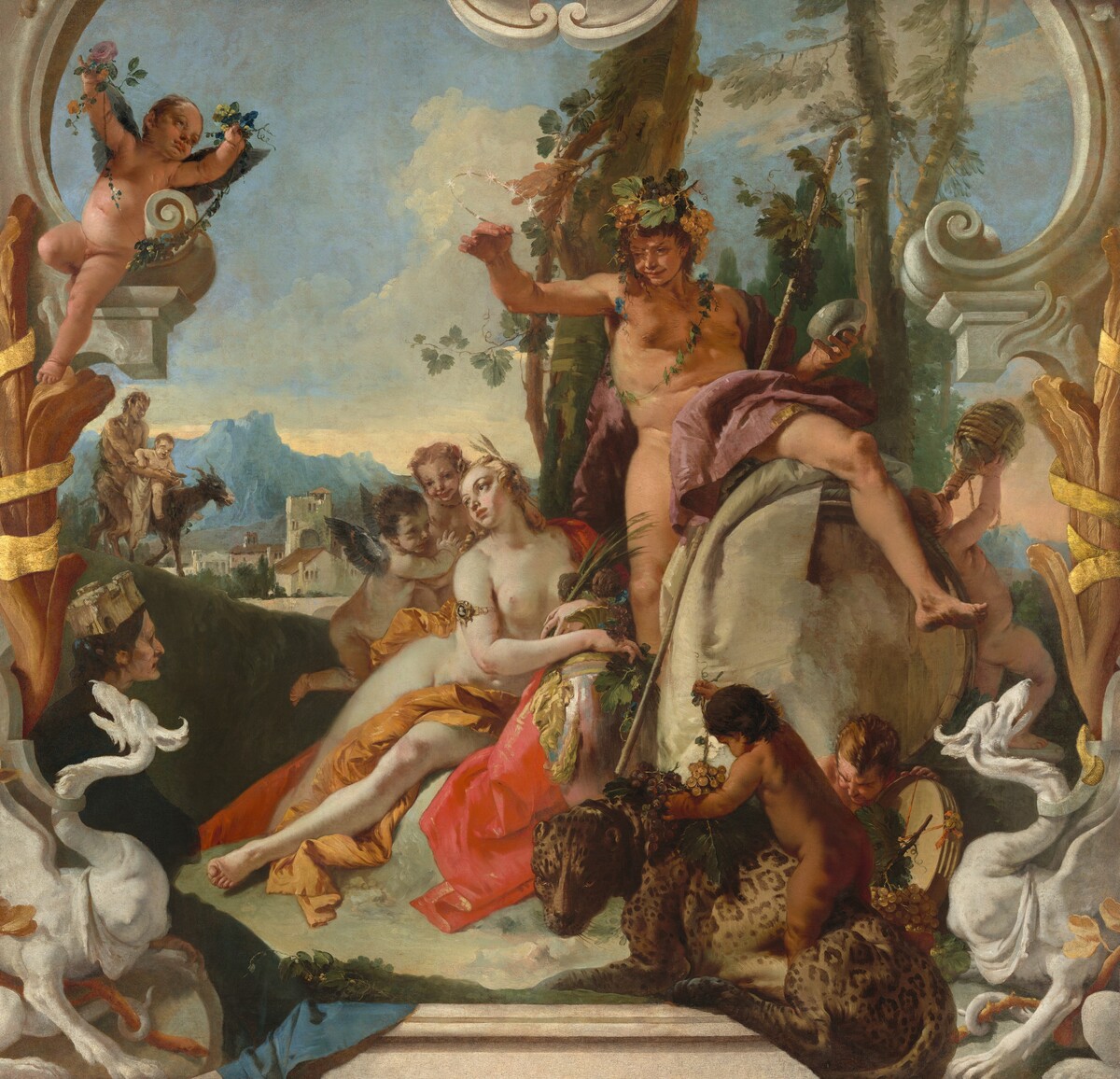
Possibly painted for a palace in Venice.[1] Probably Francesco Artaria [1744-1808], Como and Venice; from 1798 Villa Giròla, near Blevio; by descent to Domenico Artaria, inventoried in the Villa Giróla c. 1829;[2] by descent to August Artaria [d. 1893], who upon the sale of the villa in 1870 took it to Vienna, where it remained in the warehouse of the family firm, Artaria & Co., until rediscovered in 1900;[3] sold 1911 via an unknown dealer in Berlin to (Charles Sedelmeyer, Paris);[4] purchased 1927 by (Galerie Van Dieman, Berlin-Amsterdam-New York); sold 1927 or 1928 to a private collector, New York,[5] probably identical with the following. William Robert Timken [1866-1949] and Lillian Guyer Timken [1881-1959], Croton-on-Hudson, New York, and following Mr. Timken's death, New York City;[6] bequest 1960 to NGA.
[1] Based on a now lost letter written by Tiepolo to an unknown addressee from Madrid on 7 August 1764, most scholars have maintained that the original location of the painting (along with two others that were part of the same commission) may well have been the staircase of a Venetian palace.
[2] Heinrich Modern, "Les peintures de Tiepolo à la Villa Girola", _Gazette des Beaux Arts_ 3d ser., vol. 27 (1902): 477; Hans Posse, "Der Triumph der Amphitrite von Giovanni Battista Tiepolo", _Zeitschrift für bildende Kunst_61 (1927-1928): 370.
[3] Posse 1927-1928: 370, 372.
[4] Posse 1927-1928: 372.
[5] Posse 1927-1928: 372 is the most complete source for this part of the provenance. The prospectus from Van Diemen is preserved in NGA curatorial files.
[6] According to notices in _The New York Times_, 25 October 1959: 70, and 27 October 1959: 39, Mrs. Timken had begun assembling, and lending, her considerable collection of paintings in the 1920s.
Accession Number
1960.6.36
Medium
oil on canvas
Dimensions
overall: 214 × 232.4 cm (84 1/4 × 91 1/2 in.)
Classification
Painting
Credit Line
Timken Collection