Accession Number
1974.15.1
Medium
oil on canvas
Dimensions
overall: 292 x 469.8 cm (114 15/16 x 184 15/16 in.)
Classification
Painting
Credit Line
Gift of Howard Wise
Tags
Painting Contemporary (after 1950) Oil Painting Canvas American
Background & Context
Background Story
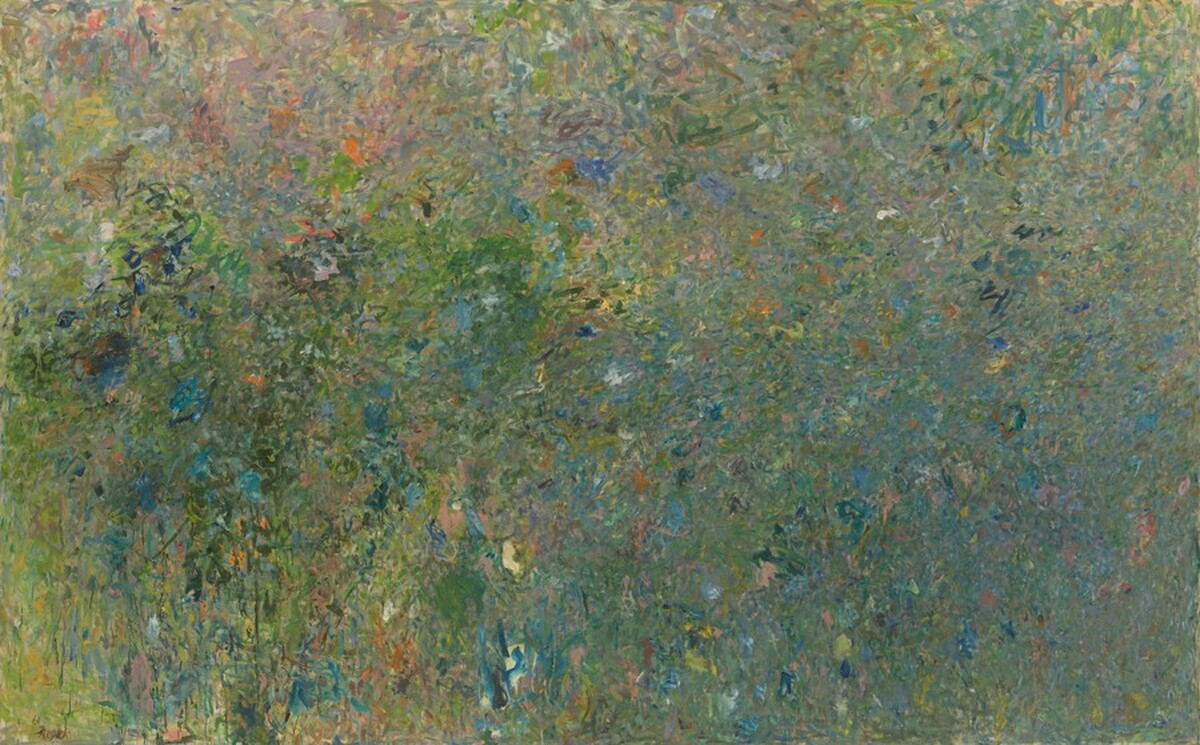
Milton Resnick (1917-2004) was an American painter known for his large-scale Abstract Expressionist paintings in which dense fields of color create a sense of contemplation and spiritual presence. Mound from 1961 is a characteristic work from Resnick's mature period, depicting a mound-like form in the dense, all-over painting manner that distinguishes his best work. The 1961 date places this in the period when Resnick was developing the dense, monochromatic manner that would define his mature paintings—fields of color so densely painted that they seem to generate their own light and presence.
Cultural Impact
Mound is important in the history of Abstract Expressionism because it demonstrates the contemplative, monochromatic manner that distinguishes Resnick's work from the more dramatic gesture of de Kooning and the more expansive color of Rothko. The dense, all-over painting creates a sense of contemplation and spiritual presence that represents an alternative to the dominant modes of Abstract Expressionism—a quieter, more meditative version of the all-over painting that Pollock and others had developed.
Why It Matters
Mound is Resnick's contemplative Abstract Expressionism: a mound-like form in the dense, all-over painting manner that creates a sense of spiritual presence and contemplation. The 1961 painting demonstrates the quieter, more meditative alternative to the dramatic gesture and expansive color that dominated Abstract Expressionism in the early 1960s.

![Saint Bernard and Saint Catherine of Alexandria with the Virgin of the Annunciation [right panel]](https://api.nga.gov/iiif/e6890364-4d99-4684-a62b-5060ee3c3446/full/400,/0/default.jpg)