Provenance
Charles Deering (1852–1927), Chicago; by descent to his daughters, Mrs. Chauncey McCormick (née Marion Deering; 1886–1965), Chicago and Mrs. Richard Ely Danielson (née Barbara Deering; 1885–1957), Chicago; given to the Art Institute of Chicago, 1927.
Accession Number
50766
Medium
Black chalk with touches of white chalk, on brown wove paper laid down on ivory board
Dimensions
36.7 × 27.5 cm (14 1/2 × 10 7/8 in.)
Classification
chalk
Credit Line
The Charles Deering Collection
Background & Context
Background Story
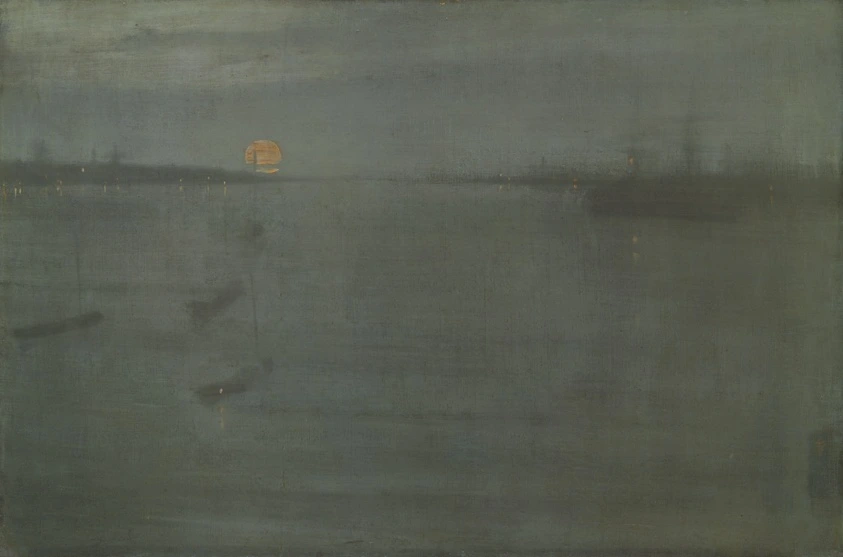
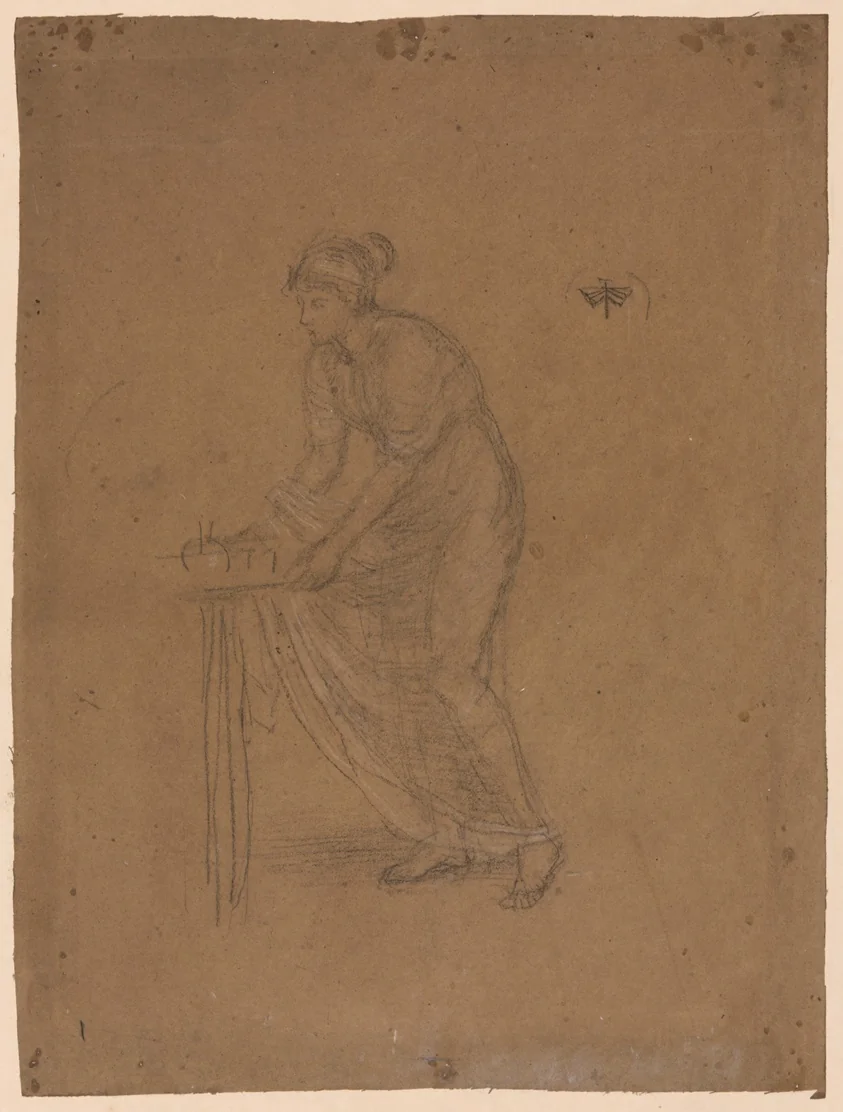
James McNeill Whistler's Draped Model (1866/69) is a black chalk drawing with touches of white chalk on brown wove paper laid down on ivory board. This study of a draped figure shows Whistler's mastery of the chalk medium and his sensitivity to the fall of fabric. The model is shown with fabric draped around her body, the folds of the cloth creating an interplay of light and shadow that Whistler captures with subtle modulations of the black and white chalks. The brown wove paper provides a warm mid-tone that gives the drawing a unified, harmonious quality. This drawing dates from the period when Whistler was developing his mature style, moving from the realist observations of his early career toward the more refined, atmospheric works for which he is best known. The draped model study reflects his interest in the harmony of line and tone that would culminate in his famous Nocturnes and Arrangements.
Cultural Impact
Whistler's draped figure studies demonstrate the evolution of his style toward the refined, tonal harmonies that would define his most famous works.
Why It Matters
This chalk study of a draped model captures the delicate interplay of light and shadow on fabric, Whistler's subtle handling of the medium revealing his growing mastery of tone and atmosphere.