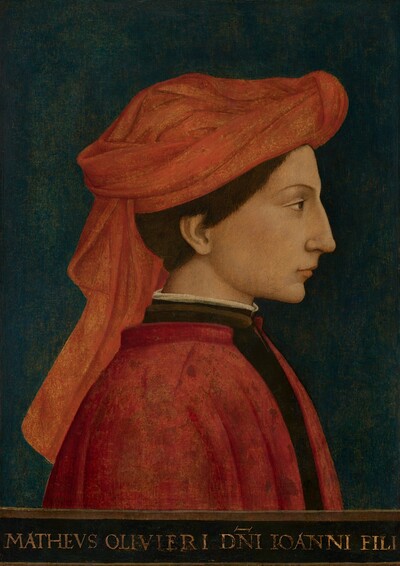
Description
Albert Bierstadt is best remembered for his paintings of the American West, but during his early career, the ambitious artist also created New England landscapes, particularly of the White Mountains, as seen here. When this painting was first exhibited in 1863, critics declared it Bierstadt’s “best work” and praised the artist’s deft contrast of “light and shade,” which brought a heightened realism to the image. Bierstadt’s affinity for the White Mountains mirrored a growing interest in the region as one of America’s premier tourist attractions. Photographs of the area from the 19th century suggest that Bierstadt utilized landscape elements from the Flume, a popular New Hampshire tourist site, in this imaginary composition.
Provenance
Accession Number
146701
Medium
Oil on canvas
Dimensions
111.8 × 91.4 cm (44 × 36 in.)
Classification
Painting
Credit Line
Purchased with funds provided by Mrs. Herbert A. Vance; fund of an anonymous donor; Wesley M. Dixon Jr. Fund and Endowment; Henry Horner Straus and Mr. and Mrs. Frederick G. Wacker Jr. endowment funds; through prior acquisitions of various donors, including Samuel P. Avery Endowment, Mrs. George A. Carpenter, Frederick S. Colburn, Mr. and Mrs. Stanley Feinberg, Field Museum of Natural History, Mr. and Mrs. Frank Harding, International Minerals and Chemicals Corp., Mr. and Mrs. Ralph Loeff, Mrs. Frank C. Miller, Mahlan D. Moulds, Mrs. Clive Runnells, Mr. and Mrs. Stanley Stone, and the Charles H. and Mary F.S. Worcester Collection
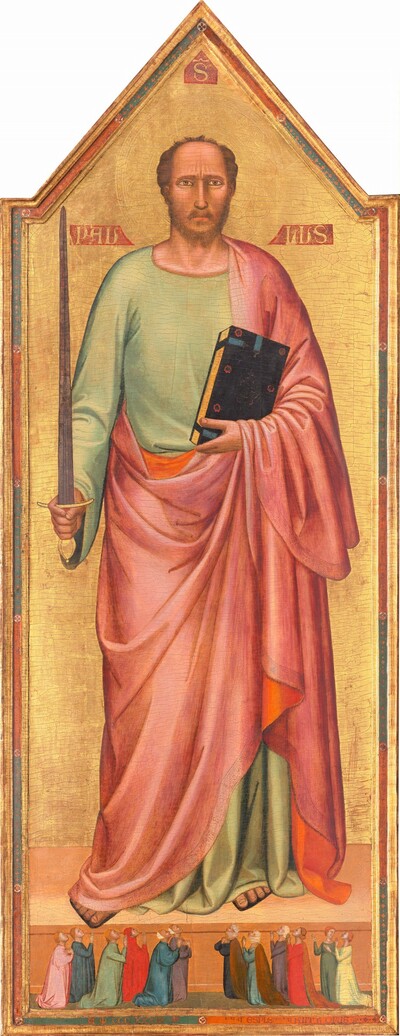
![Saint Bernard and Saint Catherine of Alexandria with the Virgin of the Annunciation [right panel]](https://api.nga.gov/iiif/e6890364-4d99-4684-a62b-5060ee3c3446/full/400,/0/default.jpg)