Provenance
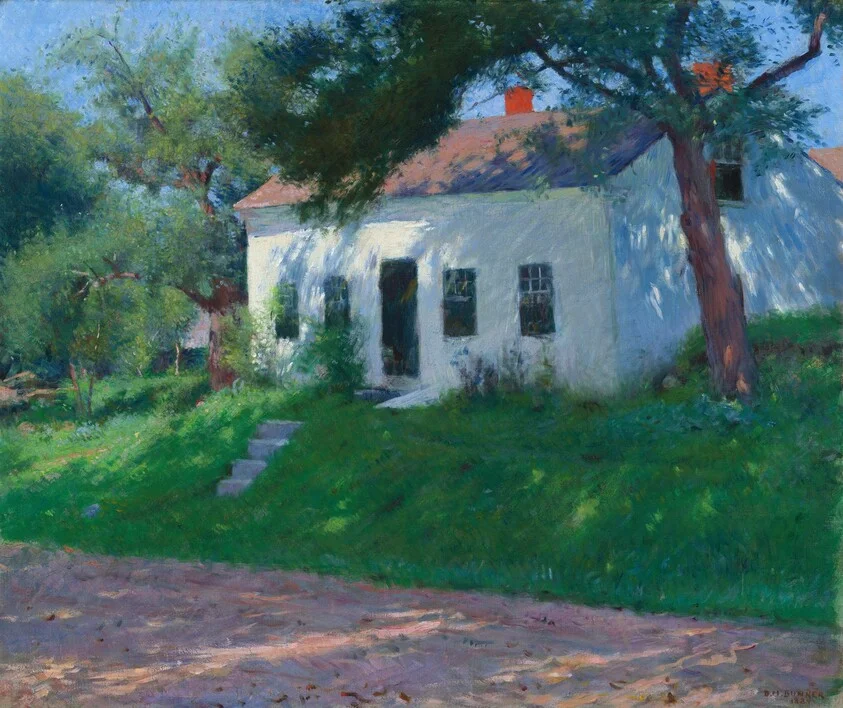
Perry Rathbone, New York; purchased 1972 by Raymond J. [1916-2005] and Margaret [1915-2005] Horowitz, New York, New York; bequest 2007 to NGA.
Accession Number
2007.94.1
Medium
oil on canvas
Dimensions
overall: 63.7 x 76.2 cm (25 1/16 x 30 in.) | framed: 97.16 × 106.05 × 4.45 cm (38 1/4 × 41 3/4 × 1 3/4 in.)
Classification
Painting
Credit Line
Gift of Raymond J. and Margaret Horowitz
Tags
Painting Impressionist & Modern (1851–1900) Oil Painting Canvas American
Background & Context
Background Story
Dennis Miller Bunker (1861-1890) was an American painter known for the luminous, precisely observed landscapes that make him one of the most important American Impressionists of the 1880s, before his premature death at 29. Roadside Cottage from 1889 depicts a cottage in the luminous, precisely observed manner that distinguishes Bunker's best work, combining Impressionist light with the precise observation that he developed from his study with William Merritt Chase. The 1889 date places this in Bunker's most productive period, before his untimely death the following year, and the roadside cottage subject shows his ability to combine Impressionist light with American subject matter.
Cultural Impact
Roadside Cottage is important in the history of American Impressionism because it demonstrates the luminous, precisely observed manner that Bunker brought to American landscape before his premature death at 29. Bunker's luminous landscapes—combining Impressionist light with the precise observation he developed from his study with Chase—represent one of the most accomplished traditions in American Impressionism, and the 1889 painting shows this tradition at its most productive, before the tragic death that cut short one of the most promising careers in American painting.
Why It Matters
Roadside Cottage is Bunker's luminous American Impressionism: a countryside scene rendered in the precisely observed manner of one of the most important American Impressionists of the 1880s. The 1889 painting shows the luminous tradition that would be cut short by Bunker's premature death at 29—one of the most tragic losses in American painting.
![Saint Bernard and Saint Catherine of Alexandria with the Virgin of the Annunciation [right panel]](https://api.nga.gov/iiif/e6890364-4d99-4684-a62b-5060ee3c3446/full/400,/0/default.jpg)