Provenance
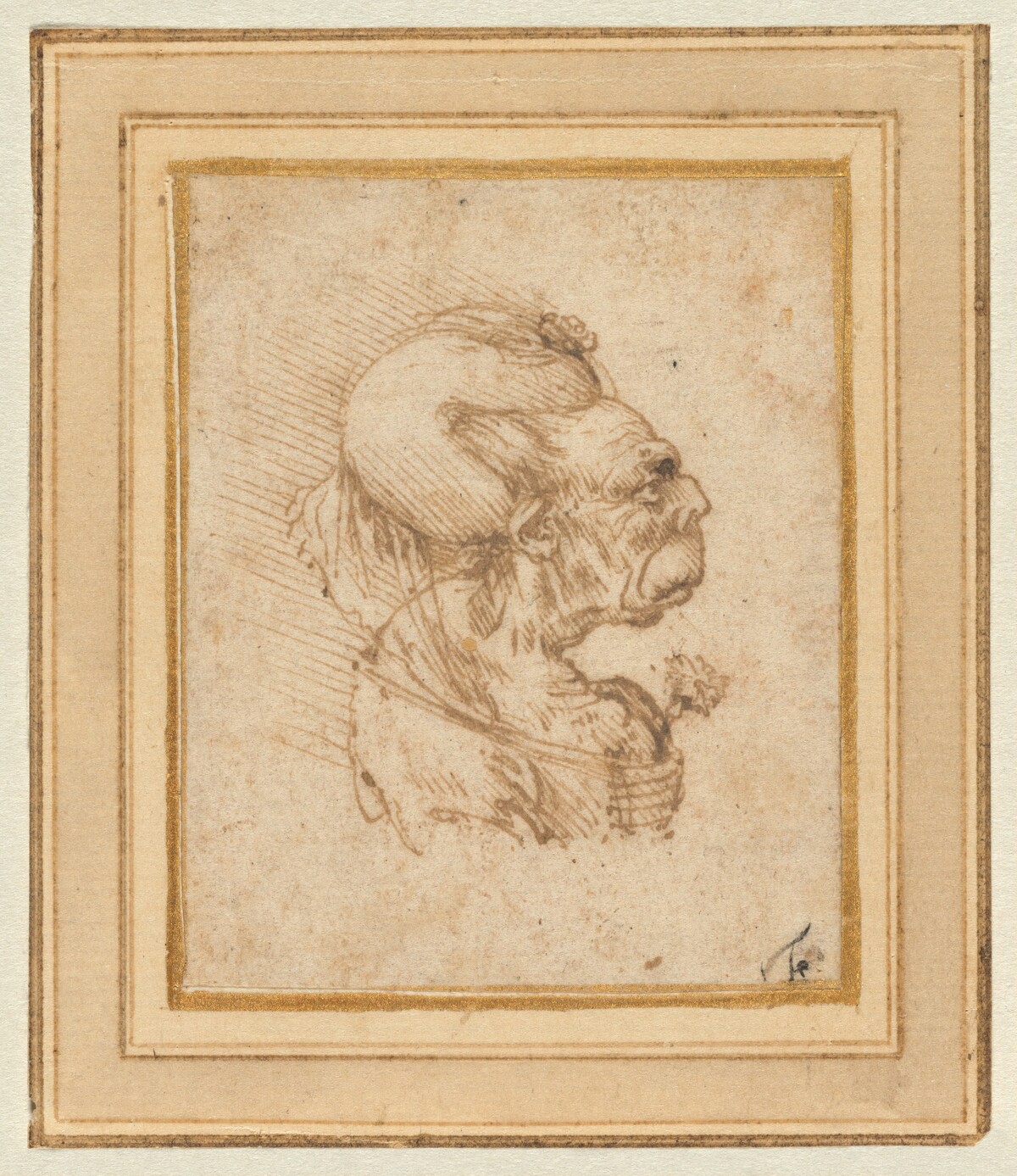
Thomas Howard, Earl of Arundel [1586-1646]; Nicolaes Anthoni Flinck [1646-1723] (Lugt 959), Rotterdam; William Cavendish, 2nd Duke of Devonshire [1672-1739]; then by descent, Chatsworth (inv. no. 820b) (sale, London, Christie's, 3 July 1984, lot 23); purchased by Ian Woodner, New York; by inheritance to his daughters, Andrea and Dian Woodner, New York, 1990.
Accession Number
2022.84.1
Medium
pen and brown ink on laid paper; laid down
Dimensions
overall: 6.4 x 5.1 cm (2 1/2 x 2 in.)
Classification
Drawing
Credit Line
Gift of Dian Woodner
Background & Context
Background Story
Breezing Up (A Fair Wind), painted between 1873 and 1876, depicts a catboat sailing before the wind, its three occupants - a man and two boys - leaning back as the boat heels in the breeze. The painting is Homer most beloved maritime work and the painting that established him as the foremost American painter of the sea.
Homer painted Breezing Up during the period when he was still working as an illustrator, and the painting combines the narrative clarity of illustration with the formal ambition of the most advanced American painting. The diagonal of the boat, cutting across the picture plane, creates a composition of extraordinary dynamic energy, while the distant horizon and the broad sky provide a spatial grandeur that elevates the humble catboat to the level of a vessel on the open sea.
The painting was immediately popular and was acquired by the National Gallery (now the National Museum of American Art) in 1876. Its vision of healthy, competent Americans navigating their own boat through a fair wind resonated with post-Civil War America desire for images of optimism and self-reliance. Homer catboat, sailed by a man and two boys who need no help from anyone, is a floating emblem of American independence.
Cultural Impact
Breezing Up established Winslow Homer as the most important American painter of his generation and created the most iconic image of American maritime life. Its vision of competent self-reliance influenced the entire tradition of American realism and remains one of the most beloved paintings in American art.
Why It Matters
This painting captures the American promise: a small boat, a fair wind, and three people who need nothing else. Homer vision is both idyllic and realistic - the sea is beautiful but demanding, the wind is fair but not gentle, and the sailors are competent but not invincible. Breezing Up is the American pastoral, painted by a man who knew that pastures, like seas, can turn dangerous without warning.
![Wreath of Laurel, Palm, and Juniper with a Scroll inscribed Virtutem Forma Decorat [reverse]](https://api.nga.gov/iiif/ff62e8d0-45c4-498f-ad36-6358de827e04/full/400,/0/default.jpg)