Provenance
Sir Hugh Walpole [1884-1941];[1] (Leicester Galleries, London, 1945); Edward H. Molyneux, 1955; Ailsa Mellon Bruce.
[1]Not inlcuded in his estate sale held at Christie's, London, 10 January 1947.
Accession Number
1970.17.164.a-b
Medium
a) black chalk and watercolor on wove paper; b) black chalk on wove paper
Dimensions
overall: 30.4 x 23.8 cm (11 15/16 x 9 3/8 in.)
Classification
Drawing
Credit Line
Ailsa Mellon Bruce Collection
Tags
Drawing Early Modern (1901–1950) Watercolor Paper Spanish
Background & Context
Background Story
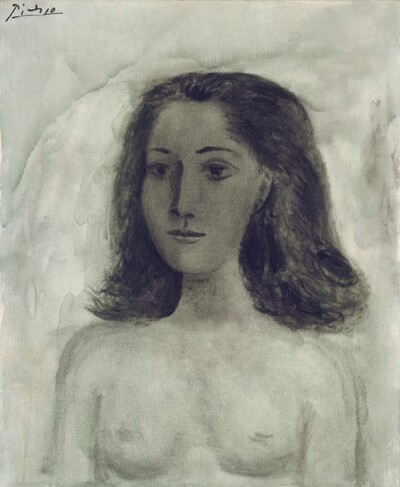
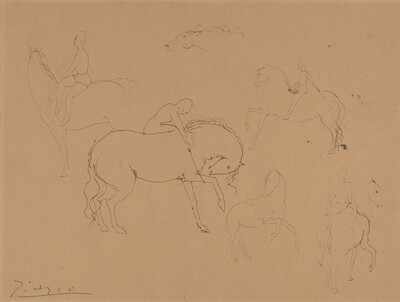
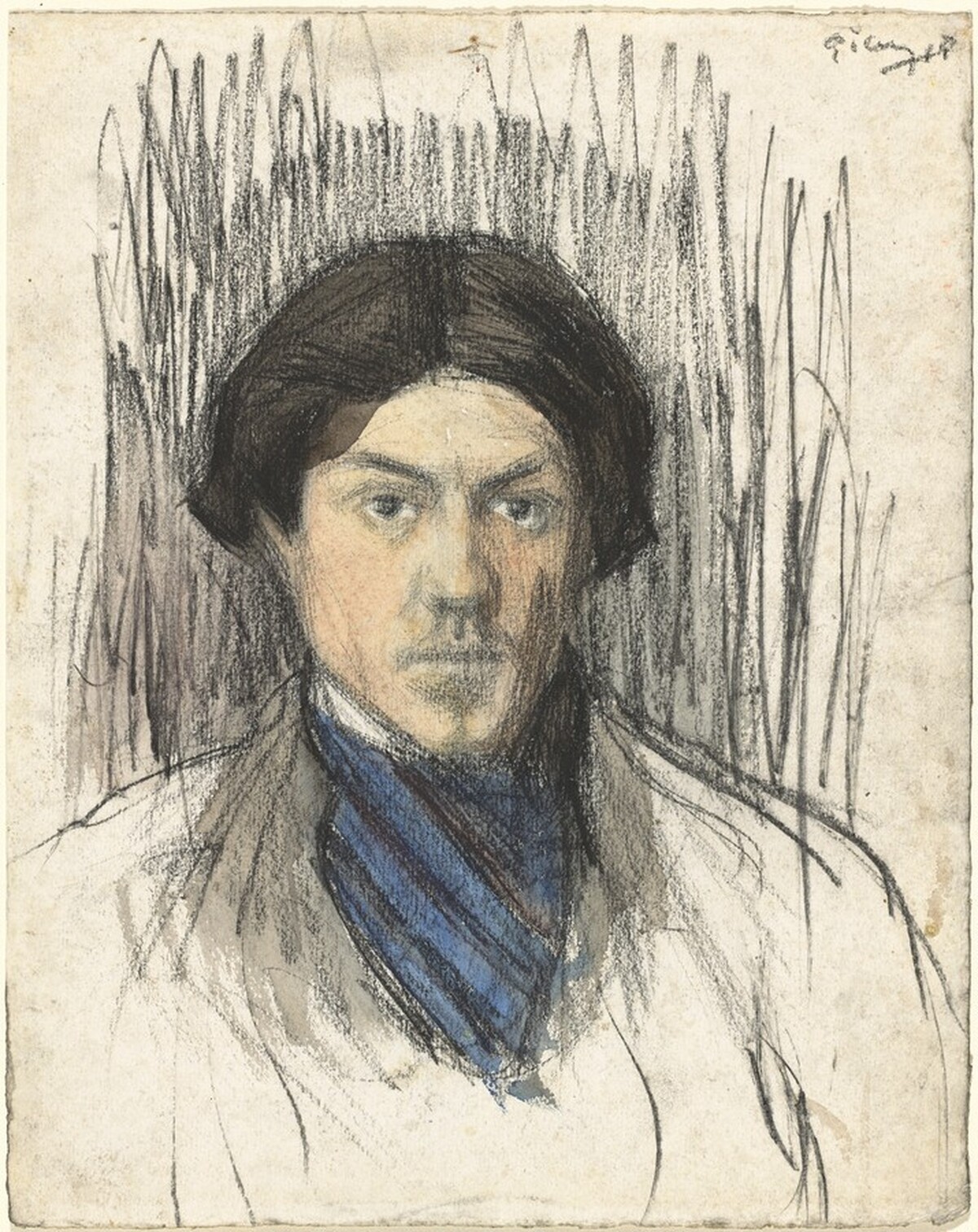
This double-sided work from 1901-1902 provides two views of Picasso at a critical moment in his artistic development. The self-portrait on the recto depicts the twenty-year-old artist at the beginning of his Parisian career—young, intense, and still finding the style that would make him the most influential artist of the 20th century. The Woman Strolling on the verso—.different subject on the reverse—adds documentary value: Picasso often used both sides of his canvases during this impoverished period, when materials were expensive and his income uncertain. The 1901-02 date spans the crucial transition from Picasso's early academic style to the Blue Period's melancholy expressiveness. The self-portrait likely shows the young artist presenting himself to the Parisian art world—with the ambition and vulnerability of someone who has not yet established his reputation. The woman strolling—a boulevardière navigating Paris's streets—represents the social world that Picasso was entering, where the flâneur and the flâneuse observed modern life and transformed their observations into art. The double-sided format, born of economic necessity, has become a document of the artist's material circumstances: when Picasso could not afford fresh canvases, he painted on both sides, and this economy reveals the financial pressures that shaped his early Parisian practice.
Cultural Impact
This double-sided work influenced how Picasso's early career was understood, revealing both his self-presentation and his material circumstances. The self-portrait influenced how the young Picasso was perceived—establishing the intense, ambitious image that would persist throughout his career. The Woman Strolling influenced how Parisian modernity was represented in the young Picasso's work.
Why It Matters
This painting matters because it provides the most direct visual evidence of Picasso's self-image at the moment of his Parisian debut—the face of the young artist before fame, before Cubism, before the century's most revolutionary artistic career. The double-sided format, born of poverty, has become an invaluable document of the material conditions that shaped one of art's most important beginnings.