Provenance
The artist [1867-1947]; by inheritance to the Bonnard-Terrasse family, Paris. Anonymous collection, Switzerland, 1966. (Wildenstein, London, New York, and Paris); sold 11 August 1966 to Ailsa Mellon Bruce [1901-1969], New York; gift 1970 to NGA.[1]
[1]Provenance according to invoice from Wildenstein dated 11 August 1966, in NGA curatorial records.
Accession Number
1970.17.10
Medium
oil on canvas
Dimensions
overall: 67 x 103 cm (26 3/8 x 40 9/16 in.) | framed: 95.9 x 131.4 x 7.6 cm (37 3/4 x 51 3/4 x 3 in.)
Classification
Painting
Credit Line
Ailsa Mellon Bruce Collection
Tags
Painting Early Modern (1901–1950) Oil Painting Canvas French
Background & Context
Background Story
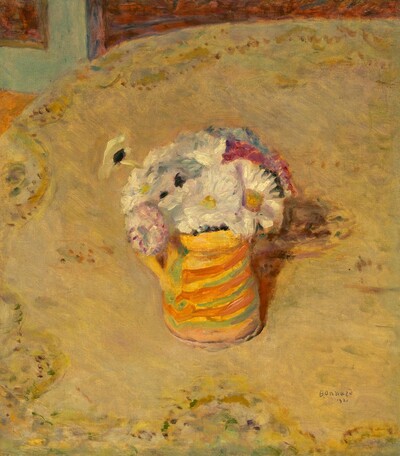
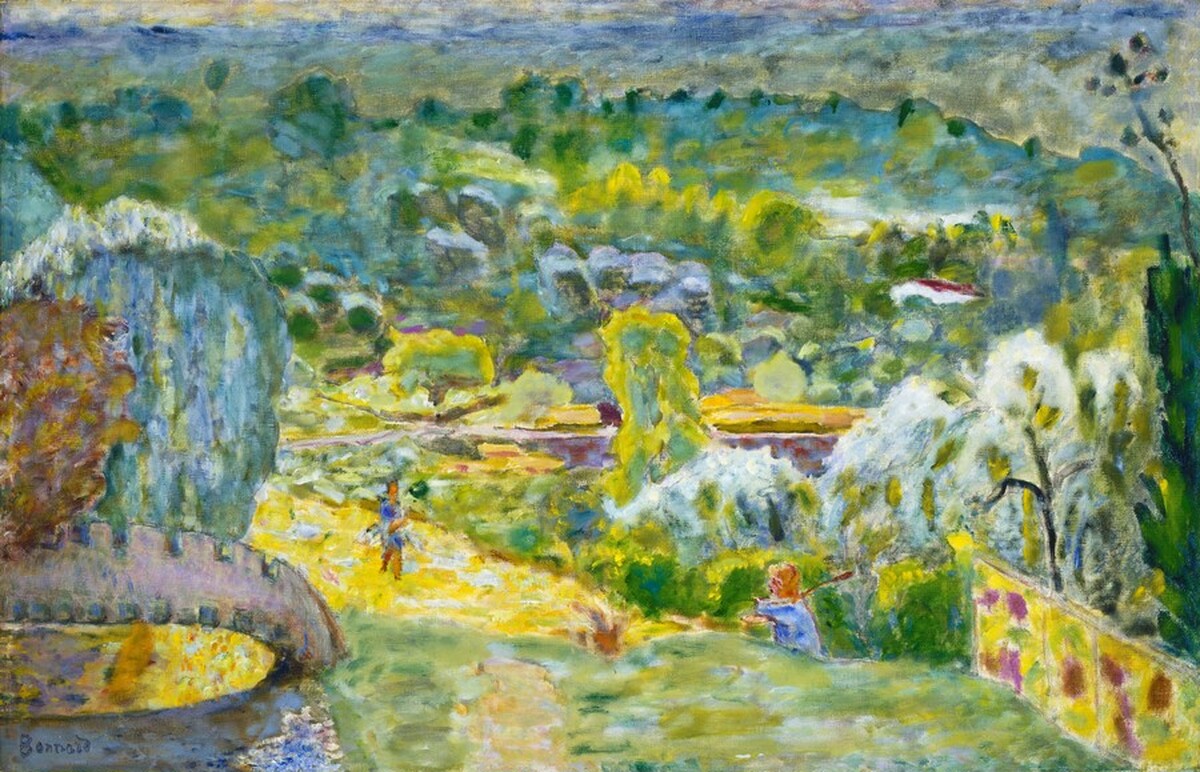
A Spring Landscape (c. 1935) belongs to Bonnard's late period, when the landscape of southern France had become his primary subject and his chromatic range had reached its greatest intensity. The year 1935 places this during the final phase of Bonnard's career, when he was producing landscapes of extraordinary chromatic richness from his home at Le Bosquet in Le Cannet. The spring subject—the season of renewal and re-emergent color—provided Bonnard with the chromatic opportunities that his late work pursued: the fresh greens, the flowers' bright accents, and the particular quality of spring light that made the south of France a paradise for color-sensitive painters. Bonnard's treatment of the spring landscape demonstrates his distinctive method: the landscape is not painted from direct observation but built up through layers of color applied from memory, creating a surface that vibrates with chromatic energy while remaining legible as landscape representation. This method—working from memory over extended periods—allowed Bonnard to develop color relationships that direct observation would not have revealed, producing landscapes that were simultaneously observed and imagined. The painting's late date also connects it to the broader context of 1930s European art, when Bonnard's decorative chromaticism offered an alternative to the more politically engaged art that the decade's crises demanded.
Cultural Impact
Bonnard's late landscape paintings influenced how the south of France was represented in 20th-century art, establishing the region as a chromatic paradise that rivaled Monet's Giverny in significance. The paintings influenced later painters who similarly pursued chromatic intensity in landscape, from the Fauves to the Abstract Expressionists. The spring landscape subject influenced how seasonal change was represented in modern art, connecting chromatic exploration to natural cycles.
Why It Matters
This painting matters because it represents Bonnard's landscape art at its most chromatically intense—the spring landscape of the south of France, rendered from memory with the color intensity that only decades of experience and the Mediterranean's light could produce. The painting argues that the artist's chromatic vision, cultivated over a lifetime, can reveal beauty that direct observation cannot access.