Provenance
Recorded as from New York. Walter P. Chrysler, Jr., in 1942.[1] Acquired in 1955 by Edgar William and Bernice Chrysler Garbisch; gift to NGA, 1959.
[1] According to Jean Lipman, _American Primitive Painting_, (London/New York/Toronto, 1942), caption to fig. 70.
Accession Number
1959.11.7
Medium
oil on canvas
Dimensions
overall: 91.7 x 112.4 cm (36 1/8 x 44 1/4 in.) | framed: 109.5 x 130.5 x 4.7 cm (43 1/8 x 51 3/8 x 1 7/8 in.)
Classification
Painting
Credit Line
Gift of Edgar William and Bernice Chrysler Garbisch
Tags
Painting Impressionist & Modern (1851–1900) Oil Painting Canvas American
Background & Context
Background Story
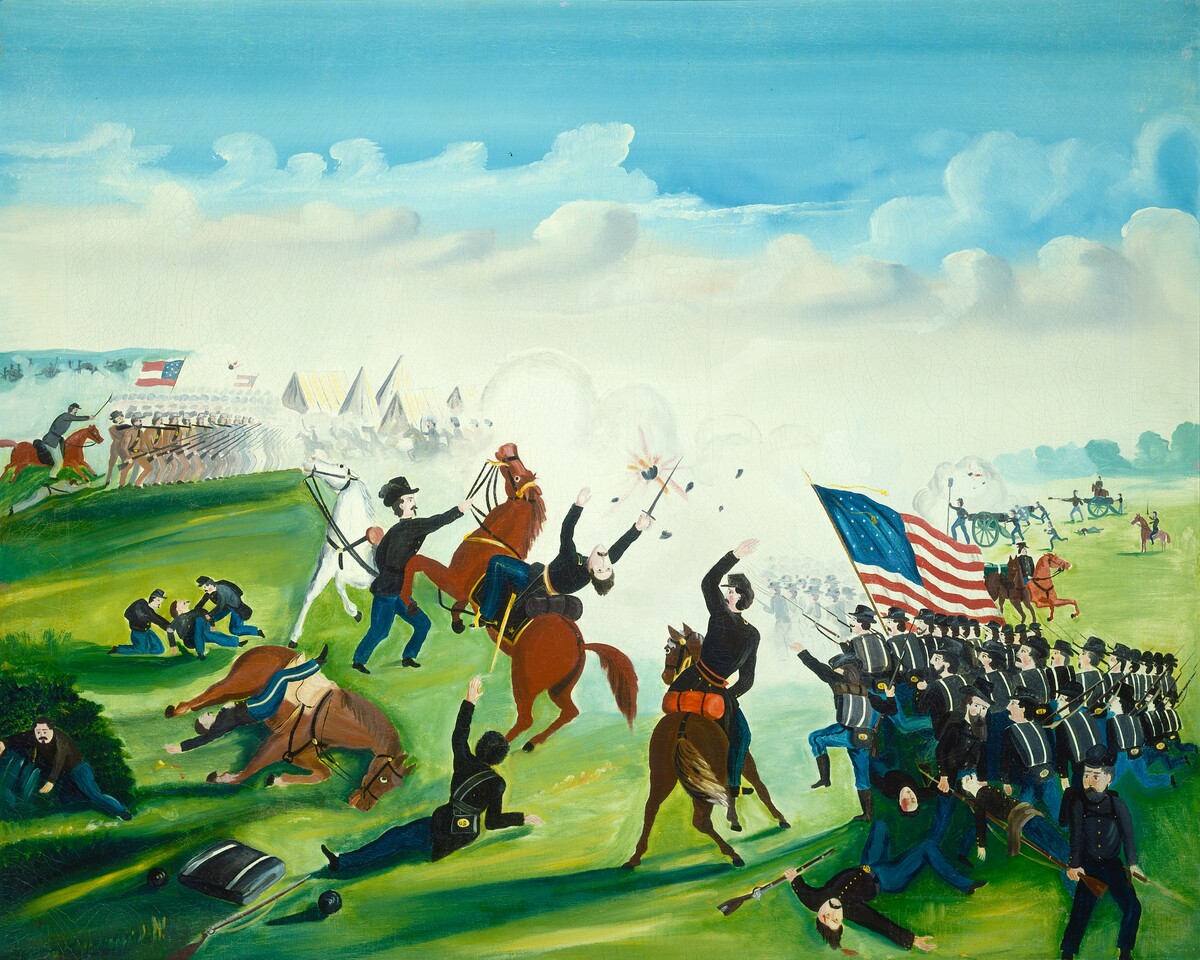
Civil War Battle from 1861 or after depicts a battle scene from the American Civil War in the manner of American battle painting that combined reportorial detail with patriotic sentiment. The 1861+ date places this during or after the Civil War, the defining event of 19th-century American history, and the battle subject reflects the demand for visual representations of the war that was satisfied by both professional painters and anonymous artists. The painting demonstrates the American tradition of battle painting that recorded the major events of the war for a public hungry for visual information about the conflict.
Cultural Impact
Civil War Battle is important in the history of American art because it demonstrates the tradition of battle painting that recorded the Civil War for a public hungry for visual information about the conflict. Anonymous battle paintings like this one satisfied the demand for visual representations of the war that professional painters could not always supply, creating a vernacular tradition of battle painting that complemented the more accomplished work of professional military painters.
Why It Matters
Civil War Battle is American vernacular battle painting: a Civil War scene painted in the manner that satisfied the public demand for visual representations of the conflict. The 1861+ painting demonstrates the tradition of anonymous battle painting that recorded the major events of the war for a public hungry for visual information about the defining event of 19th-century American history.