Accession Number
1954.17.1
Medium
oil on canvas
Dimensions
overall: 38.4 x 48.4 cm (15 1/8 x 19 1/16 in.) | framed: 58.1 x 67.3 cm (22 7/8 x 26 1/2 in.)
Classification
Painting
Credit Line
Gift of Lewis Einstein
Tags
Painting Baroque (1600–1750) Oil Painting Canvas
Background & Context
Background Story
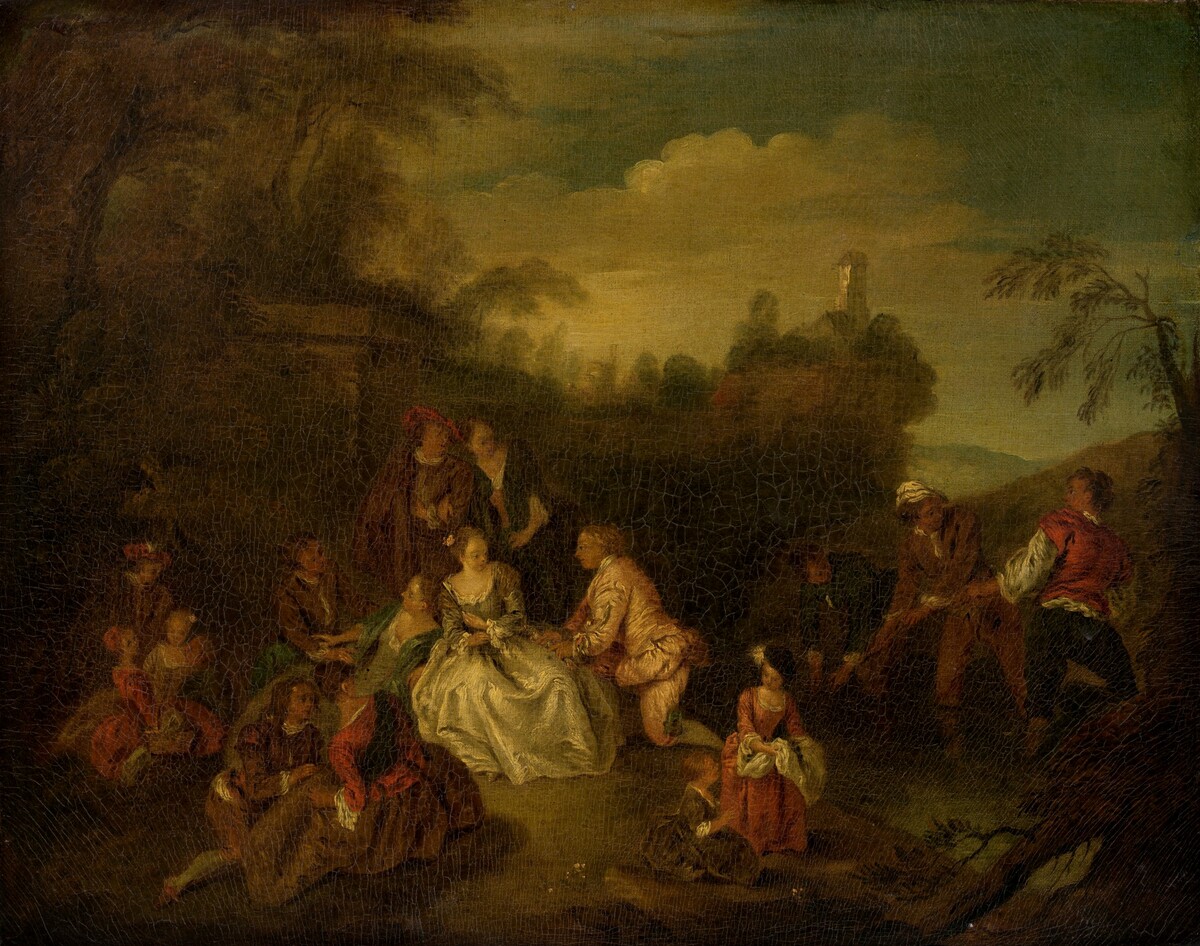
The Gift of the Fishermen is a painting after Jean-Baptiste Joseph Pater, dating to the eighteenth or nineteenth century. Pater (1695-1736) was the most devoted follower of Antoine Watteau, the inventor of the fete galante—a genre of painting depicting elegantly dressed figures in pastoral settings engaged in music, courtship, and leisurely conversation. The fete galante was one of the most influential artistic inventions of the eighteenth century, defining an aesthetic of refined pleasure that became synonymous with the French Regency and Rococo periods. The Gift of the Fishermen belongs to this tradition, depicting figures in fashionable dress at the seashore or riverside, where fishermen offer their catch as a gift—a motif that allowed Pater to combine his master's pastoral idyll with the maritime subjects that were his own specialty. Pater, who grew up in Valenciennes near the Flemish coast, had a particular affinity for seaside and river scenes, and his fêtes galantes often incorporate fishing, boating, and coastal elements that distinguish them from Watteau's more exclusively pastoral compositions. A painting "after Pater" is a work that reproduces or closely adapts one of his compositions, a practice that was extremely common in the eighteenth and nineteenth centuries, when popular paintings were widely disseminated through reproductive prints and copies. The existence of copies after Pater testifies to the enduring appeal of the fete galante, which continued to attract patrons and viewers long after the Rococo style had been superseded by Neoclassicism. The painting's subject—the gift of fishermen—carries symbolic resonances within the fete galante tradition, where gifts, gestures, and exchanges function as part of a complex visual language of social ritual and erotic suggestion. The fishermen's humble offering of fish to aristocratic figures creates a pleasing contrast of social classes within the artificial harmony of the pastoral idyll.
Cultural Impact
Pater's works and their copies kept the fete galante tradition alive well beyond its historical moment, influencing the development of garden design, decorative arts, and the broader culture of leisure that defined aristocratic and bourgeois taste across Europe. Copies after Pater also demonstrate the commercial viability of the Rococo aesthetic long after its cultural moment had passed, revealing the persistence of demand for art that offered an idealized vision of social harmony and refined pleasure.
Why It Matters
This painting matters as evidence of the lasting influence of the fete galante tradition and the commercial afterlife of Rococo painting, demonstrating how the aesthetic of aristocratic leisure developed by Watteau and Pater continued to resonate with audiences across the century following its invention.