Provenance
Recorded as from Massachusetts. Purchased in 1948 by Edgar William and Bernice Chrysler Garbisch; gift to NGA, 1953.
Accession Number
1953.5.88
Medium
oil on canvas
Dimensions
overall: 70.4 x 78.1 cm (27 11/16 x 30 3/4 in.) | framed: 82.2 x 90.5 x 5.1 cm (32 3/8 x 35 5/8 x 2 in.)
Classification
Painting
Credit Line
Gift of Edgar William and Bernice Chrysler Garbisch
Tags
Painting Impressionist & Modern (1851–1900) Oil Painting Canvas American
Background & Context
Background Story
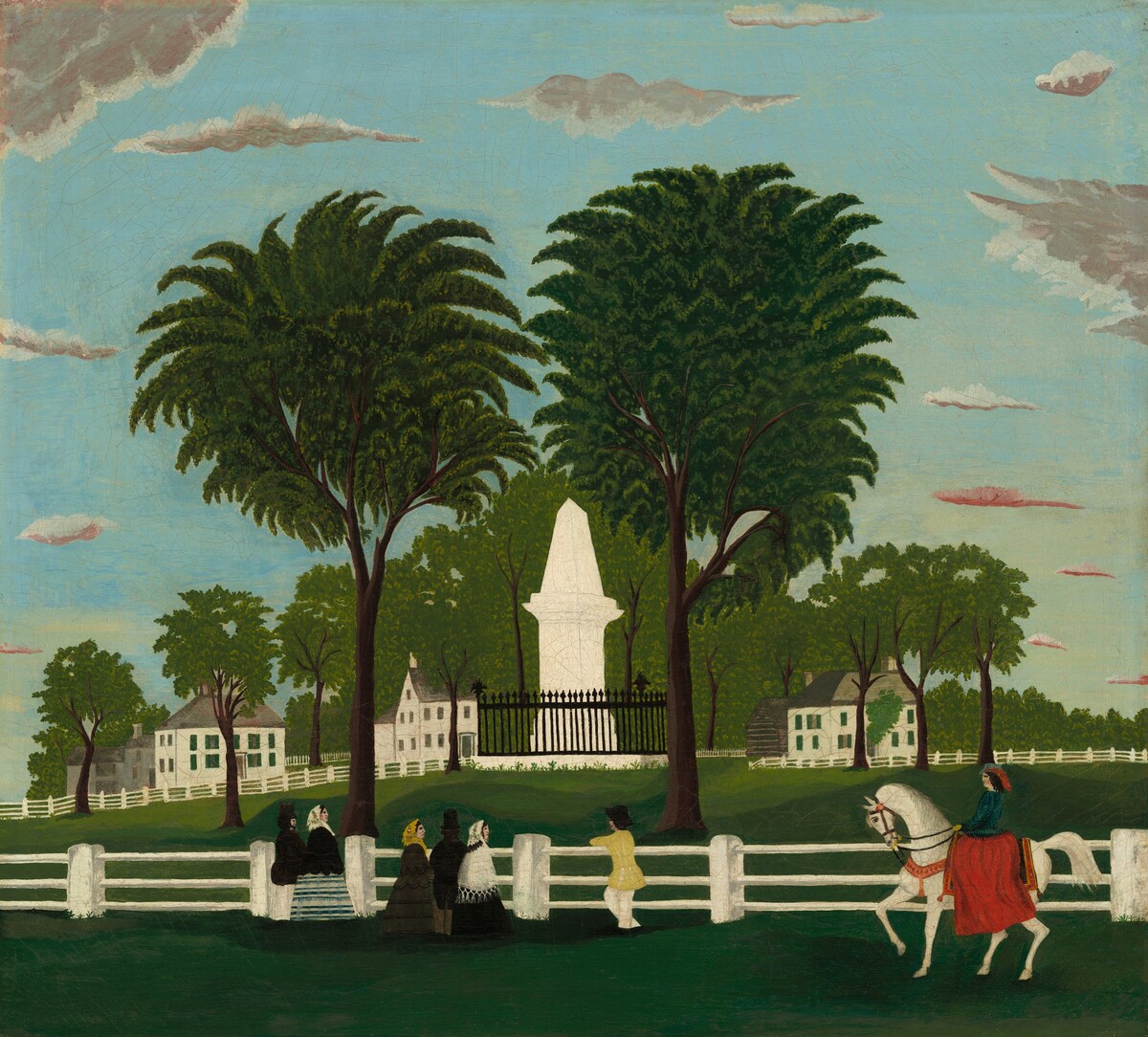
Lexington Battle Monument from 1853 or after depicts the battle monument at Lexington, Massachusetts—the site of the first battle of the American Revolution on April 19, 1775. The painting is an example of American patriotic art that combines landscape painting with national historical memory, depicting the monument and its surrounding landscape with the reverence that 19th-century Americans brought to Revolutionary War sites. The 1853+ date places this in the period when American patriotic sentiment was investing Revolutionary War sites with the national significance that they still hold today.
Cultural Impact
Lexington Battle Monument is important in the history of American patriotic art because it demonstrates how 19th-century Americans combined landscape painting with national historical memory. The painting treats the Revolutionary War site with the same reverence that European landscape painting brought to religious and historical sites, creating a type of patriotic landscape painting that served both aesthetic and national purposes.
Why It Matters
Lexington Battle Monument is American patriotic landscape painting: the site of the first battle of the American Revolution rendered with the reverence that 19th-century Americans brought to Revolutionary War sites. The 1853+ painting combines landscape beauty with national historical memory in a distinctly American genre.