Provenance
Purchased 1910 from the artist by Paul Guillaume, Paris;[1] sold 2 May 1928 to Chester Dale [1883-1962], New York; bequest 1963 to NGA.
[1] Provenance compiled from in NGA curatorial records.
Accession Number
1963.10.191
Medium
gouache on cardboard
Dimensions
overall: 100 x 69.9 cm (39 3/8 x 27 1/2 in.) | framed: 121.6 x 92.1 x 8.2 cm (47 7/8 x 36 1/4 x 3 1/4 in.)
Classification
Painting
Credit Line
Chester Dale Collection
Tags
Painting Early Modern (1901–1950) Gouache Board Spanish
Background & Context
Background Story
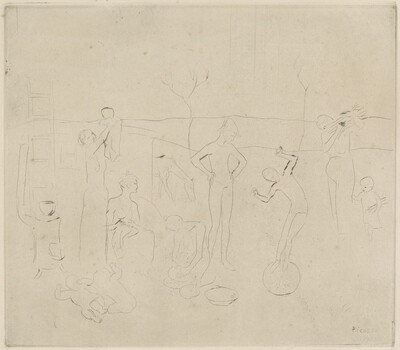
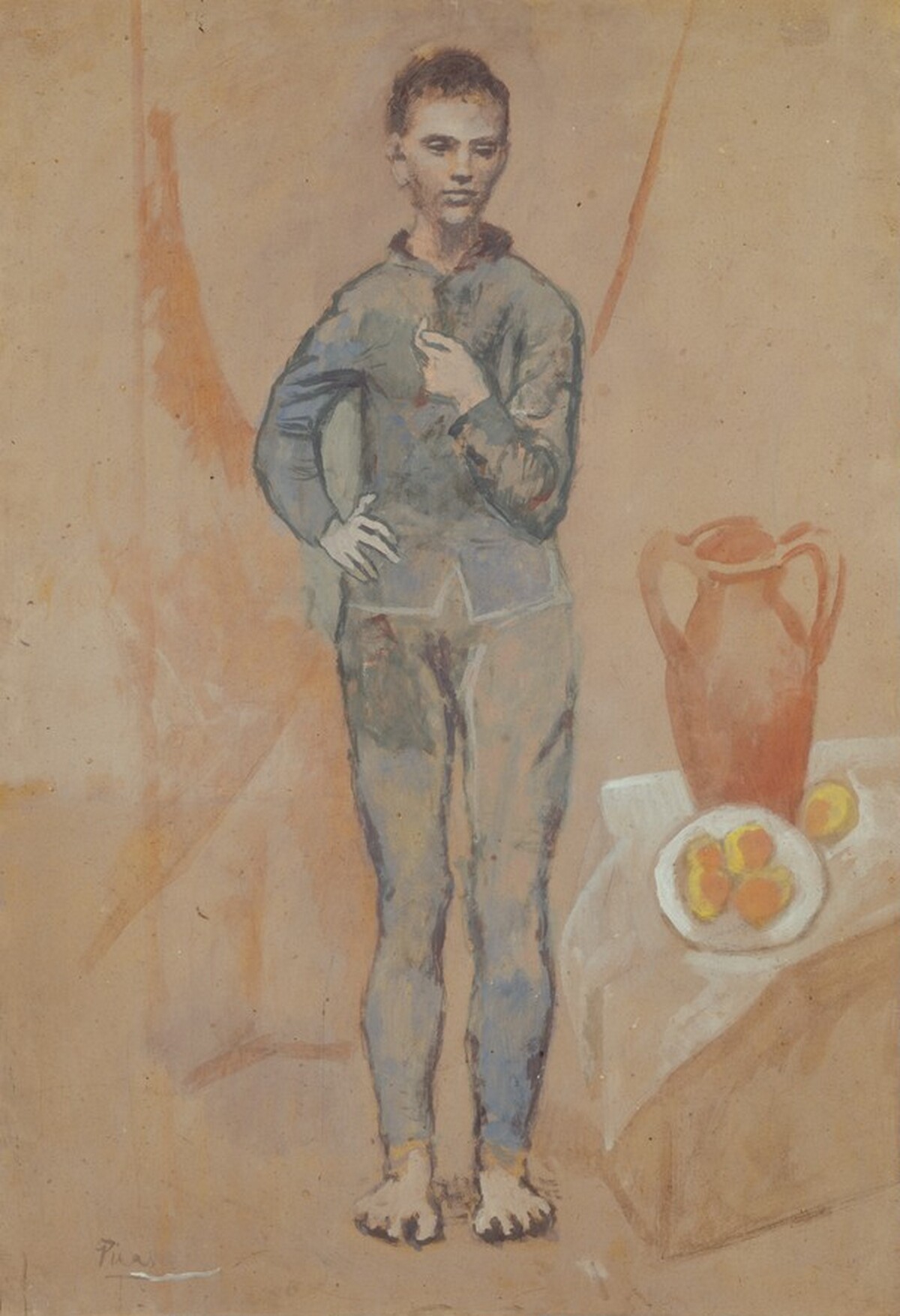
Juggler with Still Life (1905) belongs to Picasso's Rose Period—the phase that followed the Blue Period's melancholy and preceded the Cubist revolution. The painting depicts a juggling performer—a figure from the world of itinerant entertainers (saltimbanques) that Picasso and his circle identified with during this period. The juggler, like the acrobat and the harlequin, represented the artist's alter ego: a marginal figure whose skill was both impressive and unvalued by conventional society. The year 1905 was significant: Picasso was moving from the Blue Period's despair to the Rose Period's warmer emotional register, and the saltimbanque subjects marked this transition. The still life elements—objects juggled or displayed—provide a connection to the genre tradition while adding compositional complexity. The painting's palette, with its warmer pinks and roses replacing the Blue Period's cold blues, reflects a psychological shift: Picasso was emerging from grief into engagement, finding beauty in the marginal world of performers rather than anguish in poverty's isolation. The saltimbanque subject also connects Picasso to the Commedia dell'Arte tradition—harlequins, jugglers, and acrobats had been artistic subjects for centuries—and his treatment updates this tradition with the psychological depth that modernism demanded.
Cultural Impact
Picasso's saltimbanque paintings influenced how performers and marginal figures were represented in modern art, establishing the itinerant entertainer as a symbol of the artist's position in society. The paintings influenced later artists who similarly identified with marginal or outsider figures. The Rose Period influenced how Picasso's emotional development was understood, connecting stylistic change to psychological transformation.
Why It Matters
This painting matters because it captures the moment when Picasso emerged from the Blue Period's despair—the transition from melancholy to engagement that the saltimbanque figures embodied. The juggler, with his skill and marginality, represented Picasso's own position: a master of his art who had not yet achieved the recognition his skill deserved.