Provenance
Dr. Jacques Soubies, Paris; (his sale, Hôtel Drouot, Paris, 14 June 1928, no. 64); acquired by (Galerie Jacques Dubourg, Paris)[1] probably for (Kraushaar Galleries, New York); sold 6 September 1928 to Chester Dale [1883-1962], New York;[2] bequest 1963 to NGA.
[1] According to the results of the Soubies sale published in the _Gazette de l'Hôtel Drouot_, 16 June 1928.
[2] According to Chester Dale papers in NGA curatorial records.
Accession Number
1963.10.166
Medium
oil on canvas
Dimensions
overall: 50.2 x 60.9 cm (19 3/4 x 24 in.) | framed: 66.6 x 77.4 x 6.9 cm (26 1/4 x 30 1/2 x 2 11/16 in.)
Classification
Painting
Credit Line
Chester Dale Collection
Tags
Painting Early Modern (1901–1950) Oil Painting Canvas French
Background & Context
Background Story
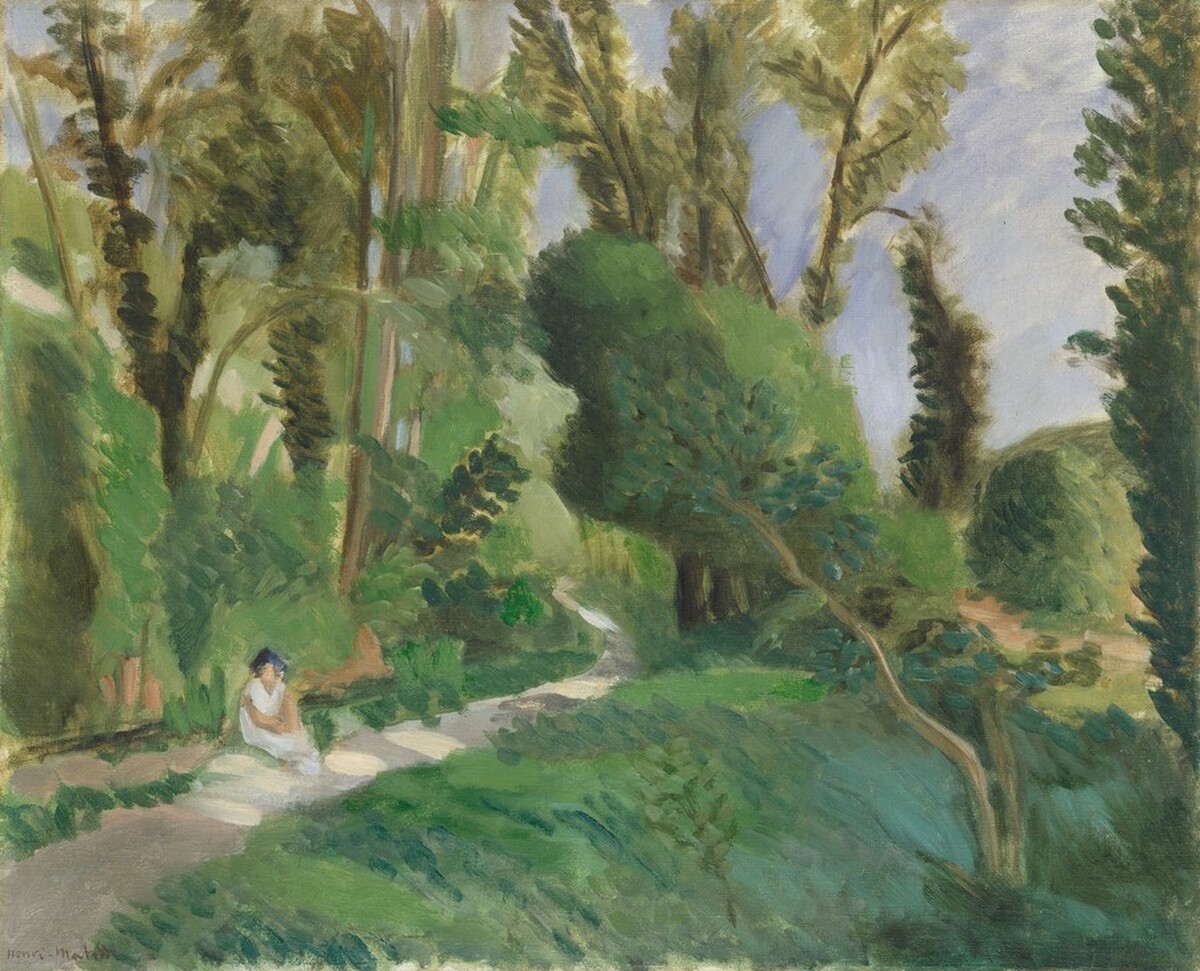
Henri Matisse (1869-1954) painted Les Gorges du Loup during the 1920s, depicting the dramatic gorge of the Loup River in the French Riviera hinterland near his home in Nice. The painting belongs to Matisse's post-Nice period, when he was moving beyond the odalisques and interiors that had dominated his work during the 1910s and returning to landscape with a new directness and chromatic freedom. The gorge is rendered in the bold, simplified forms and bright colors that distinguish Matisse's mature style, with the steep cliffs and deep valley reduced to their essential volumes and the color organized to create pictorial harmony rather than naturalistic description.
Cultural Impact
Matisse's landscapes of the 1920s are important because they demonstrate his return to landscape painting with the chromatic freedom and formal simplification that his Nice period had developed. Les Gorges du Loup reduces the dramatic Provençal landscape to its essential volumes, organizing the color to create pictorial harmony rather than naturalistic description—a approach that distinguishes Matisse's landscape painting from the more naturalistic tradition of Post-Impressionist landscape.
Why It Matters
Les Gorges du Loup is Matisse's landscape at its most simplified: the dramatic Provençal gorge reduced to essential volumes and organized in color harmonies rather than naturalistic description. The 1920s date places this in Matisse's return to landscape with the chromatic freedom and formal simplification that his Nice period had developed.