Provenance
Recorded as from Massachusetts. (Frederick W. Fuessenich, Litchfield, Connecticut); by whom sold in 1954 to Edgar William and Bernice Chrysler Garbisch; gift to NGA, 1958.
Accession Number
1958.9.9
Medium
oil on canvas
Dimensions
overall: 49 x 65 cm (19 5/16 x 25 9/16 in.) | framed: 64.5 x 80 x 7.3 cm (25 3/8 x 31 1/2 x 2 7/8 in.)
Classification
Painting
Credit Line
Gift of Edgar William and Bernice Chrysler Garbisch
Tags
Painting Neoclassical & Romantic (1751–1850) Oil Painting Canvas American
Background & Context
Background Story
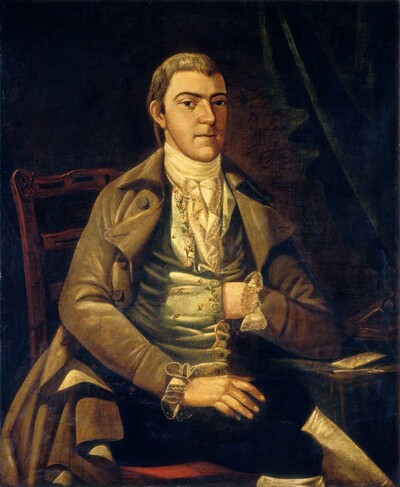
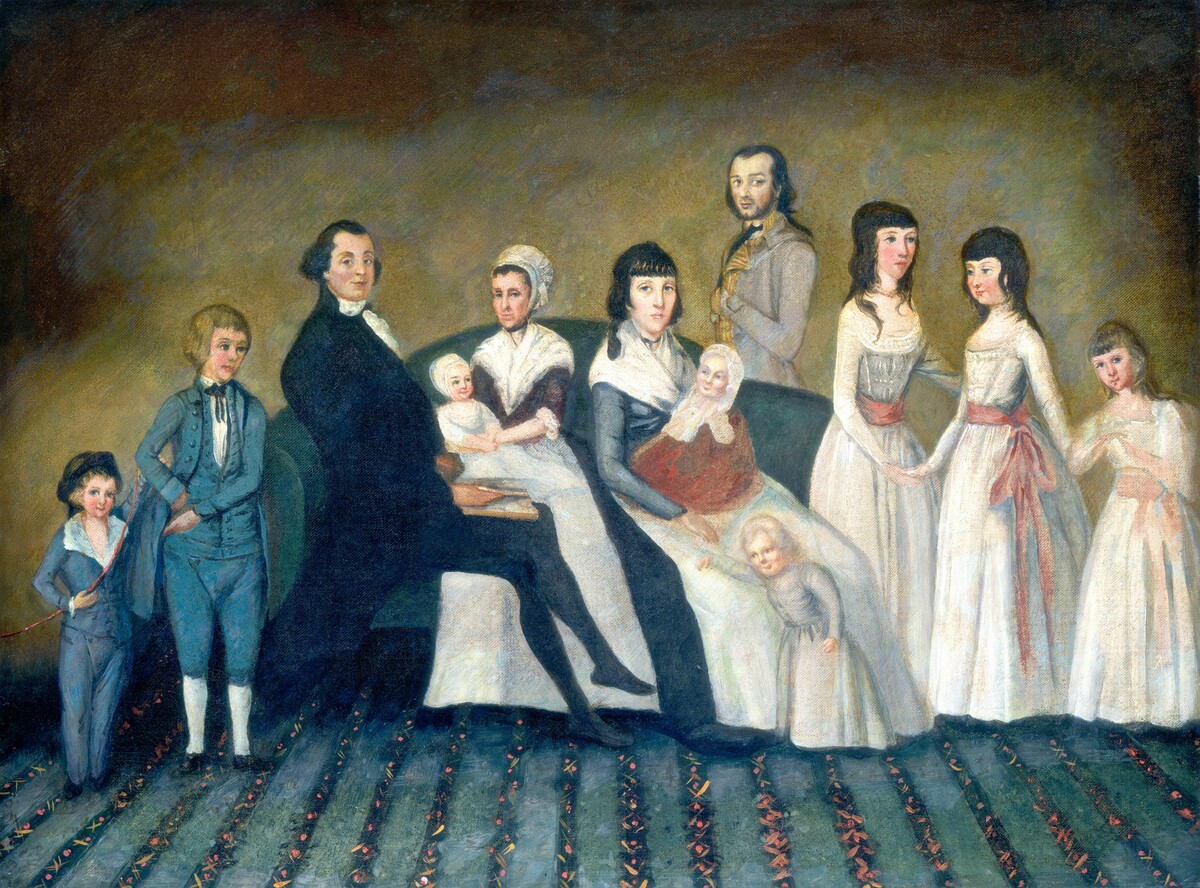
The Cheney Family portrait is a classic example of American group portraiture from the Federal period. The composition shows a family arranged in the conventional hierarchy of age and status, with the patriarch seated centrally and other members disposed around him in a spatial arrangement that mirrors their social position. The unknown artist follows the compositional conventions learned from English mezzotint reproductions of Reynolds and Gainsborough, but the handling is unmistakably American: broader in brushwork, flatter in modeling, more emphatic in its declaration of family unity.
Cultural Impact
Family group portraits were a specifically American genre in the late 18th century. In England, group portraits were commissioned by the aristocracy; in the new republic, they were commissioned by merchant families who had no aristocratic pedigree to display and therefore emphasized family bonds and collective achievement instead. The Cheney Family portrait exemplifies this democratic adaptation of an aristocratic form.
Why It Matters
The Cheney Family is more than a portrait — it is a visual charter of American middle-class identity, declaring that family unity and domestic prosperity are the true measures of success in a republic.