Artists

Boccaccino, Camillo
Italian
Italian, 1504 - 1546
Camillo Boccaccino (Italian: [bokkatˈtʃiːno]; 1511 – 4 January 1546) was an Italian painter and draughtsman, active mainly in Cremona and the region of Lombardy who painted in a Mannerist style. Even though he died young and only left a very small body of work, he had an important influence on the development of painting in Northern Italy.

Bocchi, Achille
Italian
Bolognese, 1488 - 1562
Achille Bocchi (Achilles Bocchius) (1488 – 6 November 1562), of Bologna, was an Italian humanist writer, emblematist, historian and lector in Greek, poetry and "humanae litterae" at the University of Bologna. He is best known for his emblem book Symbolicarum quaestionum de universo genere from 1555, which "takes as its subject the whole of universal knowledge: physics, metaphysics, theology, dialectic, Love, Life and Death, packaging them under the veil of fables and myths." It borrowed from Francesco Colonna. The title page put it in the tradition of serio ludere. Bocchi was a friend of Giovanni Pierio Valeriano Bolzanio, and his work is related to Valeriano's Hieroglyphica. Bocchi was the leader of an informal academy, the Accademia Bocchiana, under the protection of Cardinal Alessandro Farnese, nephew of the Farnese Pope Paul III. For Bocchi Giacomo Barozzi da Vignola, recently returned from Fontainebleau, designed the Palazzo Bocchi, Bologna, about 1545 (built 1545-55); for the façade Bocchi provided two inscriptions, one in Latin, the other in Hebrew, that run along the rusticated base of the front.
Boccioni, Umberto
Italian
Italian, 1882 - 1916
Bochner, Jack
American
American, 1915 - 1995
Bochner, Mel
American
American, 1940 - 2025
Melvin Simon Bochner (August 23, 1940 – February 12, 2025) was an American conceptual artist. He is considered to be one of the founders of Conceptual Art, and credited with reshaping the canon of contemporary art. Bochner's 1966 exhibition, “Working Drawings And Other Visible Things On Paper Not Necessarily Meant To Be Viewed As Art,” is cited as one of the first conceptual art exhibitions in the world.
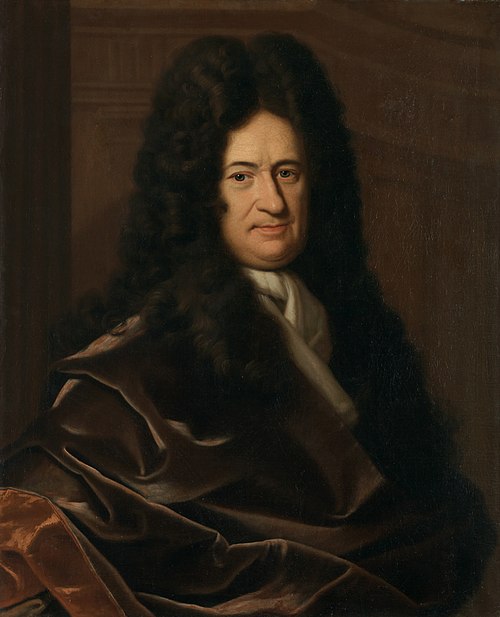
Bock, Christoph Wilhelm
German
German, 1755 - after 1805
Gottfried Wilhelm Leibniz (or Leibnitz; 1 July 1646 [O.S. 21 June] – 14 November 1716) was a German polymath active as a mathematician, philosopher, scientist and diplomat who is credited, alongside Isaac Newton, with the creation of calculus in addition to many other branches of mathematics, such as binary arithmetic and statistics. Leibniz has been called the "last universal genius" due to his vast expertise across fields, which became a rarity after his lifetime with the coming of the Industrial Revolution and the spread of specialized labour. He is a prominent figure in both the history of philosophy and the history of mathematics. He wrote works on philosophy, theology, ethics, politics, law, history, philology, games, music, and other studies. Leibniz also made major contributions to physics and technology, and anticipated notions that surfaced much later in probability theory, biology, medicine, geology, psychology, linguistics and computer science. Leibniz contributed to the field of library science, developing a cataloguing system (at the Herzog August Library in Wolfenbüttel, Germany) that came to serve as a model for many of Europe's largest libraries. His contributions to...
Bockl, Herbert
Austrian
Austrian, born 1894
The World Figure Skating Championships is an annual figure skating competition sanctioned by the International Skating Union in which figure skaters compete for the title of World Champion. Men's competitions took place from February 25 to 26 in Berlin, Germany. Ladies' and pairs' competitions took place from March 5 to 6 in London, United Kingdom.
Böcklin, Arnold
Swiss
Swiss, 1827 - 1901

Böcklin, Johann
German
German, active 1710/1716
The Pfeffel family (ennobled as von Pfeffel) is a Bavarian-German noble family originally from Neuburg an der Donau in Bavaria. Some family members were ennobled in the Kingdom of Bavaria in the 19th century. The family's history was explored in the BBC series Who Do You Think You Are?, relating to Boris Johnson. The family is descended from the watchman Johannes Pfeffel (1580–1634) of Neuburg an der Donau. His son Conrad Pfeffel (born 1605) was a tailor in Augsburg, and was the father of a pastor in Freiburg im Breisgau Johann Conrad Pfeffel (1636–1701). The latter's son Johann Conrad Pfeffel (1682–1738) moved from Freiburg to nearby Colmar in Alsace, where he served as Buergermeister (mayor) for half a year in 1727. He was the father of the historian, lawyer and diplomat Christian Friedrich Pfeffel von Kriegelstein (1726–1807) and the writer Gottlieb Konrad Pfeffel (1736–1809). Christian Friedrich's son Christian Hubert Pfeffel von Kriegelstein (1765–1834) served as the Envoy of the Kingdom of Bavaria to the United Kingdom and was raised to the rank of Freiherr (Free Lord, equivalent to Baron) in his native Bavaria. He was the father of Baroness Ernestine von Pfeffel (1810–1894...

Bockstiegel, Peter August
German
German, 1889 - 1951
Peter August Böckstiegel (7 April 1889, Werther - 22 March 1951, Werther) was a German painter, graphic artist and sculptor, in the Expressionistic style.

Bockstorfer, Christoph
German
German, 1490 - 1553
Hugo von Hohenlandenberg (c. 1457 in Schloss Hegi bei Winterthur [Zurich] – 7 January 1532 in Meersburg, Germany) was Bishop of Konstanz from 1496 to 1529, and again in 1530 and 1531 until his death in 1532.
Bocquet, Louis
French
French, active early 18th century