Agostino di Duccio
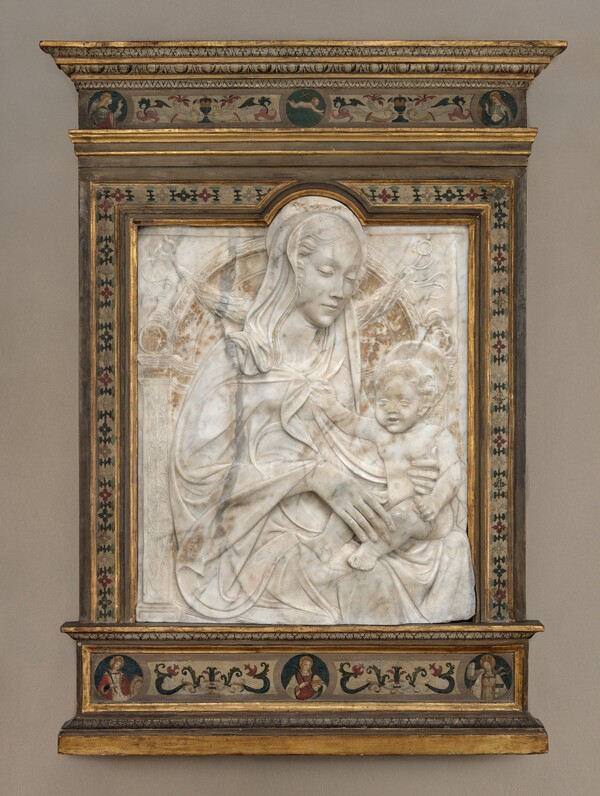
Agostino di Duccio (Florence, 1418 – Perugia, c. 1481) was an early Renaissance Italian sculptor. Born in Florence, he worked in Prato with Donatello and Michelozzo, who influenced him greatly. In 1441, he was accused of stealing precious materials from a Florentine monastery and was temporarily banished from his native city as a result. The following year he continued the work on the altar of S. Geminiano for the Cathedral of Modena, a work noticeable for the influence of Michelozzo. In 1446, he studied late Gothic sculpture in Venice and met Matteo de' Pasti, a fellow sculptor who called on him to execute the sculptural decoration of the Tempio Malatestiano in Rimini, where he stayed from 1449 to 1457. The decorations were supposed to be a sort of medieval encyclopedia, with reliefs of zodiacal and other allegorical and mythological figures. Between 1457 and 1462 he created the marble façade of the church of S. Bernardino at Perugia and the following years until 1470 he created many works especially in Florence, such as the Madonna of Auvillers for Piero di Cosimo de' Medici, now found at the Louvre, Paris. In 1464, the overseers (operaio) of Florence Cathedral commissioned Agostino...
Read more on Wikipedia →